
Julius Berger Builds Profits As Diversification Bleeds
Julius Berger construction-led pre-tax profit climbs even as diversification units continue recording losses through the nine-month reporting cycle.
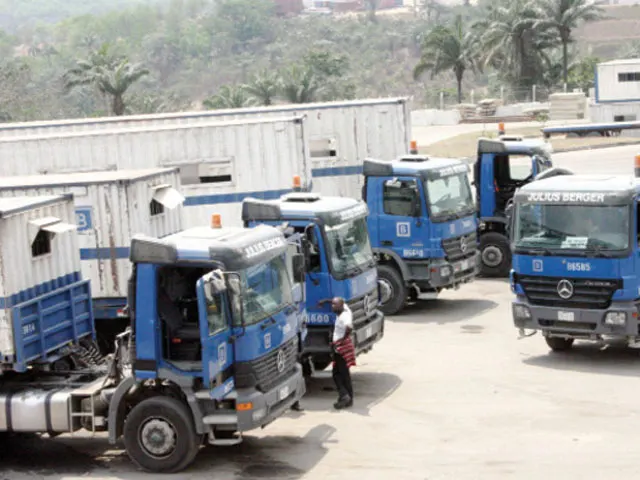
Julius Berger Nigeria has delivered its strongest construction-led earnings momentum in the current reporting cycle, with pre-tax profit up sharply in the first nine months of 2026 even as diversification moves outside its core building business continue to bleed losses — a combination that shows the country's flagship civil engineering company near record profitability while its diversification chapters still demand turnaround work.
The builder's nine-month accounts, analysed by BusinessDay among the NGX's third-quarter reporting wave, show pre-tax income expanding on the strength of construction-linked demand and cost discipline, even as the group's diversification arm — the businesses Julius Berger has developed beyond engineering — continues to weigh on group profit. The construction core remains the earnings engine, with the company's late-period strength measured not merely in revenue but in consistent cash conversion under a working environment where public construction, industrial projects and state infrastructure programs have supplied civil works pipeline momentum.
The construction engine and its demand anchors
Julius Berger's core operating environment is defined by government capex — federal infrastructure, state capital projects and institutional construction. The federal 2026 budget architecture and the state governments' capital programmes have channelled building works into roads, bridges and public buildings; industrial and institutional investment slots — factories in food processing, cement and beverages, warehouses and logistics centres — have added the private-side demand that historically outperforms public works in margin quality. Construction-linked demand has also been reinforced by the industrial projects that the current investment environment accommodates, and the company's nine-month delivery confirms the channel is active.
That demand, however, arrives with working-capital pressure typical of construction in an economy with high rates and payment arrears. Receivables management, mobilisation-advance mechanics and the financing costs of long execution cycles are where contractors' earnings are made or destroyed — and Julius Berger's ability to preserve profitability through the reporting season suggests discipline in contract selection and progress-billing that peers in the sector have struggled to match.
The diversification losses that persist
The group's expansion beyond core construction — occupying the same logic that big industrial engineering companies have followed, using brand equity and cash flow to build adjacent revenue in facilities management, healthcare services, hospitality and property adjacent businesses — has yet to support the group's earnings profile. The company's nine-month disclosures confirm persistent losses from the diversification businesses, whose costs, in a high-rate environment with a thin management layer relative to the core business, continue to erode what the construction core earns.
Strategic patience has defined the company's handling: diversification businesses and their early-stage losses stay on the books in the interest of long-term franchise expansion, on an understanding that several of the investments' growth curves steepen once scale and contract density arrive. The coming quarters will tell whether the ninth-month losses stabilise or whether the group takes a harder decision — consolidation, disposals or spin-offs — which would unlock capital for the core construction business whose demand visibility is now its defining asset.
Construction contract economics in a high-inflation environment
The construction sector's macro environment presents distinct challenges the period's results had to absorb. Materials prices — cement, steel, bitumen and imported fittings — reprice with the exchange rate and freight costs; labour costs absorb the inflation expectations of the workforce; and contract templates for public works have historically left contractors exposed to inflation surprises between award and delivery. A profitable period under those conditions signals the company's repricing discipline: fresh contracts priced to current cost structures, old contracts' variations followed through claim mechanisms and procurement pass-throughs that protect margin quality.
The sector-wide implications matter for Nigeria's infrastructure delivery capacity. Construction companies' balance-sheet repair sustains the working-capital cycle that keeps projects running — and the sector's health is, in turn, a function of the government's payment discipline, which drives the receivables cycle that defines whether contractors build capacity or repair losses. Julius Berger's consistent profitability is among the strongest arguments the construction industry can make for the public payment reforms that determine the sector's future.
What investors will weigh next
For shareholders, the earnings season's questions fit three headings. Dividend policy: with the construction core cash generative and the year-end approaching, the payout conversation reflects both the company's conservative capital ethos and the capex pipeline that requires funding. Contract backlog and pipeline: the company's revenue visibility depends on public infrastructure budgets and private industrial projects whose 2027 economics will be set by the fiscal calendar and the investment environment. Portfolio rationalisation: the diversification losses present a capital-allocation decision that the board will face with increasing urgency as the core business's opportunity set grows.
For the broader market, Julius Berger's construction-led performance is part of the industrial goods confirmation the Nigerian market's report season has delivered: companies exposed to public construction cycles and compliant cost structures have restored earnings, while those whose diversification chapters remain loss-making must now demonstrate either the path's value or the discipline to exit. That distinction is where the next stage of Nigeria's industrial equity re-rating gets decided.
Up next
BUA Cement Lists N115bn Bond Amid Record Earnings
BUA Cement listed its N115bn bond on the NGX as nine-month profit jumped nearly 60 percent on improved margins and a net-cash balance sheet.
More in Corporate
See all
MTN Nigeria Nine-Month Profit Climbs 55 Percent
MTN Nigeria grew nine-month profit after tax 55.3 percent to N1.17 trillion as data revenue surged 35.8 percent and cash tax payments jumped to N295.4 billion.

Xerox Suspends Dividends After $959 Million Goodwill Hit
Xerox reported a $1.02 billion quarterly loss after a $959 million goodwill impairment tied partly to memory price increases, and suspended common and preferred dividends.

Nascon Third-Quarter Sales Climb as Profit Slips
Nascon Allied Industries grew third-quarter revenue 9.5% to N39.19 billion but profit before tax slipped 2.8% to N13.40 billion as input costs pressed margins.
About the author
Ngozi Eze
Companies Reporter
Ngozi Eze writes for BusinessPress.
More by Ngozi Eze


