
Gold Caught Between War Premium And Stubborn Rates
Gold consolidates near 3,950 dollars as US-Iran escalation risks clash with stubborn interest rates punishing non-yielding assets.
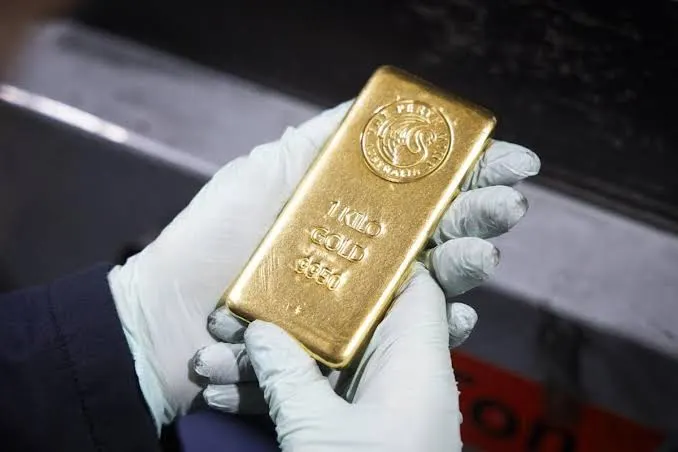
Gold's retreat through Tuesday's Asian and European sessions — with bullion trading near $3,950 an ounce after touching a one-year closing low late last week — shows the metal caught between two opposing forces that roughly cancel: record-breaking geopolitical risk premiums from the widening US-Iran conflict, and an interest-rate environment whose persistence keeps punishing an asset that pays its holders nothing.
The price action, tracked through global market reports on Tuesday, has the yellow metal down against its late-autumn highs even as war escalation keeps its downside bid alive. COMEX gold futures traded around $3,956 in early-hours dealings, while spot quotations drifted near the $3,910-3,945 band that has defined the metal's consolidation since gold's historic run through 2025-2026 carried it above every prior record. Silver's performance — trading above $50 an ounce after a multi-decade absence from that level — has carried the precious complex's supply-deficit narrative even as gold treaded water.
The tug-of-war in one instrument
Gold's current economics split cleanly in two. On the safe-haven side, the conflict map is as threatening as it has been all year: US strikes on Iran's Qeshm Island, stalled diplomatic tracks, tanker attacks disrupting the Strait of Hormuz's shipping lanes and a Middle East war whose escalation scenarios keep repricing haven demand across the asset complex. Every historical precedent says gold should be making all-time highs under these conditions.
On the rates side, the earned-yield environment is hostile. Elevated developed-market policy rates and bond yields reward alternatives with income; the opportunity cost of holding gold compounds with every basis point central banks delay cutting. A high interest rate environment — the Reserve Bank of Australia's fifth hike of 2026 a case in point — projects discount rates that keep the metal's rally conditional rather than compounding. Markets have also repriced the December policy decisions in the developed world toward restraint, and gold's consolidation maps that re-pricing almost day for day.
What the official sector is doing with the correction
The world's central banks, whose buying has underwritten gold's historic 2020s revaluation, remain the metal's structural base. Reserve managers — led by the emerging economies whose reserve diversification away from dollar assets has become a stated policy programme — have kept accumulating through the correction, and the IMF's reserve statistics continue recording additions whose scale keeps the market's floor logic working. That official bid, unlike speculative positioning, does not unwind with the market's risk appetite: it reflects a geopolitical reserve allocation whose rationale — sanctions exposure, dollar system risk, diversification — strengthens with every quarter's global tensions.
The private investment channel is where the correction's mechanics matter. Exchange-traded fund holdings, futures positioning and retail coin-and-bar demand show the two-sided market: ETF flows have cooled from their 2025 pace even as bar-and-coin buying in the price-sensitive Asian demand centres — India, China, the Gulf — survives the elevated price environment. India's third-quarter gold demand, down sharply year-on-year, shows what record prices do to the traditional buyers on whose cultural demand the market's baseline rested for decades.
What the correction means for the gold-linked economy
For African gold producers — Ghana, Mali, Burkina Faso, Tanzania, Sudan, Zimbabwe among the larger producers — a $3,900-4,000 band remains a revenue environment unprecedented in the industry's history, whatever its retreat from the record peak. Production economics calibrated at half these prices deliver record margins; the fiscal take from royalties and corporate taxes in gold-producing states reflects the windfall; and exploration capital keeps flowing to African gold belts whose geology the majors have been courting throughout the rally. The correction's risk is not profitability but budgeting discipline: fiscal planning that assumes record prices persist would be the standard mistake the resource cycle repeats.
For the artisanal and small-scale mining economy — in which tens of millions of workers across Africa's gold belts participate — the elevated band supports incomes whose social floor the industry's formalisation programmes have strengthened. The commodity's use as an inflation hedge in household saving across emerging economies keeps off-market demand absorbing domestic production through local bullion trading whose local premiums the official exporters watch.
The paths from here
Two catalysts decide gold's direction through the remainder of the year. The geopolitical track: any credible de-escalation in the US-Iran conflict would remove the war premium supporting the metal's floor, opening the correction's downside; a genuine escalation — a Hormuz closure attempt, strikes on energy infrastructure — would send haven demand through the roof. The policy track: a December rate cut from the Federal Reserve would reprice gold's opportunity cost lower and resume the rally; a hawkish hold extends the consolidation and pressures momentum positioning.
Analysts' published ranges keep the band wide: $3,600-4,400 scenarios depending on the war's course and December's rate decision, with medium-term structural support from de-dollarising reserves keeping the bull case intact even if the correction runs. What both directions require from investors is the same discipline: position sizing that respects a two-sided market whose daily ranges — many hundreds of dollars — now exceed entire historical years' price movement. November's sessions, with the US election calendar, policy meetings and war escalation risks stacking within days of each other, promise the metal's most consequential fortnight since the spring's record run.
Up next
N13.79trn Headed For Money Market As OMO Eases
Dealers project about N13.79 trillion in system inflows for November as the CBN eases open market operation mop-up intensity.
More in Markets
See all
TAIEX Takes Two-Day Slide as Chip Earnings Circulate
Taiwan's TAIEX lost 1,642 points on Friday after a 980-point fall the previous day, as investors reassessed the island's record AI-led run.

Wall Street Weekend Slide Puts Logic Behind Rates Habits
S&P 500 fell 1.82% and Nasdaq 2.86% on Friday as weak Intel guidance recharged worries about AI spending, payback and valuations.

ICE Revenue Rises as Market Services Expand
Intercontinental Exchange reports higher revenue and profit, highlighting demand for trading, risk management and financial data.
About the author
Kwame Mensah
Markets Correspondent
Kwame Mensah writes for BusinessPress.
More by Kwame Mensah


