
Egypt Floats Banque du Caire in $650m IPO
Egypt raised the equivalent of more than $650 million by floating shares in state-owned Banque du Caire, adding a major bank to the Egyptian Exchange privatisation drive.
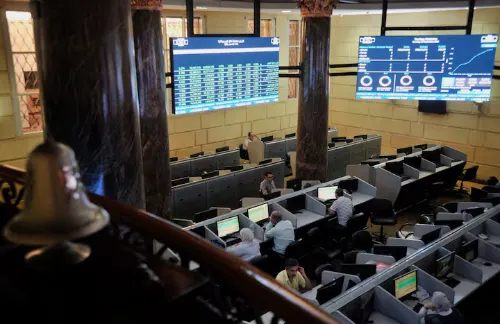
Egypt raised the equivalent of more than $650 million — about 585 million euros — via an initial public offering of shares in state-owned Banque du Caire, market reports of the flotation confirmed — a sale of government-held shares in one of the country's oldest banking franchisees, adding one of the country's biggest banks to the Egyptian Exchange and advancing a privatisation programme that has made financial-sector listings its centrepiece.
The offering ranks among the largest Egyptian equity raises of recent years and lands on an exchange hungry for exactly this kind of large-cap financial stock. marks the latest step in a state asset-sale strategy pursued under the government's investment push, with bank listings ranked among the programme's most bankable candidates because of their profitability, distribution value and the institutional demand they attract from Gulf and global funds seeking exposure to Egypt's large retail deposit base.
Why Egypt is selling its banks
State ownership of Egyptian banking is a legacy of decades of directed credit and public ownership, and privatising those holdings serves several policy goals at once. Sale proceeds fund deficit reduction and foreign-currency support; exchange listings impose market discipline on institutions long used to policy-oriented lending; and successful floats give global investors the liquidity entry points that anchor Egypt in Africa's emerging financial-services asset class.
The listed-bank route also disciplines the system in ways no regulation does: quarterly disclosure, independent boards and market-driven pricing all pull a policy-oriented lender toward commercial behaviour. The timing is a function of improved macro optics. The Egyptian pound's managed float and the country's expanded IMF and Gulf financing arrangements have stabilised the currency picture that spooked foreign investors in recent years, and a functioning equity market is the prerequisite for monetising state assets at prices reflecting that stabilisation.
The African bank-listing wave
Banque du Caire's float lands within days of Stanbic Bank Botswana's P1.37 billion IPO in Gaborone and alongside Egyptian market counterparts — a cluster of bank listings across the continent that market operators read as a regional cycle rather than coincidence. African governments and parent groups are converting national banking champions into public companies simultaneously, seeking deeper local capital markets, wider ownership and the valuation re-rating that liquidity brings.
For investors, the offering offers direct exposure to a full-scale Egyptian commercial bank — a deposit franchise serving retail savers and small businesses across the republic — at a moment of improving macro management, though the familiar risk set applies: Egyptian pound stability remains the macro variable on which local bank earnings depend, and government-linked ownership structures after IPO still influence the pace of private-sector credit decisions.
What the money does for the market
The Egyptian Exchange has lacked large new listings for stretches of its modern history, and each major float recruits new institutional investors to the market's plumbing while giving retail savers — historically the GFSA programme's silent partners — a direct claim on a national asset. Offerings of this scale also test the mechanics every future float will rely on: custodians, research analysts and index providers who follow assets that trade. A bank of Banque du Caire's scale adds ballast to index weights and gives pension and insurance money an investable large-cap finance name — the sort of infrastructure that outlasts any single offering.
The sales programme's next steps matter as much as this one. Egypt has a queue of state assets — banks, industrial companies, logistics and utility nameplates — identified for privatisation, and the market's tolerance of this IPO, both in price performance and oversubscription levels, will set the pace for the next candidates. Strong performance accelerates the pipeline; weak performance does the opposite.
For Nigerian and African observers, the offering completes a triangle with the Stanbic Botswana and Eastern European-style bank privatisations: African governments have learned that bank floats, properly timed and structured with retail participation, monetise state assets while deepening capital markets — a policy playbook whose next applications are already queuing in Lagos, Cairo and Gaborone's follow-up calendars.
Up next
VFD Group Nine-Month Profit Nearly Doubles
VFD Group grew nine-month profit after tax 96 percent to N13.00 billion as gross earnings climbed 35 percent to N81.88 billion across its financial services franchises.
More in Finance
See all
Nigerian Banks Post Continental Lowest Lending Ratios
The five Nigerian groups in a 22-bank African ranking posted the lowest loan-to-deposit ratios as recapitalisation and fresh bad-loan recognition kept credit growth behind deposits.

Linkage Assurance Profits Rise 31% on Investment Income
Linkage Assurance lifted nine-month profit after tax 31% to N4.09 billion and grew total assets 31% to N100.83 billion, led by investment income of N7.71 billion.

Fidelity Bank Clears $400 Million Eurobond at Maturity
Fidelity Bank fully redeemed its $400 million 7.625% Eurobond at maturity on 28 October 2026, completing the five-year instrument with all coupons paid on schedule.
About the author
Musa Abdullahi
Finance Correspondent
Musa Abdullahi writes for BusinessPress.
More by Musa Abdullahi


