NCC Moves to Block Unapproved Phones as Users Get 30-Day Alerts
Nigerians are receiving alerts warning their phones could be disconnected after 30 days under the NCC's new Device Management System for type-approved devices.
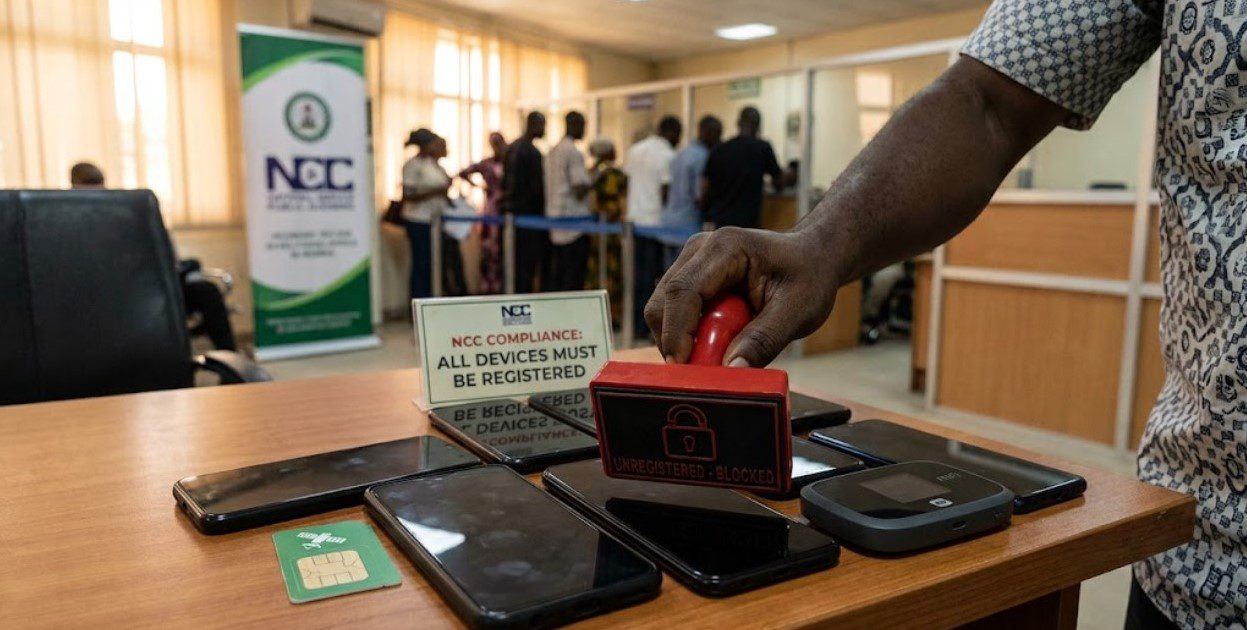
Nigerians are receiving text messages warning that their mobile phones could be disconnected from local networks after 30 cumulative days, as the Nigerian Communications Commission (NCC) rolls out a device-management system designed to block handsets that are not type-approved for use in the country.
The alerts, which began circulating widely in recent days, have unsettled users of imported and grey-market devices who say they bought and used their phones legitimately but are now being flagged as unverified.
How the system works
The warnings are tied to the NCC's Device Management System (DMS), which is built on a Central Equipment Identity Register (CEIR) — a central registry of the International Mobile Equipment Identity (IMEI) numbers of devices operating in Nigeria. Under Section 132(2) of the Nigerian Communications Act 2003, communications equipment must obtain type approval from the NCC before it can be sold or used in the country.
The DMS extends the logic of SIM-card registration to the devices themselves. Just as every SIM must be registered, every SIM-enabled device is now expected to be registered and authenticated. The commission said the system will also help deter phone theft by allowing stolen devices to be blocked across all networks.
The rollout has been phased. The commission onboarded existing stock through an initial deadline that was extended from September 7 to October 6, 2026, after some stakeholders reported difficulty completing registration. A companion system, the Telecommunications Identity Risk Management System, was scheduled to go live in October.
Which phones are affected
The NCC has stressed that the exercise is not targeted at any particular brand. Users of a range of devices — including Apple, Infinix, Tecno, Oukitel and Google Pixel handsets — have reported receiving alerts, and some bought their phones locally through major retailers.
The commission has sought to reassure consumers, saying it is preparing a process through which people who legitimately acquired devices abroad or through private transactions can register them. "If you have a phone that you feel was not type approved — maybe you travelled out of the country and bought a phone from there — there are a few registration processes that the person is supposed to go through for that phone to be registered on the network," an NCC official said.
Business Insight
The policy's objective — curbing counterfeit, stolen and non-compliant devices — is sound. Illegal imports and substandard equipment undermine network quality, harm consumers, reduce tax revenue and complicate the fight against phone-enabled crime. A central device registry is a sensible tool that many countries operate.
The risk lies in execution. Nigeria's device market is large, informal and heavily dependent on imports, and millions of consumers buy phones through channels that never touched an authorised distributor. If the registration process is slow, opaque or expensive, the policy could inconvenience legitimate users and disrupt trade without meaningfully deterring bad actors.
For importers, dealers and retailers, the message is to ensure that devices they sell are type-approved and registered. For consumers, the coming weeks will test whether the promised registration pathway is genuinely accessible — because a policy that disconnects innocent users' phones is one that will quickly lose public support.
Background
Nigeria has about 231 million active telephone lines and a mobile-phone market dominated by imported devices. The NCC has been tightening its device oversight for years, moving from SIM registration to device-level monitoring. The type-approval regime has existed since 2003, but enforcement has historically been weak, allowing a large grey market to flourish.
Conclusion
The DMS is a significant regulatory step that could clean up Nigeria's device market and improve network integrity. But its success will depend on whether the NCC can register millions of devices without penalising law-abiding consumers. The commission has the right objective; now it must deliver the user-friendly process it has promised.
Up next
Nigeria's Equity Market Is Booming Without the Foreigners
Nigeria's stock market has surged about 66% this year on domestic money alone, raising the question of how durable a rally can be without foreign investors.
More in Technology
See all
MTN Nigeria Revenue Nears N3 Trillion as Data Demand Surges
MTN Nigeria's half-year revenue approached N3 trillion as data sales and a wider subscriber base drove profit sharply higher, reinforcing the telecoms sector's role as a pillar of the consumer economy.

IMF Warns AI Could Disrupt 40% of Jobs Worldwide
The IMF has warned that AI could disrupt about 40% of jobs worldwide, urging governments to prepare workers and share the gains from the technology.
Anthropic Warns Small AI Models Could Self-Replicate Across Smart Devices
Anthropic researchers have warned that small AI models could self-replicate across connected devices, sharpening debate over how to control advanced systems.
About the author
Chinedu Nwosu
Technology Editor
Chinedu Nwosu writes for BusinessPress.
More by Chinedu Nwosu