NGX ASI declines 0.32% to 245,116.49 as banking drags, turnover slips to N23.6bn
Nigerian equities fell as banking stocks led losses, with breadth turning negative and turnover moderating.
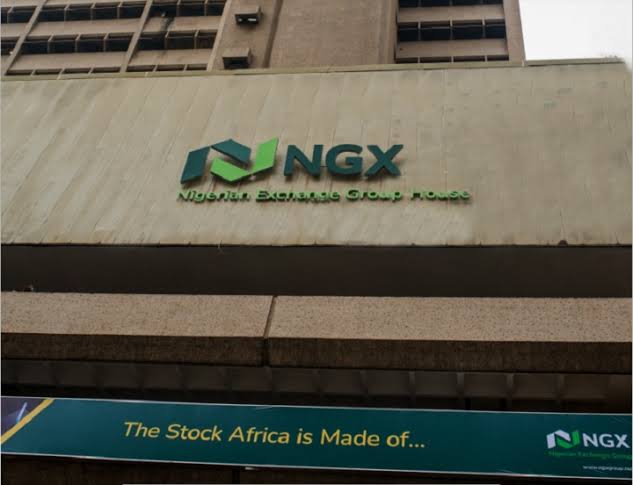
The Nigerian Exchange All-Share Index declined 0.32 per cent on Tuesday, October 21, 2026, to close at 245,116.49 points as profit-taking in banking stocks weighed on the market and breadth turned negative for most of the session.
Market capitalisation fell by N515.95 billion to N159.152 trillion. Turnover moderated to N23.6 billion, down 8.88 per cent from N25.92 billion in the previous session, while traded volume stood at 354.1 million shares across 32,585 deals. Of 55 stocks traded, 18 advanced against 37 decliners, giving a market breadth of 0.49 and signalling broad selling pressure across large-cap counters.
The Banking Index led the decline, shedding 1.49 per cent as investors took profits in some of the lenders that had rallied recently. The Oil and Gas Index was the lone gainer among major sectoral gauges, edging up 0.12 per cent. Other indices were mostly flat to lower as the session progressed, with rotation dominating price action.
Among notable losers, CWG fell 9.98 per cent to N18.05, UPDC REIT lost 9.93 per cent to N5.14 and Austin Laz shed 9.92 per cent to N2.01. On the gainers' side, LivingTrust Mortgage Bank advanced 9.90 per cent to N3.22, ABC Transport rose 9.77 per cent to N4.17, Meyer gained 9.72 per cent to N16.57, Livestock Feeds added 9.65 per cent to N18.75, Caverton Offshore Support Group climbed 6.67 per cent to N6.24 and Fidelity Bank gained 6.02 per cent to N22.00.
The pullback came amid elevated but uneven liquidity in the domestic market and as investors weighed fixed-income yields against equity valuations. Despite the day's decline, the ASI remains up 57.52 per cent year-to-date, a gain that has been underpinned by improved liquidity conditions and selective re-rating across sectors over the course of 2026.
Market participants noted that the session was more about stock-specific repositioning than a broad risk-off move. Many traders appeared content to lock in profits in recently strong banking names while looking for opportunities in counters with specific catalysts or defensive characteristics.
Strategic implications
The development carries broader implications for stakeholders across the value chain. For businesses, it may affect input costs, funding conditions or competitive dynamics depending on the sector. For policymakers, it highlights the need for coordinated responses that address both immediate pressures and longer-term structural issues.
As the situation evolves, market participants and industry players will be watching for follow-up actions, implementation details and measurable outcomes. The effectiveness of proposed measures will be key to determining whether the intended benefits materialise in practice.
In the current environment, agility and informed decision-making remain important as companies navigate changing conditions and adjust their strategies to new realities.
Longer-term outlook
Looking ahead, the trajectory of these developments will depend on policy implementation, market response and global conditions. Stakeholders across the public and private sectors will need to adapt to evolving dynamics while maintaining focus on long-term objectives.
Continued monitoring of key indicators and proactive engagement with emerging trends will be essential to navigating the period ahead. The interplay of structural factors and cyclical pressures is likely to shape outcomes for some time to come.
Liquidity and rates backdrop
Banking system liquidity has remained elevated in recent weeks following Open Market Operations maturities, providing ample funding for short-term instruments. However, government borrowing costs have been edging higher at certain points on the curve, with the Debt Management Office accepting higher stop rates at recent auctions to clear supply.
This mix of ample liquidity and rising yields at the long end has kept investors selective, with fixed income competing more strongly for funds than it did earlier in the year. The resulting rotation has contributed to the more choppy, stock-specific trading seen in recent sessions.
Outlook
Near-term direction is likely to be driven by upcoming fixed-income auctions, sector earnings and global market cues. With year-to-date gains substantial, the market may continue to consolidate as investors reassess valuations and positioning. Banking stocks are expected to remain particularly sensitive to any further repricing of yields in the coming weeks.
Up next
FG Moves to Strengthen Food Security as South-West States Target Food Losses, Supply Chain Gaps
As the regional review concludes on October 22, attention will turn to the recommendations adopted, the finalisation of the operating...
More in Markets
See all
NGX Extends Recovery as Oil and Gas Rally Lifts Market Value to N160.83 Trillion
The All-Share Index edged up 0.01 per cent to 247,707.13 points for a second straight gain, but decliners outpaced gainers and the value of trades contracted sharply, leaving the rally resting on a narrow band of energy stocks.

African Equities End Mixed as Investors Turn to South Africa's Mini-Budget
More stocks fell than rose across 17 African exchanges on Thursday, with Uganda leading index gains and Ghana the weakest, while attention shifted to Enoch Godongwana medium-term budget on 21 October and a possible R70 billion revenue windfall.

FG to Issue N5.40 Trillion Treasury Bills in Q4, With a Sharp Bias to One-Year Debt
The Central Bank and Debt Management Office plan N5.40 trillion in Treasury bill offers between October and December 2026, with nearly 76% in 364-day instruments, a structure that largely rolls over maturing obligations rather than raising new money.
About the author
Adaeze Okonkwo
Markets Editor
Adaeze Okonkwo writes for BusinessPress.