FG Moves to Strengthen Food Security as South-West States Target Food Losses, Supply Chain Gaps
As the regional review concludes on October 22, attention will turn to the recommendations adopted, the finalisation of the operating...
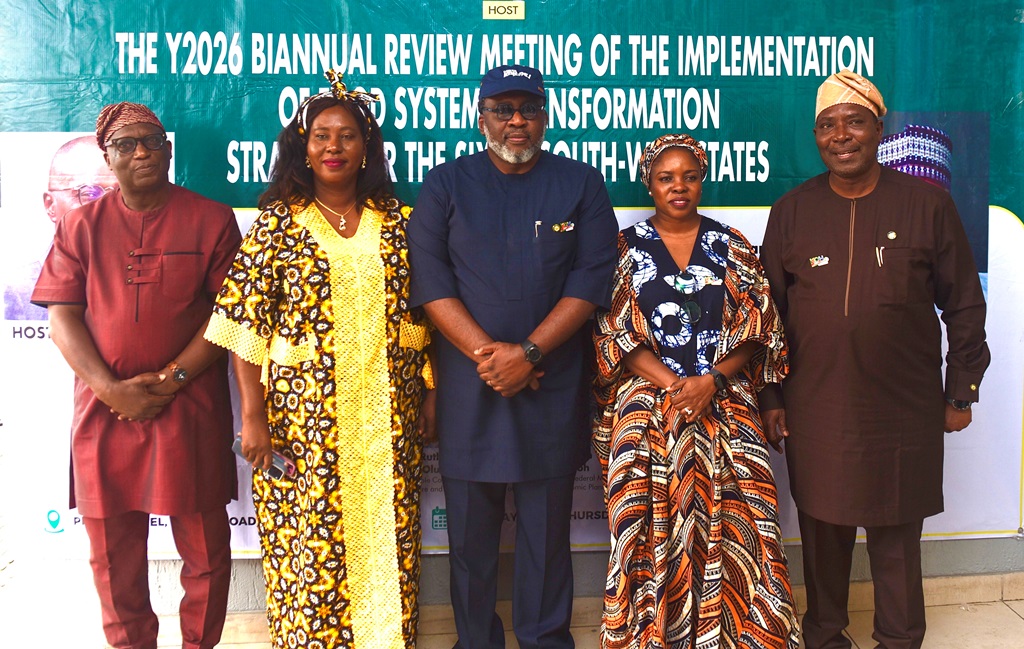
The Federal Government has called for stronger collaboration among state governments, development partners and agricultural stakeholders to address Nigeria's food security challenges, as South-West states move to improve food supply chains, reduce post-harvest losses and strengthen regional coordination.
The call came during the South-West Bi-annual Review of the Food Systems Transformation Pathways (FSTP) Strategy and validation of its draft Standard Operating Procedure (SOP), hosted by the Lagos State Government at Protea Hotel, Ikeja.
The three-day engagement, held from October 20 to 22, 2026, brought together representatives from Lagos, Ogun, Oyo, Osun, Ondo and Ekiti states, alongside federal officials, academics, technical experts and development partners.
Discussions focused on assessing progress in implementing Nigeria's food systems transformation agenda, identifying institutional and operational gaps, and developing a harmonised framework to improve food production, preservation, distribution and affordability.
Federal Government Seeks Unified Framework for Food Systems Transformation
Speaking on behalf of the Permanent Secretary of the Federal Ministry of Budget and Economic Planning, Dr Deborah Odoh, the National Convener of Nigeria's Food Systems Transformation Pathway, Dr Clementina Ebere-Okoro, emphasised the importance of involving states in developing a practical and effective implementation framework.
According to Ebere-Okoro, although the Federal Government has developed a draft SOP, contributions from state governments and geopolitical zones remain essential because much of the implementation takes place at the subnational level.
“At the national level, we have put up the draft SOP, but we need the input of everyone—the states and the zones—because that is where the implementation is. We want a situation whereby we have a joint food SOP, so we need to validate it with your inputs,” she said.
She explained that the proposed framework would provide a coordinated approach to implementation, monitoring, reporting and accountability across participating institutions.
Ebere-Okoro identified climate change, insecurity, malnutrition, rising food prices and post-harvest losses among the challenges requiring more coordinated interventions.
She added that the bi-annual review would allow stakeholders to assess progress, identify emerging difficulties, document lessons and agree on practical measures to strengthen implementation.
Lagos Highlights Regional Cooperation as Key to Food Availability
In his keynote address, Lagos State Commissioner for Economic Planning and Budget, Mr Ope George, described food systems transformation as an important component of economic development, employment creation and household welfare.
George noted that improving food security requires attention beyond agricultural production, extending to processing, storage, transportation, distribution, market access and consumption.
He explained that Lagos, as a major consumption and commercial centre, depends significantly on agricultural supplies from other parts of Nigeria.
“As a major centre of consumption, commerce and distribution, Lagos State has strong food supply linkages with other parts of Nigeria, including the Northern states,” he said.
The commissioner stressed that stronger cooperation among states could help address transportation challenges, inadequate storage facilities, post-harvest losses and market inefficiencies.
“Our collective goal must be to strengthen food value chains, improve market access for producers, enhance food availability and build a more resilient and sustainable national food system,” George added.
He said the regional review would provide an opportunity to identify implementation gaps and develop actionable recommendations, while the validated SOP would clarify institutional responsibilities and improve coordination.
Food Inflation: Lagos Identifies Storage and Logistics as Major Challenges
Lagos State Commissioner for Agriculture and Food Systems, Ms Abisola Olusanya, drew attention to the role of food preservation, storage and logistics in determining food availability and consumer prices.
Olusanya argued that increasing agricultural production alone would not adequately address food security challenges without corresponding improvements in infrastructure and distribution.
“A lot of our problem around inflation is not production. It is actually preservation, storage, logistics. Those are the key challenges around why inflation of food is high,” she said.
Her remarks highlighted the economic consequences of weaknesses across agricultural supply chains.
When harvested produce cannot be properly stored or transported, losses can reduce the quantity reaching markets, increase distribution costs and place additional pressure on consumer prices.
Such challenges are particularly significant for perishable agricultural products that require timely transportation and appropriate storage conditions.
Olusanya called for better organisation of food markets, improved traceability and stronger quality-control systems.
“We must start to organise our markets. We must start to ask questions. We must start to know who is planting this, planting that,” she said.
She also emphasised investment in cold-chain facilities, temperature-controlled transportation, technology and human-capital development.
According to the commissioner, initiatives encouraging young people to combine agriculture with technology and entrepreneurship could contribute to building more efficient and commercially sustainable food systems.
Sectional Insight: Why Food Supply Efficiency Matters to Nigeria's Economy
The issues raised during the review have implications beyond agricultural production.
Food systems connect farmers, processors, transport operators, wholesalers, retailers and consumers. Weaknesses at any stage can affect the availability, quality and final cost of agricultural commodities.
For Lagos and other major urban markets, improvements in food logistics could help reduce avoidable losses while strengthening commercial relationships with agricultural production centres.
More efficient storage and distribution systems could also create investment opportunities in warehousing, refrigerated transportation, food processing and agricultural technology.
However, the potential benefits depend on the availability of infrastructure, effective coordination and the ability of businesses and producers to access affordable services.
Improved logistics alone would not eliminate food inflation, which can also be influenced by insecurity, energy costs, exchange-rate movements and other supply constraints.
Nevertheless, reducing preventable losses represents an important area where targeted investments and coordinated policies could improve supply efficiency.
South-West States Seek Stronger Accountability and Policy Coordination
In her welcome address, Permanent Secretary of the Lagos State Ministry of Economic Planning and Budget, Mrs Olayinka Ojo, emphasised the importance of sustained collaboration in implementing the food systems transformation agenda.
Ojo said the review provided an opportunity for participating states and development partners to exchange experiences, assess progress and identify areas requiring additional intervention.
She noted that Lagos' role as host reflected the state's commitment to policy coordination and sustainable development.
“Given Lagos State's strong economic and food supply linkages with other parts of Nigeria, collaboration across states and geopolitical zones remains essential to building resilient and sustainable food systems,” she said.
The permanent secretary encouraged participants to contribute actively to the validation process, stressing that the range of experiences represented at the meeting could support more practical regional recommendations.
The proposed SOP is expected to provide clearer guidance on institutional responsibilities, implementation procedures, monitoring and reporting.
A harmonised framework could help participating states establish more consistent approaches to measuring progress and addressing implementation challenges.
Implementation Remains Critical to Achieving Food Security Goals
The South-West review forms part of broader efforts to strengthen Nigeria's Food Systems Transformation Pathways through coordinated planning and implementation.
While the meeting provides an opportunity to identify challenges and develop a common operational framework, its longer-term significance will depend on how effectively participating institutions translate recommendations into practical interventions.
Priority areas identified during the engagement include improved agricultural logistics, stronger market organisation, reduced post-harvest losses, better storage infrastructure and increased cooperation among states.
For households and businesses, meaningful progress would ultimately be reflected in improved food availability, more efficient supply chains and greater resilience against disruptions.
As the regional review concludes on October 22, attention will turn to the recommendations adopted, the finalisation of the operating framework and the practical steps required to strengthen food systems across the South-West.
Up next
Aviation Ministry Approves Lagos Airport Monorail Design as Financing Talks Advance
The five-stop line from Ikeja Railway Station to Murtala Muhammed International Airport Terminal 1 has an approved design but no published cost or construction schedule, while the terminal reconstruction it is meant to serve is already under way.
More in Business
See allOndo, OCTAGRAM Agree 9m scfd CNG Mother Station at Ore Industrial Park
The Omotosho project would compress and truck gas to industrial and transport customers beyond pipeline reach, moving from a Licence to Establish towards construction approval and offtake deals.
Nigeria Needs 0 Billion for Energy Infrastructure as Investors Demand Policy Consistency
HBSAN energy conference chairman Mayowa Afe says Nigeria needs about 0bn in energy infrastructure investment over five years, warning that capital follows confidence and confidence follows consistency.
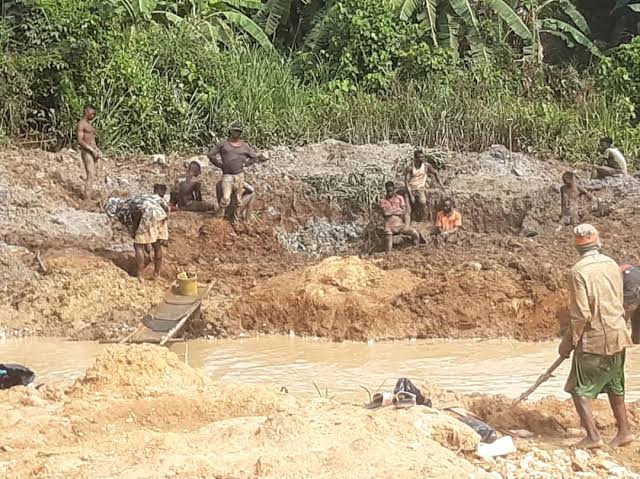
Insecurity, Illegal Mining Threaten Nigeria's Solid Minerals Investment Push
Mining Technologies CEO Joshua Egbagbe says insecurity, illegal occupation of licensed sites and policy instability have cost him foreign technical partners and disrupted operations in Nigeria's solid minerals sector.
About the author
Abiodun Abdullahi
Author / Business and Markets Writer
Abiodun Abdullahi writes for BusinessPress.