OPay Earns More From Lending Than Payments as Profit Hits $90.9 Million
OPay's US listing filing shows lending generated 50.6% of revenue in the first half of 2026, overtaking payments, as profit reached $90.9 million.
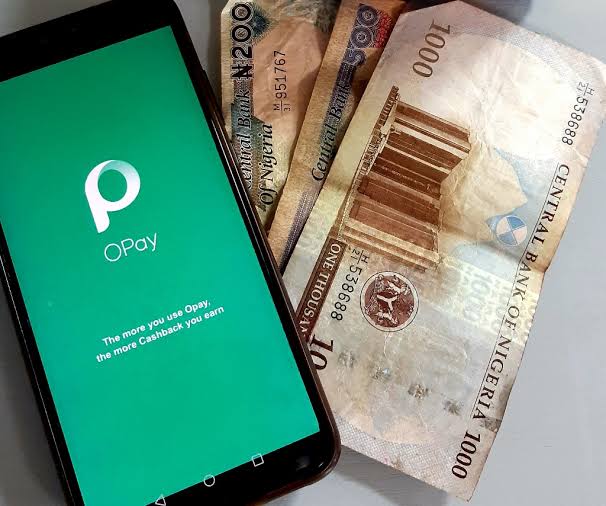
OPay has become a lending company that happens to process payments. That is the striking message buried in the F-1 registration statement the Nigerian fintech filed with the US Securities and Exchange Commission ahead of its planned listing on the New York Stock Exchange.
The filing shows that loan financing generated $236.1 million in the first half of 2026 — 50.6 per cent of total revenue — while payments contributed just 28 per cent. It is a far cry from the cash-transfer and payments identity on which OPay built its brand.
A profit turn from losses
The shift has been accompanied by a dramatic improvement in profitability. OPay reported net income of $90.9 million for the six months ended June 30, 2026, up from $21.7 million a year earlier, on revenue that more than doubled to $467.1 million from $197.5 million.
The turnaround is even sharper over a longer horizon. In 2024, the company lost $50.8 million on revenue of $205.7 million. In 2025, revenue more than doubled to $536.3 million and OPay swung to a $72.5 million profit — meaning the first six months of 2026 alone already beat the whole of 2025 on profit.
A platform measured in hundreds of billions
The scale behind the numbers is substantial. OPay said it had 50.1 million monthly active users and 26.8 million daily active users as of July 31, 2026. Gross transaction value — counting payments, transfers and loans processed across the platform — reached $558 billion in the twelve months to June 2026.
Founded by Chinese billionaire Yahui Zhou, OPay raised $400 million at a $2 billion valuation in 2021 and now operates across Nigeria, Indonesia, Egypt and Pakistan. SoftBank entities own a 6.6 per cent stake before the offering, and Stanbic Africa Holdings has agreed to invest as much as $200 million in a concurrent private placement. Citigroup, Deutsche Bank, Standard Bank and CICC are among the underwriters.
Business Insight
The reweighting toward lending is both OPay's greatest opportunity and its biggest risk. Credit is far more profitable than payments: interest income scales with the loan book, whereas payment fees are thin and competitive. That is why OPay's margins have expanded so quickly and why it can post a near-$100 million half-year profit.
But lending is also where fintechs get hurt. In a market where credit bureaus are still developing and consumer defaults can spike with inflation and unemployment, a large loan book carries real credit risk. The company's ability to underwrite, price and recover loans — not its user count — will determine whether its profitability is durable.
The IPO itself will be a test of investor appetite. The filing comes as surging bond yields and elevated interest rates have cooled demand for new listings, prompting several companies to delay their flotations. OPay's profitability and the Stanbic backstop give it a better chance than most, but the pricing will reveal how much the market believes the lending story.
Background
Nigeria's fintech sector has grown rapidly on the back of a cash-heavy economy, a large unbanked and underbanked population, and mobile penetration. OPay, along with rivals such as PalmPay and Moniepoint, has moved from simple transfers into agent banking, merchant acquiring and, increasingly, credit. The regulator has been tightening oversight of digital lending, which makes compliance capacity another competitive factor.
OPay plans to pursue a secondary listing in Nigeria after completing the NYSE listing, under the ticker "OPAY."
Conclusion
OPay's transformation from a payments app into a profitable lending platform is the most consequential Nigerian fintech story of the year. Its NYSE listing, if completed, will test whether global investors are willing to back that model at scale — and whether a Nigerian company can be valued on earnings rather than on growth promises.
Up next
States, FCT Collect N2.64 Trillion in PAYE as Tax Take Jumps 40.3%
Nigeria's 36 states and the FCT collected N2.64 trillion in PAYE taxes in 2025, a 40.3% rise, as personal income tax dominated sub-national revenue.
More in Finance
See all
Liberia Seeks Nigeria's Insurance Playbook After N720 Billion Recapitalisation
Liberia's central bank has turned to NAICOM for guidance on supervision, after Nigeria's recapitalisation raised about N720 billion and strengthened 50 insurers.

Only 0.3% of Nigeria's Informal Workers Have Pension Cover
Just 245,315 of Nigeria's roughly 84.9 million informal workers are enrolled in a pension plan, exposing a vast retirement savings gap, PenCom data shows.

PenCom Automates Penalties After N36.6 Billion Recoveries
PenCom has automated penalties for employers that delay pension remittances, after cumulative recoveries from defaulters reached N36.6 billion.
About the author
Musa Abdullahi
Finance Correspondent
Musa Abdullahi writes for BusinessPress.
More by Musa Abdullahi
Nigeria Capital Inflows Jump 84% to $10.37 Billion in Q1 2026
Finance4 hrs ago
Nigeria Pension Assets Climb Past N31 Trillion as PenCom Eyes Infrastructure
Finance4 hrs ago
SEC Flags Wayvepay Over Suspected Investment Fraud
Finance4 hrs ago