
Rivian Beats Third-Quarter Estimates on R2 Momentum
Rivian reported 38% revenue growth, record deliveries and R2 as its best-selling vehicle, then raised 2026 guidance across every metric.
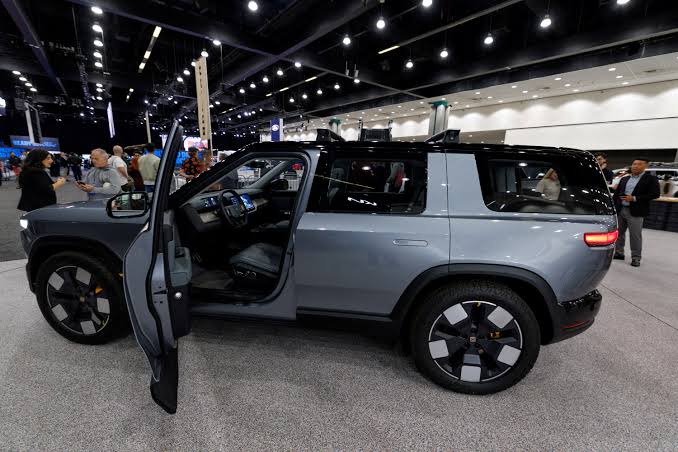
Rivian Automotive reported a 38% increase in third-quarter revenue on 29 October, produced and delivered more vehicles in a single quarter than ever before, and raised its full-year guidance on deliveries, adjusted losses and capital spending, in a sign that its lower-priced R2 sport-utility vehicle has moved from development project to commercial engine.
According to the company's results release , revenue reached $2.155 billion, against $1.558 billion a year earlier, while the company produced 19,751 vehicles at its Illinois plant and delivered 19,248, a record for both measures. Deliveries rose 46% year on year and 58% from the second quarter.
R2 changes the revenue mix
The most commercially significant item in the report was the structure of sales. R2, in its first full quarter of customer deliveries since launching in June, became Rivian's best-selling vehicle by volume in the third quarter, outselling both the R1 range and the electric delivery vans it built its early reputation on.
That shift alters the way an investor should read the company's numbers. R1 vehicles and vans carry the higher unit pricing and much of the fixed-cost base, while R2 is priced for a wider market, so a mix dominated by R2 improves volumes at some cost to vehicle-level margins. The company said cost of goods per unit fell by more than $12,000 quarter on quarter because of higher R2 volumes and fixed-cost leverage, meaning the mix change arrived alongside improving unit economics rather than in spite of them.
Where the revenue is actually coming from
Rivian's consolidated gross profit was $176 million, an 8% gross margin, and adjusted EBITDA losses for the quarter stood at $435 million. Automotive revenue was $1.55 billion, up 36%, including $81 million of regulatory credits, while software and services revenue rose 45% to $605 million, of which $354 million came from the joint venture established with Volkswagen Group for electrical architecture and software development.
The software line has become a practical second business rather than an accounting convenience. Volkswagen's payments are spread through about mid-2028, the Autonomy+ subscription product launched in April is taking customers above plan, and the rest of the segment includes services and the company's own vehicle software subscription business. For a company still dependent on external funding, revenue that does not depend on selling each vehicle individually is a means of staying independent while volumes mature.
Guidance improved across the board
The company raised full-year delivery guidance to between 67,000 and 70,000 vehicles from 65,000 to 70,000, calling for R2 to represent the majority of deliveries in the fourth quarter. It improved its adjusted EBITDA outlook by $100 million at the midpoint, to a loss of between $1.75 billion and $1.85 billion, partly because of a tariff-related receivable booked in the third quarter and better regulatory-credit revenue. It also cut planned capital expenditure by $300 million at the midpoint, to between $1.40 billion and $1.50 billion, which management attributed to the timing of spending on the Georgia plant.
Reaching the new delivery range means a record fourth quarter, because Rivian had delivered 41,807 vehicles through September. But because the guidance came a month into the quarter, after October production was known, the confidence it carries is greater than an average year-end specification.
Liquidity and what it must carry
The outstanding question is financing. Rivian ended the quarter with $5.502 billion in cash, cash equivalents and short-term investments, and total liquidity of $6.095 billion including its revolving credit facility, a figure that rises to $7.095 billion on a pro-forma basis once the $1 billion ten-year non-recourse term loan from Volkswagen received in October is included.
Set against quarterly free cash flow of negative $1.124 billion, that funding covers roughly a year and a half of present burn, which is why the R2 ramp, regulatory-credit revenue and the Volkswagen JV payments matter: together they narrow the gap mentally drawn between a two-money-burn quarter and an operation that funds its next major plant expansion. For watchers of the African EV and auto-components market, the quarter reinforces the same lesson the major global programmes have taught: software and contract development work now carry enough weight, and at enough predictability, that they can be separated from the vehicle business itself when valuing a young manufacturer.
Management change at the finance desk
Chief financial officer Claire McDonough is stepping down, and a successor will lead on an interim basis while the company searches for a permanent appointment, a development investors should note without overstating it. Founder and chief executive RJ Scaringe said the team had great results with R2 and that customer feedback had been exceptional, adding that the company's autonomy platform was progressing rapidly. The change arrives at a moment of strong operational results rather than at a funding crisis, which affects how heavily it is likely to be weighed.
Up next
Wall Street Weekend Slide Puts Logic Behind Rates Habits
S&P 500 fell 1.82% and Nasdaq 2.86% on Friday as weak Intel guidance recharged worries about AI spending, payback and valuations.
More in Business
See all
University Press Profit Eases as Receivables Build
University Press reports lower half-year profit and revenue, while trade receivables rise sharply from the March year-end.

Aviation Ministry Approves Lagos Airport Monorail Design as Financing Talks Advance
The five-stop line from Ikeja Railway Station to Murtala Muhammed International Airport Terminal 1 has an approved design but no published cost or construction schedule, while the terminal reconstruction it is meant to serve is already under way.

NCDMB Begins Rollout of Oil and Gas Component Manufacturing Study in Port Harcourt
Only 18 of about 60 indigenous companies identified in a study commissioned in 2022 met the qualification criteria, and implementation of the report has begun three years after it was submitted.
About the author
Amaka Obi
Senior Business Reporter
Amaka Obi writes for BusinessPress.


