
Federal Government Introduces 30-Day Petrol Discount at NNPC Stations
The federal government has rolled out a 30-day petrol discount at NNPC stations, a temporary measure to ease household costs amid lingering reform pressures.
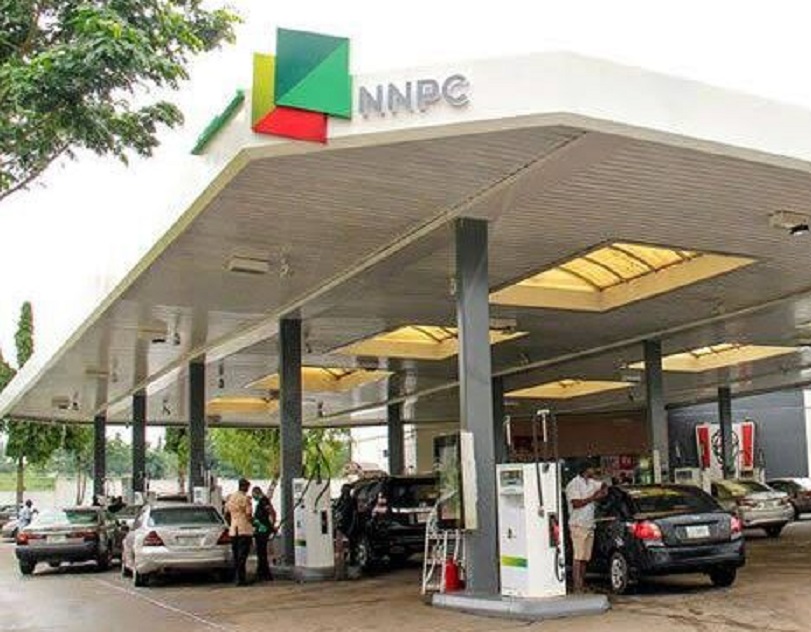
The federal government has introduced a 30-day petrol discount at NNPC retail stations, a time-limited measure designed to cushion households from the cost of fuel while the downstream market adjusts to rising domestic refining capacity.
The discount reduces the price motorists pay at the pump at NNPC outlets, which are among the most widely used in the country. It is positioned as temporary relief rather than a return to the subsidy regime that the government dismantled, a reform that sent petrol prices soaring and stoked public anger.
Why the government acted
Cost of living remains the most politically potent issue in Nigeria. Although inflation has begun to moderate, food and transport costs are still far above their levels before the subsidy was removed, and wages have not kept pace. Fuel prices feed directly into transport fares, food distribution costs and the price of almost everything else, so any reduction has an outsized effect on household budgets.
The government is also under pressure from organised labour, which has threatened industrial action if fuel prices and the minimum wage are not addressed. The discount is partly a response to that pressure — a way to show that the administration is listening without abandoning its reform programme.
A 30-day discount buys time, not a solution. If prices rise again when it ends, the political problem returns with interest.
The fiscal question
The critical question is who pays for the discount. If the cost falls on NNPC's balance sheet, it weakens a company that is central to the government's finances. If it falls on the treasury, it is effectively a subsidy by another name, with the same fiscal drain that made the original scheme unsustainable.
The government insists the discount is affordable because of the Dangote refinery's output and the resulting reduction in import costs. Cheaper domestic supply, the argument goes, means that stations can lower prices without an explicit subsidy. That logic holds only if the underlying economics genuinely support lower prices and if the discount does not become permanent.
A market in transition
Nigeria's downstream sector is being reshaped by the refinery's entry and by competition among marketers. In the long run, more domestic refining should mean lower and more stable prices. But the transition is uneven, and consumers bear the brunt of the volatility.
The 30-day window is short. It gives the government room to manage expectations and to assess whether the market can deliver sustainable relief. What happens on day 31 will determine whether the measure was a bridge to a cheaper fuel market or the beginning of a new fiscal commitment.
Up next
IMF Warns Nigeria's Fast Growth Is Failing to Lift Millions Out of Poverty
The IMF has warned that Nigeria's improving economic indicators are not reaching the poorest households, questioning whether the country's reforms are creating shared prosperity.
More in Business
See all
Nigeria's sugar plan targets 835,000 tonnes of new annual capacity
Ten greenfield projects form part of a $7.1 billion, 10-year programme that could reduce import demand if financing, farms and factories are delivered on schedule.

World Bank Group programmes target $5.79 billion in private capital for Nigeria
The development lender says its 2026 interventions combine credit, guarantees and investment to draw commercial funding into agriculture, finance and job creation.
Tier-one banks post stronger capital ratios ahead of new thresholds
Higher retained earnings have lifted buffers, giving lenders room for loan growth.
About the author
Amaka Obi
Senior Business Reporter
Amaka Obi writes for BusinessPress.


