
Fidelity Bank Repays 400m Eurobond At Maturity
Fidelity Bank redeemed its 400 million dollar Eurobond at maturity, underscoring the Nigerian banking sector restored external balance-sheet strength.
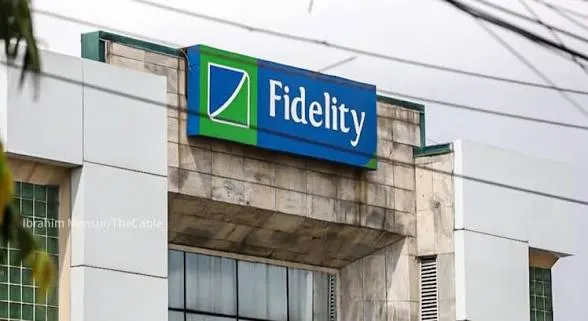
Fidelity Bank has redeemed its $400 million Eurobond at maturity, retiring the instrument in full from its own resources — a repayment that closes one of the Nigerian banking sector's visible external maturities on schedule and adds to the balance-sheet evidence that the country's recapitalised banks are carrying their foreign-currency obligations from a position of liquidity strength rather than stress.
The redemption, reported through Nigeria's banking media this week, sees the mid-tier lender discharge the dollar obligation at its contractual maturity date without refinancing pressure — an execution detail whose significance, in a sector where debt calendars have been closely watched for stress signals since the 2023-2024 devaluation cycle, is precisely its normality. Banks' external obligations are the market's periodic test: maturities that arrive and are paid confirm creditworthiness to the international investor base whose confidence the industry's restoration requires.
Why scheduled repayments carry market information
Eurobond redemptions are the banking sector's public balance-sheet audit. Each maturing instrument tests the paying institution's liquidity management — the accumulation of foreign currency through trade finance flows, diaspora remittances, correspondent balances and treasury operations whose surplus the CBN's high-rate environment has rewarded — and the clean redeeming of a $400 million instrument on maturity day demonstrates that Nigeria's banking system holds the dollar plumbing its balance sheets advertise. The alternative outcome, where issuers seek refinancing arrangements whose stress pricing signals weakness, is a market story of a different kind; Fidelity's episode reads as the reassuring one.
For the international investor base, the redemption lands as verification. The Nigerian banks' Eurobond market — through which the country's lenders have raised foreign-currency capital across the past decade, with spreads that traced the sovereign's distress and recovery — is priced off exactly this kind of repayment behaviour. Each maturing obligation honoured at face value tightens the credit narrative for the sector's remaining outstanding paper, whose secondary-market spreads have steadily normalised through 2026's recovery.
The sector's debt calendar as a confidence schedule
The Nigerian banking industry's 2026 external obligations form a calendar whose clearing the market follows instrument by instrument. The sector's Eurobond maturities — spread across the year, with several institutions carrying redemptions in the second half — have been managed against the operating environment's transformed currency dynamics: with the naira's consolidation and the reserves at record levels, the foreign-exchange access whose provision the 2024 crisis threatened has been fully restored, ending the flat-footed refinancing conversations that cycle's stress produced.
The Central Bank's own foreign-exchange plumbing continues to support scheduled repayments: the interbank market's liquidity, the repatriation guarantees whose reliability the investor community monitors and the forward-market tools whose availability lets treasurers hedge rather than gamble on maturity dates. The improving external account — reserves at multi-year highs, crude receipts strengthening and portfolio inflows returning — has turned what was a systematic fragility two years ago into routine treasury management.
What it means for Fidelity's growth ambitions
For the bank, the redemption clears the deck for the growth phase whose capital the industry's recapitalisation programme has been funding. Fidelity — one of the sector's fastest-growing franchises through the 2020s, whose retail and digital banking expansion has won customer scale across the group's network — is among the lenders that used the recapitalisation window to strengthen its equity base for regional and business-line expansion. A clean external debt calendar complements that strategy: with the maturing instrument retired from retained liquidity rather than refinanced, the balance sheet's flexibility for new business extends into the season's lending opportunities.
There is also a funding-strategy read: retiring a maturing Eurobond does not exit the market permanently, and banks that repay from internal resources keep the option of returning to the international market on stronger terms when growth financing warrants. A clean repayment record — the instrument honoured at face value without negotiation — is precisely the track record whose pricing benefits compound across subsequent issuances.
The broader sector read
The Nigerian banking sector's 2026 has delivered the reporting season the market's valuation reset required: nine-month profits at record aggregates, asset quality recovering through the post-devaluation seasoning and external obligations repaid on schedule. The recapitalisation programme whose capital raises transformed the industry's balance sheets has begun converting from survival engineering into growth capacity, and the integration costs — technology programmes, integration arrears and the demands on management attention — are progressively absorbed.
For the currency market and the macro framework, bank repayments of this kind are not merely sector news: they consume foreign currency whose supply the external account must support, and the year's pattern of clean redemptions is itself a source of the confidence that keeps the market's stability intact. Each maturing instrument the system clears without drama dissolves a future stress story — the debt-calendar episodes whose volatilities the market no longer carries through 2026's consolidation.
Fidelity's $400 million repayment on maturity is therefore a small line with a large read-through: the Nigerian banking sector's foreign obligations are being met from strength, the international capital market's confidence is being repurchased one clean repayment at a time, and the recapitalised industry's balance sheets — the biggest single factor behind the year's record corporate profits — are now demonstrably carrying their external calendar without strain.
Up next
US Midterms Look Set To Spare Global Markets
JPMorgan strategists expect limited market impact from the US midterm elections as investors price policy gridlock and look past the vote.
More in Finance
See all
BNP Paribas profit rises 13.5% as revenue outpaces costs
Institutional banking led divisional growth as the group improved operating efficiency while credit costs remained a deduction from earnings.

Sterling profit rises 21% but restated earnings per share decline
Wider net interest income strengthened group earnings, but a larger tax charge and the share-base comparison qualify the gain.

Infinity Trust loan growth draws on borrowings as funding costs increase
Customer loans rose to N36.69 billion as borrowing grew faster than deposits. Inconsistencies in the filing require clarification.
About the author
Musa Abdullahi
Finance Correspondent
Musa Abdullahi writes for BusinessPress.
More by Musa Abdullahi
CBN Caps Payment Firms Dominance With Market Share Limits
Finance46 mins ago
N13.79trn Headed For Money Market As OMO Eases
Finance3 hrs ago
Egypt Floats Banque du Caire in $650m IPO
Finance

