
Analysts See NGX Crossing N200 Trillion by December as Refinery Listing Looms
From N161.59 trillion after a losing week, capital-market analysts project a year-end push past N200 trillion on the Dangote Petroleum Refinery listing and returns above 57 per cent.
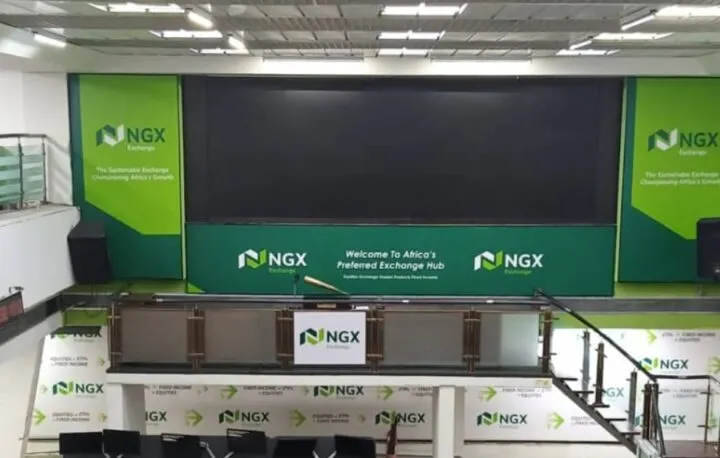
Nigeria's stock market could cross N200 trillion in capitalisation by December, with full-year returns exceeding 57 per cent, if capital-market analysts' projections reported by Vanguard play out — and the catalysts they name are specific: the anticipated listing of Dangote Petroleum Refinery on the Nigerian Exchange, strengthening investor confidence and a final earnings surge.
The projection is not idle optimism about a small market. The NGX closed the first week of November at N161.59 trillion in market capitalisation after a N3.52 trillion weekly loss, meaning the N200 trillion call requires roughly N38 trillion of new quoted value in seven weeks. A single listing of the refinery's scale — the $20 billion complex whose IPO already missed its 10-million-retail-investor target but was substantially oversubscribed — would carry much of that load on its own.
The refinery listing is the whole ballgame
Dangote Petroleum Refinery's potential admission to the exchange is the largest would-be listing in Nigerian market history, and the arithmetic explains why analysts anchor year-end forecasts to it. An asset with output already exceeding Nigeria's daily petrol consumption, exports surpassing domestic demand and a declared ambition to list would enter the index as one of its largest constituents on day one. Its IPO order book — reported at N6.4 trillion earlier in the issuance process — signals the depth of waiting demand.
The listing also solves a market-structure problem. The NGX's rally has been criticised for concentration: a handful of banks, cement and telecom names carry the index. A new mega-cap in the energy-processing sector diversifies the index's earnings base and gives pension funds and asset managers — sitting on N8.31 trillion parked at the central bank's deposit facility — a domestic asset large enough to absorb meaningful allocation.
What 57 per cent requires
The return projection is less exotic than it looks. The exchange entered the week up 59.93 per cent year-to-date even after the sell-off; holding those gains plus a modest December rally clears the bar. The bull case rests on three supports: nine-month earnings that were collectively strong across banks and industrials, a naira that has appreciated 6.26 per cent over twelve months and removed the devaluation discount on naira assets, and fixed-income yields that — at 15.8 per cent on a one-year bill — are high but no longer rising, which historically marks the point equities re-rate.
The bear case is equally concrete: the market just lost N3.52 trillion in a week of broad selling, 57 stocks declined, and the heavyweights that drove the 63-per-cent October peak — Dangote Cement, BUA Foods, Aradel, the banks — were the ones sold.
Who actually buys N38 trillion of new value
The honest answer is that most of it arrives through one listing rather than organic appreciation. Pension fund assets under administration have been growing toward record levels, foreign portfolio investors are re-entering on currency stability, and the retail base the refinery IPO courted — ten million target investors — represents a structural deepening of the market's participation that outlasts any single print of the index.
The election-fever element of the Vanguard report deserves its own weight: with the presidential election in January 2027, incumbent-cycle spending and policy largesse historically flow into Nigerian equities in the final quarter before a vote, a pattern local analysts cited explicitly.
The risk register
Timing risk compounds the others: a listing that lands in mid-December still clears the target arithmetically but leaves no trading window for the market to digest it, and index-inclusion mechanics mean the quoted-value jump arrives on the day of listing while the institutional buying around it takes weeks. The projection, in practice, is a bet on a specific date as much as on a market.
Three things break the N200 trillion call: the refinery listing slips again, global AI-led risk aversion deepens and pulls foreign money from frontier markets, or oil prices — Brent settled at $98.32 Friday — slump far enough to squeeze the federation account that part of this rally is priced against. But the direction of travel, from a N161.59 trillion base after a losing week and still up nearly 60 per cent on the year, makes December's target a question of listing dates rather than market direction.
Up next
Profits Up, Prices Down: The NGX Sell-Off Just Made Some Blue Chips Genuinely Cheaper
Nine-month results covering roughly 90 per cent of the exchange’s value show names like MTN Nigeria earning 55 per cent more while costing less — and a screen for telling cheap from falling.
More in Markets
See allAradel hands NGX a negative week as profit-taking outweighs the oil rally
Aradel fell 6.33% in the week ended October 23, 2026, the single biggest drag on the Nigerian Exchange, with Friday turnover of N4.20bn pointing to institutional distribution even as Brent rallied to a six-month high.
NGX Market Capitalisation Slips Below N160 Trillion as Dangote Cement Leads Profit-Taking
The All-Share Index fell 0.91 per cent to 245,278.34 points and market capitalisation dropped N1.47 trillion to N159.257 trillion as Dangote Cement declined 5.5 per cent.
Dangote Refinery IPO Draws Investors From Over 90 Countries
Dangote Petroleum Refinery says its initial public offering has drawn subscriptions from more than 90 countries, including investors in 51 of Africa's 54 nations, as the offer heads toward its October 27 close with no further extension planned.
About the author
Fatima Bello
Analysis Editor
Fatima Bello writes for BusinessPress.
More by Fatima Bello


