
Uganda’s Central Bank Meets Again as the Shilling Battles Back From October’s Slide
Traders expect a second, smaller hike at the November 9 meeting after an emergency increase helped the shilling recover to 4,040/4,050 per dollar from 4,345/4,355.
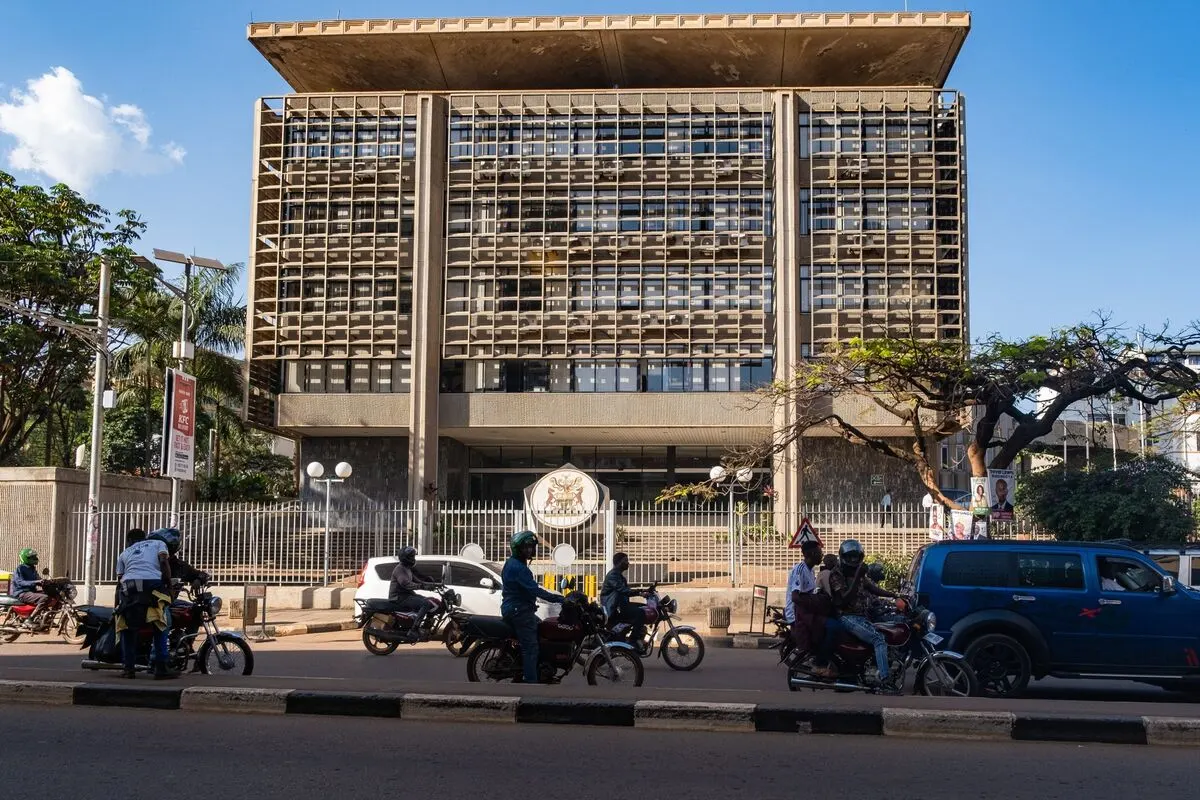
Uganda's central bank meets on Monday, November 9, less than a month after an emergency rate increase, with traders expecting a second, smaller hike that would confirm one of the fastest monetary-policy reversals in East Africa — and a shilling that has clawed back most of the ground it lost in October.
Commercial banks quoted the shilling at 4,040/4,050 to the dollar ahead of the decision, a sharp recovery from 4,345/4,355 at the previous Thursday's close, according to Reuters reporting from Kampala. The rebound followed the central bank's abrupt hike late last month, a move that initially failed to arrest the currency's slide before tight liquidity and intervention began to bite.
A second hike, softer this time
"We anticipate another hike but of a lower magnitude, so that sentiment or expectation and also the fact that liquidity is really scarce will boost the shilling," one Kampala trader told Reuters. The framing captures the Bank of Uganda's dilemma: the emergency increase stabilised expectations but only after a lag, and another aggressive move risks choking private credit in an economy where inflation — most recently measured at 5.8 per cent — is elevated but not runaway.
The sequencing matters for the wider region. Uganda's October emergency action was the region's most dramatic policy response to dollar strength and seasonal import demand, and its outcome is now the live test of whether front-loaded tightening can repair a currency without a full-blown balance-of-payments crisis.
What moved the shilling — and what sustains it
Three forces are doing the work. The first is the rate itself: with the policy rate sharply higher, carrying shillings for a week now earns a premium that offsets expected depreciation, encouraging importers to buy locally rather than hoard dollars. The second is scarce shilling liquidity, which mechanically supports the currency whenever corporates convert. The third is regional risk sentiment, which improved after the United States midterm elections produced expectations of a steadier policy environment and softened the dollar's advance against emerging-market currencies.
The sustainability question is seasonal. East African import bills swell toward December as traders stock consumer goods, and Uganda's energy import needs are partly dollar-indexed. Traders told Reuters they expect the shilling to keep a firming tone through the week to Thursday, but the currency's October experience shows how quickly that calculus can flip when import payments cluster.
The regional monetary map
Uganda's decision lands against a strikingly mixed regional backdrop. Kenya's shilling is forecast to hold steady around 129.85/130.05 per dollar, and its inflation print of 7.3 per cent keeps the focus on growth rather than emergency tightening — Stanbic's purchasing managers' index for October, at 52.5, signalled the strongest business conditions of the year. Ghana's cedi is expected to trade range-bound near 11.67 to the dollar with inflation most recently at 5.5 per cent, while Zambia's kwacha faces continued pressure from hard-currency demand for energy and agricultural imports, quoted at 20.62 per dollar.
Nigeria, the region's largest economy, presents the opposite problem: an already-high 23 per cent policy rate, an official naira rate near N1,346.79 and reserves above $55 billion give the Central Bank of Nigeria room to defend rather than repair.
What it means for business
For Ugandan importers and manufacturers, a second hike raises working-capital costs immediately, even as it protects them from a repeat of October's currency shock. For regional investors, the episode is a reminder that East African frontier yields now price meaningful currency risk: a 400-shilling swing in the dollar rate inside a week is the kind of move that erases a quarter of carry returns.
The Bank of Uganda's communique, due after Monday's meeting, will be parsed for one thing above all — whether the committee signals that the emergency phase is over. If it does, the shilling's recovery has a credible anchor; if it hints at more aggressive moves to come, the market may decide the currency's stability is being rented at rates the real economy cannot afford for long.
Up next
Nigeria’s Cement Giants Rake in N5.8 Trillion as Dangote Cement Swings to Net Cash
Dangote Cement, Lafarge Africa and BUA Cement posted combined nine-month revenue of N5.8 trillion, up 21 per cent, with Dangote Cement profit up 31.2 per cent to N974.8 billion.
More in Finance
See all
CBN Sets N10bn and N15bn Capital Floors as Stablecoin Rules Take Shape
A circular dated November 5 requires naira-backed issuers to hold N10 billion in paid-up capital, dollar-pegged issuers N15 billion, with 100 per cent reserves, next-day redemption and no offshore exemption.

Investors Bid N2.05 Trillion for N800bn of Treasury Bills as Liquidity Swells
The 364-day bill drew N1.99 trillion of bids and held its 15.80 per cent stop rate while banking-system liquidity climbed to N8.51 trillion and SDF placements reached N8.31 trillion.

October CPI Arrives Without a Year Rate as December Hike Odds Hit 76%
The last inflation print before the Fed meets publishes no year-on-year headline because of the shutdown data gap, leaving monthly moves to settle a 76 per cent hike market.
About the author
Musa Abdullahi
Finance Correspondent
Musa Abdullahi writes for BusinessPress.


