
The Data Week That Decides the Year: CPI, China Trade, UK GDP and PPI
A five-day calendar packs the last CPI before the Fed meets, China’s trade in the producer-price era, UK growth and PPI — with AI earnings running alongside.
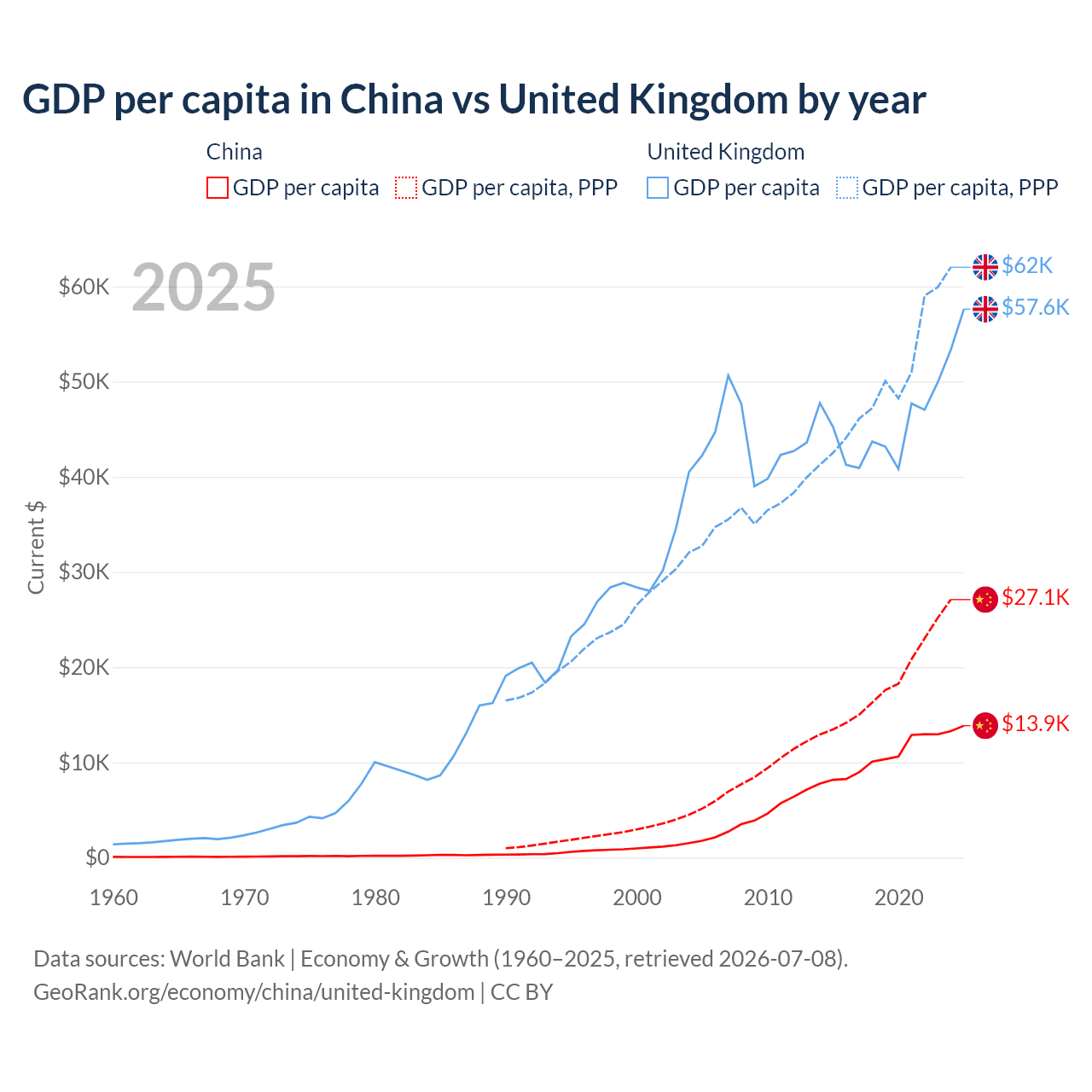
The week ahead is the densest data calendar of the final quarter: the United States prints its last consumer-price reading before a December Federal Reserve decision that money markets already price as a coin-flip hike, London reports growth, China publishes trade, and Tokyo's corporate-goods index closes the week out — a five-day stretch that will decide whether the world's disinflation story holds through year-end.
The anchor is Tuesday's US CPI at 8:30 a.m. Eastern, where consensus expects a 0.3 per cent monthly headline rise and roughly 0.2 per cent core — but this release carries an unusual handicap: because of the 2025 shutdown data gap, the report publishes no year-on-year headline, making monthly moves the market's only decision input. With Friday's jobs report already pushing December Federal Reserve hike-odds to about 76 per cent on the CME's FedWatch futures and 75-77 per cent on prediction markets Kalshi and Polymarket, the CPI is effectively the last chance saloon for the no-hike case.
Tuesday: CPI under an alternative rulebook
The September print — a 0.6 per cent monthly shock that pushed year-ago comparisons to 3.7 per cent — set the inflation fence the October data is judged against. A 0.2-0.3 per cent October monthly reading would mark the first deceleration in three months and validate the bond market's own view (Cleveland Fed's five-year breakeven at 2.26 per cent, ten-year yields steady below 4.88 per cent); anything above 0.5 per cent would extend the acceleration streak and cement the December hike. Federal funds already sit at an effective 3.88 per cent, and the committee's guidance — New York Fed's John Williams saying inflation is "still too high" — has essentially pre-written both outcomes' communiqués.
For African markets the US print carries weight through the dollar leg. The dollar index printed its strongest one-session gain in five months on the jobs report and held near 102.2 into Monday; a firm CPI would extend that strength, tightening trade finance and tempering frontier-market portfolio appetite, while a soft one would let the current risk-on bounce in EM assets extend through the week. Nigeria's equity market, which lost N3.52 trillion for the week just gone on exactly these global flows, is a direct consumer of Tuesday's outcome.
Wednesday: China's trade in the producer-price era
China's October trade data lands mid-week against a price backdrop that has fundamentally changed: factory-gate inflation printed at a 4.5-year high of 5.7 per cent on Monday, while consumer prices slowed to 0.7 per cent. The trade report will show through which channel that upstream cost surge is travelling — exported in Chinese goods prices (a potential global inflation refueller) or absorbed in manufacturer margins (a competitive-price gift to Western and African buyers that would sustain goods disinflation). Either reading reshapes the global inflation forecast, and the commodity leg — China's iron-ore purchases at a three-year-low $90-93 a tonne, crude import volumes under a Brent price that slid 16 per cent last week — will set the direction for Africa's commodity earnings assumptions heading into 2027 budgets.
Also watch for the policy reaction: China's price split (weak consumer, hot upstream) is precisely the configuration that historically forces Beijing to choose between demand stimulus and supply-side intervention, and any signal on property-sector support or industrial-capacity discipline that arrives alongside the trade data will move global industrial metals immediately.
Thursday: UK GDP and Japan's cost gauge
Britain reports third-quarter GDP Thursday with BCC and City forecasts around 0.7 per cent quarter-on-quarter growth — a strong reading that will test the Bank of England's fresh decision to raise Bank Rate to 4.0 per cent, and one whose outcome will shape gilt and sterling pricing through year-end. Japan prints corporate goods prices (CGPI) the same day, the cheapest read on the upstream inflation pipeline that has been building across commodity markets; Bank of Japan officials hinting at another policy adjustment this winter will measure the CGPI's acceleration as their primary evidence.
Friday closes the week with the US producer price index — forecast at 0.4 per cent month-on-month — and the monthly US budget statement. PPI is the CPI's leading indicator: a hot figure would confirm the upstream cost-push thesis for early 2027, a tame one would extend the goods-disinflation runway that emerging markets' easing cycles have ridden all year.
The earnings calendar running alongside
The data week is set against an earnings calendar equally loaded with AI-read-throughs: SoftBank reports Tuesday as the largest listed investor in AI-linked private assets, CoreWeave — the purest AI-infrastructure name on the tape — reports the same day with consensus expecting a $1.27 loss per share on $3.54 billion of revenue, and Vodafone's half-years (with majority-owned African affiliate Vodacom reporting the same day) lead the telecoms read-through. Cisco and Applied Materials close the earnings week Thursday, the latter the semiconductor industry's largest equipment maker and the market's preferred gauge of how the AI buildout's capital-spending plan is actually running.
The combined weight means this week is a genuine trend-setter rather than a data-filling exercise. The global rate debate enters December with an unresolved hike question; the global inflation debate enters it with a fresh supply-side headwind from China; and African markets have spent the last week absorbing exactly the dollar-and-volatility impulses this calendar will either confirm or reverse.
Five sessions, four central-bank inputs, two continents' price puzzles and one December rate decision hanging over all of it: the last clean market-structure week of 2026 has arrived, and the discount rates the world's assets trade on into the new year will be set inside it.
Up next
Asia Roars Back as Nikkei Gains 3.5% and TSMC Jumps 5.6%
The MSCI Asia-Pacific index rose nearly 2 per cent after last week’s 4.6 per cent slide, with chips leading and US futures holding the bounce hostage.
More in Economy
See all
“The Emergency Is Over”: Tinubu Pivots From Stabilisation to Prosperity at Lagos Trade Fair
Opening the 40th Lagos International Trade Fair, the president cited an 18-year reserves high of $55.07bn, 14.63 per cent inflation and 4.43 per cent growth as the foundation repaired.

Kenya’s Private Sector Wakes Up: PMI Hits 52.5, Its Best Reading of 2026
October’s Stanbic PMI delivered Kenya’s first expansion in eight months, joining Nigeria’s five-month growth streak — with inflation still running at 7.3 per cent across the region.
Eurozone Inflation Hits 4% as Lagarde Warns Prices Will Stay High
Annual inflation reached its highest level since September 2023 on an energy-driven surge, but the ECB president declined to commit the council to a December hike.
About the author
Fatima Bello
Analysis Editor
Fatima Bello writes for BusinessPress.
More by Fatima Bello


