
Nigerian Breweries Clears 72bn Losses As Profit Surges 33%
Nigerian Breweries third-quarter profit return allows it to clear N72.17bn accumulated losses and look toward dividend resumption.
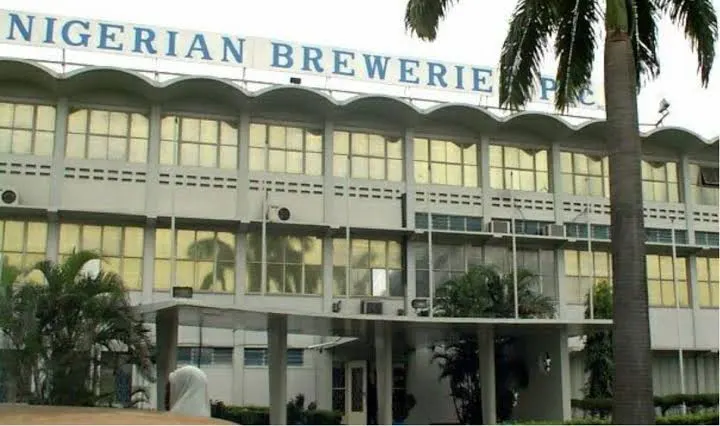
Nigerian Breweries Plc has returned to third-quarter profit for the first time since 2022, cleared an accumulated loss position that once stood at more than N72 billion, and reported a 33 percent jump in nine-month profit after tax to N114.1 billion, confirming that the country's biggest brewer has moved from restructuring survival mode to a rebuilt balance sheet capable of resuming shareholder payments.
The brewer's nine-month results, published around the NGX's third-quarter reporting season, showed group net revenue rising five percent to N1.10 trillion from N1.05 trillion a year earlier, while finance expenses fell substantially and gross profit improved, food industry publication Food Business SEA reported. Quarterly performance marked the turn: a net profit of N21 billion for the three months ended September 30 against a net loss of N4 billion in the same quarter of 2025 — the first third-quarter profit after losses in the same quarter in each year since 2022.
The balance sheet reset changes the dividend conversation
The most consequential line in the accounts is on the liabilities side. Group retained earnings turned positive at N34.79 billion as of September 30, 2026, Nairametrics reported, swinging from an accumulated deficit of N72.17 billion at the end of December 2025 — an improvement of nearly N107 billion within nine months. The parent company's position also moved from a N77.09 billion accumulated deficit to positive retained earnings of N37.01 billion.
That shift matters for concrete commercial reasons. Companies carrying negative equity need board permission, and in many cases regulator patience, before distributions. With the accumulated losses fully eliminated, the brewer's path to dividend resumption — a matter repeatedly raised by shareholders since the 2023-2024 naira devaluation crisis drove finance costs into triple-digit percentages — is now formally open subject to board resolutions and meeting approvals.
How the recovery was engineered
The turnaround rests on three legs. First, cost discipline: lower finance expenses after deleveraging efforts reduced the drag that had consumed operating profit in prior periods, when naira weakness multiplied the naira value of the company's foreign-denominated debt. Second, margin repair: improved gross profit reflects pricing power, input-cost management under the naira's more stable 2026 conditions and portfolio strength. Third, revenue quality: an admittedly modest five percent revenue gain reflects the challenging consumer environment, but the composition improved as premium brands including Heineken and Desperados contributed to market share gains, lending resilience to gross margin at price points the brewer could defend.
Management framing acknowledged the trade-off. The company noted that volumes and net revenue declined during the third quarter even as profits rose, positioning the result as a milestone in a repair programme rather than a demand-led boom. For a company still managing an inflation-pressured consumer base, profit-led growth ahead of volume remains the correct near-term strategy, though a return to volume growth will define whether the recovery becomes durable.
What it means for Nigeria's consumer goods sector
Nigerian Breweries' health has implications well beyond its own shareholders. The brewer is one of the country's largest manufacturing employers and among the biggest corporate income tax payers in the Fast Moving Consumer Goods sector, and its distribution network moves product through hundreds of thousands of retail outlets. A profitable company invests more in its trade structures, which supports the working capital of distributors and the viability of small outlets dependent on brand support.
The company's recovery also speaks to a broader dynamic across Nigerian consumer goods companies that rode out the devaluation crisis: the reopening of forex stabilisation since late 2024, moderating inflation and reduced finance costs have combined to convert operating improvements into sustainable balance-sheet strength. Rivals' recent results — including recovery in other food and beverage names' profitability this season — suggest the sector has crossed the most dangerous phase of its currency-driven crisis.
Competitive implications in the brewing market
Strategically, the company's ability to defend premium portfolio share matters most. The premium segment, in which Heineken competes against international prestige brands and newer entrants, delivers high-quality margins and is where shareholder value gets built amid consumer price sensitivity. The company's disclosure that Desperados contributed to share gains acknowledges this dynamic — where portfolio mix matters as much as headline volume to long-term earnings quality.
Investors will next watch for capital allocation signals. With deleveraging progressing and accumulated losses gone, options include dividend resumption, further debt paydown in the interest of capital structure and continued capacity investment in a recovering consumer market, each of which trades off against the other given the still-high cost of capital in the Nigerian economy. The company's profitability trajectory now gives it room on all three — a position distinctly unmatched by the brewer's 2024 posture.
The road ahead
Nothing in the result eliminates macroeconomic risk. Household purchasing power remains stretched by earlier inflation, energy and packaging input costs remain sensitive to the exchange rate, and premium demand cannot fully insulate the brewer from any future currency stress. But Nigeria's consumer economy runs on corporate health stories, and the brewer's return to profitable operations — with its accumulated losses gone, its taxes paid and its distribution networks liquid — is part of the demand-side engine sustaining the wider recovery. For a market that has priced Nigerian Breweries as a turnaround story, the nine-month financials shift those expectations from repair to outperformance.
Up next
Nigeria Opens 40 Oil Blocks For Global Bidding
NUPRC opens its 2026 bid round portal on November 20 with 40 oil and gas blocks on offer to international and domestic investors in Abu Dhabi.
More in Corporate
See all
Nigerian Breweries profit rises 33% as financing costs ease
A wider gross margin and lower net finance costs lifted earnings, while third-quarter revenue declined and distribution expenses increased.

Guinness Nigeria Nine-Month Profit Climbs 53 Percent
Guinness Nigeria nine-month profit rose 53 percent as finance costs eased and the premium portfolio carried margins through the consumer squeeze.

Julius Berger Builds Profits As Diversification Bleeds
Julius Berger construction-led pre-tax profit climbs even as diversification units continue recording losses through the nine-month reporting cycle.
About the author
Ngozi Eze
Companies Reporter
Ngozi Eze writes for BusinessPress.
More by Ngozi Eze

