
Sunbeth Global Concept draws more than N220 billion for its N150 billion commercial paper programme amid the cocoa boom
The Nigerian agricultural exporter's commercial paper offer was oversubscribed by 46.7 per cent, with proceeds earmarked for cocoa procurement and expansion, underlining deep investor appetite for food and agribusiness paper.
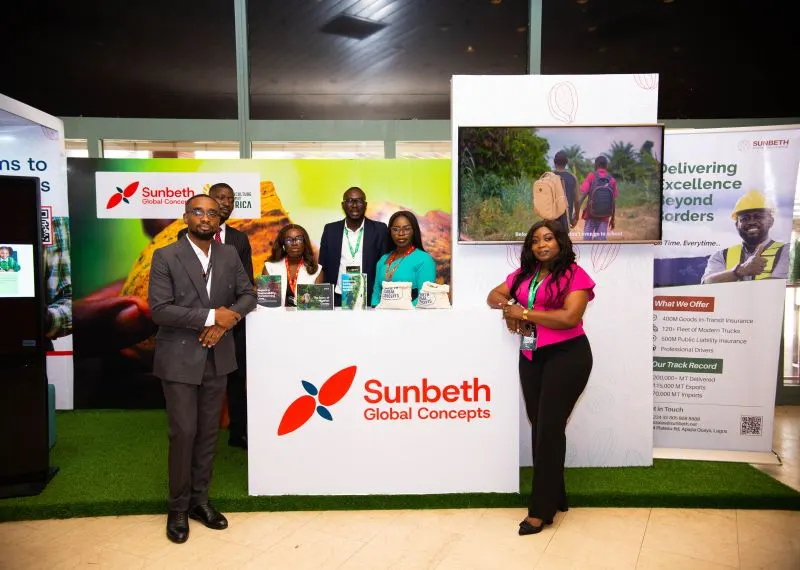
Nigeria's short-term debt market showed again this week that it will fund agriculture when the collateral story is credible. Sunbeth Global Concept, a Lagos-based commodities trading firm, attracted more than N220 billion in subscriptions against its N150 billion commercial paper offer, an oversubscription of 46.7 per cent, with the proceeds earmarked for cocoa procurement and business expansion. The size of the demand, arriving alongside a cocoa export boom that has transformed the trade balance of the commodity in the past two years, is a signal about where private capital believes the next tranche of Nigerian growth is priced.
Why investors queued up
Commercial paper is the standard instrument through which Nigerian corporates fund working capital: short-tenor, unsecured and priced against the prevailing money-market curve. A subscription this far above offer size tells investors two things at once. First, that the issuer's cash flow profile, anchored in a commodity that has substantially appreciated, meets the diligence standards of the fiduciary managers and institutional treasuries that dominate CP allocation. Second, that the instrument's pricing competes favourably with government securities at a moment when federal paper offers some of the highest nominal yields in the world. An oversubscription of close to half again suggests investors judged the risk-return trade acceptable even against a treasury-bill market yielding into the high teens.
The cocoa fundamentals behind the offer have been exceptional. Nigerian cocoa exports have surged as global prices ran to historic highs and as naira dynamics made export proceeds more valuable at home. Producers, aggregators and exporters have consequently needed larger working-capital lines at exactly the moment the crop cycle demands them, because procurement is seasonal and storage economics reward firms that can buy at peak harvest and ship through the year. A 46.7 per cent oversubscription for procurement funding indicates that the cocoa trade's cash generation has become legible to the fixed-income market in a way that agricultural paper rarely was in previous cycles.
[irp][irp][irp][irp][irp]
A deeper market for private paper
The CP segment has grown from a niche into a mainstay of Nigerian corporate finance over the past three years, as bank credit remained rationed by high reserve requirements and as regulators sharpened disclosure and ratings requirements for private paper. blue-chip industrials, consumer goods manufacturers and now agricultural trading houses have all raised sizeable programmes. Each successful issuance builds the market's institutional memory: rating agencies have more comparable credits, fiduciary managers have track records to evaluate and secondary markets gain depth as programmes repeat.
Sunbeth's programme will be parsed by other exporters as a template. The structure signals that a mid-sized agricultural firm, rather than only a bank or an industrial giant, can access nine-figure naira funding if the underlying commodity cycle supports the cash flows. That matters for agric-focused value chains from cocoa to cashew and sesame, all of which face the same seasonal procurement wall and all of which were previously dependent on bank overdrafts priced at punitive spreads.
The risks investors accepted
Commodity-linked paper carries genuine risks that investors priced in. Cocoa prices are volatile and vulnerable to global supply cycles, and a sharp reversal would compress the margins that back this CP programme. The naira's stability, now supported by reserves near an 18-year high, reduces currency risk on export proceeds but adds exchange-rate sensitivity to any future stress. Rating agencies and trustees will scrutinise the programme's covenants, and issuers that promise growth spending alongside procurement will need to show they can serve both purposes without straining liquidity.
None of these risks stopped the market from oversubscribing the offer by nearly half again. That tells investors the story of Nigerian agriculture's financing is changing: capital providers, once content to sit on government paper, are following the cash flows of the trade economy into corporate balance sheets. For a country whose export basket remains commodity-heavy, converting seasonal crops into deep, repeatable debt programmes is one of the more durable reforms of the past three years, and Sunbeth's allocation is evidence that the market sees it too.
Up next
Dangote Cement posts nine-month profit of N974.8 billion as the stock extends its rally on record monthly volumes
Dangote Cement reported nine-month 2026 profit after tax of N974.8 billion, up 31.2 per cent year on year, on revenue of N3,774.2 billion, while its shares on the Nigerian Exchange extended gains into Thursday's session.
More in Finance
See all
FSD Africa backs Nigerian women-led business network with $335,000
UK-funded institutional support aims to mobilise $2.7 million of Nigerian private capital through a revenue-based financing network.

BNP Paribas profit rises 13.5% as revenue outpaces costs
Institutional banking led divisional growth as the group improved operating efficiency while credit costs remained a deduction from earnings.

Deutsche Bank quarterly profit reaches €1.9bn as costs stay flat
Revenue rose while noninterest expenses remained unchanged, supporting higher profit alongside client inflows and ongoing credit provisions.
About the author
Musa Abdullahi
Finance Correspondent
Musa Abdullahi writes for BusinessPress.
More coverage


