
Brent crude steadies near $111 a barrel as traders weigh supply risks against softer demand after the Fed holds rates
Global oil benchmarks held firm on Thursday, with Brent trading near $110.80 after a week in which Middle East refinery damage kept supply risk at the centre of pricing, and the US Federal Reserve's decision to hold rates cooled demand expectations.
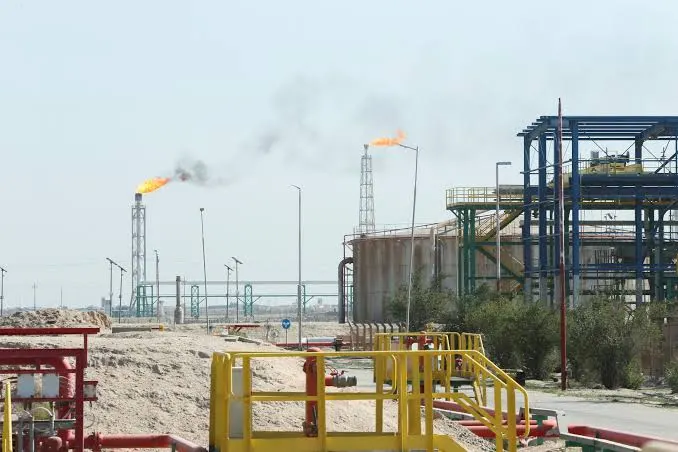
Oil held a hard-earned foothold above the $110 mark on Thursday, with Brent crude trading near $110.80 a barrel after a week in which each session tested the durability of the run higher. The benchmark had pushed into the $115 area earlier in the week, riding a blend of supply-side disruption and speculative positioning, before profit-taking and a cautious policy environment trimmed the gain.
Why prices climbed to triple digits
The week's dominant narrative concerns infrastructure in the Middle East. Damage to a large refinery in the region reduced expected product supply and raised the prospect of replacement imports, a scenario that puts a premium on every barrel produced elsewhere. Insurers and shippers reassessing their exposure added to the friction, and the market responded by re-pricing the value of supply security rather than merely the physical scarcity of crude.
Speculative positioning amplified the move. Fund flows into petroleum futures accelerated as the refinery news broke, adding fuel to a rally that was already supported by tight balances in the physical market. When speculative flows and physical tightness point the same way, prices tend to overshoot, and Monday's push toward $115 displayed exactly that dynamic. Wednesday through Thursday saw some of the froth pared back as investors weighed the durability of the disruption against evidence of softer consumption at the margin.
The Federal Reserve's cooling effect
Thursday's session brought an additional headwind from Washington. The US Federal Reserve held its benchmark rate steady at 3.75 to 4 per cent and kept its tone vigilant on inflation, a stance that analysts read as a mild brake on the demand impulse. Higher-for-longer US rates tend to cool risk appetite and slow the global economy at the margin, and petroleum is the most macro-sensitive commodity in the index. The yield on the 10-year Treasury note eased toward 4.94 per cent, a signal that bond traders see the hold as a pause rather than an end to tightening risk.
[irp][irp][irp][irp][irp]
Nigerian exposure to the crude cycle
Nigeria's fiscal arithmetic runs through the same benchmark. Bonny Light, the country's flagship crude stream, has been pricing in the vicinity of $115 a barrel during the week, translating into stronger dollar earnings for exports at a time when the central bank's reserves stood near multi-year highs. Extra revenue per barrel flows into foreign exchange supply, federation accounts and the petroleum industry's investment cycle, all areas where dollar availability has historically been the binding constraint.
The relationship is not all one-way. Sustained crude above $100 raises the imported cost of refined products and freight, and Nigeria imports a large share of its refined product supply despite growth in domestic refining capacity. Every dollar added to the Brent curve is therefore simultaneously a fiscal blessing and an imported-inflation risk, and the pass-through to pump prices depends on how much refining capacity the country can mobilise in the current quarter.
What the market is watching next
Attention will pivot in the coming sessions to formal damage assessments from the affected refinery, response measures from producing nations and the pace of stock draws in the United States and Asia. A repair timeline that returns capacity quickly would likely unwind part of the risk premium built into the past week; a prolonged outage, or a further escalation, would keep Brent pinned above its recent range and could invite additional policy responses from consuming countries.
For now, the market has settled into a narrow band just above $110 a barrel, a hold that reflects genuine physical tightness balanced against demand uncertainty. Nigerian producers, marketers and policymakers will be watching the next twist with the usual double focus: the earnings side benefits from high prices, while the domestic transport and power sectors, both heavily dollarised, must absorb the consequences. The next prompt for a larger move will come from either a repair timeline or a supply response, and traders have learned not to bet the entire curve on the first estimate of either.
Up next
Nigeria's gross external reserves stand near a record $55.25 billion, the highest level in 18 years
Central Bank of Nigeria Governor Olayemi Cardoso reported gross external reserves of $55.25 billion as of 18 September 2026, the highest reading in 18 years, with cover for about 11.3 months of imports and net reserves above $45 billion.
More in Markets
See allBrent tops $116 a barrel, a six-month high, as Houthi attacks stoke supply fears
Brent crude settled at $116.72 on October 23, 2026, its highest close since April and a third straight weekly gain, while WTI held above $103 and Nigerian Bonny Light traded near $124.
Brent Crude Hits Highest Level Since May After Tankers Struck by Mines in Hormuz
Brent crude jumped 3.7% to $109.86 a barrel after tankers were hit by mines in the Strait of Hormuz, the highest level since mid-May, prompting emergency supply measures from the IEA and the United States.
Wall Street Logs Worst Week Since June as AI Selloff Deepens and Oil Jumps
A broad selloff in technology shares dragged the Nasdaq to its worst week since late June, while Brent crude surged on Middle East supply risks.
About the author
Adaeze Okonkwo
Markets Editor
Adaeze Okonkwo writes for BusinessPress.
More by Adaeze Okonkwo
NGX closes Thursday at a record market value of N164.97 trillion as the All-Share Index settles at 254,083.02
Markets18 mins ago
CBN and NITDA partner on sovereign cloud drive as banks face January 2027 deadline to keep payment data onshore
Technology5 hrs ago
NGX Group's nine-month profit before tax climbs 83.3 per cent to N20.6 billion as digital trading lifts the exchange
Business5 hrs ago
More coverage


