US earnings split: AT&T, United Airlines fall; Braze soars on Salesforce deal interest
Mixed earnings drove sharp stock moves as Braze surged on acquisition speculation and airlines fell on guidance.

US corporate earnings delivered a mixed picture on Tuesday, October 21, 2026, with some companies posting solid results and raising guidance while others disappointed investors and saw their shares come under pressure.
AT&T fell about 4 per cent despite reporting adjusted earnings per share of 65 cents, above the 60 cents expected, on revenue of $32.3 billion. Investors appeared focused on subscriber trends and capital expenditure plans rather than the headline beat.
United Airlines dropped roughly 4 per cent after issuing fourth-quarter adjusted earnings guidance of 50 cents to $1.50 per share, well below analysts' expectations of $1.76. The carrier cited higher fuel costs, with jet fuel prices up about 62 per cent year-on-year to around $4.80 per gallon, even as it reported record third-quarter revenue of $17.9 billion, up 17 per cent.
Netflix slipped about 5 per cent as investors weighed subscriber growth and content spending against intensifying competition in the streaming space. The stock move reflected heightened expectations following a strong run in recent periods.
By contrast, Braze surged more than 51 per cent on reports of interest from Salesforce, which was said to be considering an acquisition at around $47.50 per share, valuing the company at roughly $5.66 billion. The deal speculation triggered heavy trading and a sharp re-rating of the customer engagement platform's shares.
Other notable movers included 3M, which gained about 5 per cent, Northrop Grumman up 4 per cent and RTX higher on raised guidance. General Motors fell 5 to 6 per cent, Intuitive Surgical dropped about 6 per cent and Danaher saw pressure despite raising its full-year guidance as investors parsed segment details.
Strategic implications
The development carries broader implications for stakeholders across the value chain. For businesses, it may affect input costs, funding conditions or competitive dynamics depending on the sector. For policymakers, it highlights the need for coordinated responses that address both immediate pressures and longer-term structural issues.
As the situation evolves, market participants and industry players will be watching for follow-up actions, implementation details and measurable outcomes. The effectiveness of proposed measures will be key to determining whether the intended benefits materialise in practice.
In the current environment, agility and informed decision-making remain important as companies navigate changing conditions and adjust their strategies to new realities.
Longer-term outlook
Looking ahead, the trajectory of these developments will depend on policy implementation, market response and global conditions. Stakeholders across the public and private sectors will need to adapt to evolving dynamics while maintaining focus on long-term objectives.
Continued monitoring of key indicators and proactive engagement with emerging trends will be essential to navigating the period ahead. The interplay of structural factors and cyclical pressures is likely to shape outcomes for some time to come.
Outlook and considerations
As developments unfold, stakeholders will need to monitor implementation timelines, policy responses and market reactions closely. The coming weeks are likely to provide further clarity on the direction of these trends and their broader implications.
In an environment of evolving conditions, maintaining flexibility and staying informed will be key. The balance between near-term pressures and long-term opportunities will continue to shape decision-making across sectors.
Conclusion
The developments underscore the interconnected nature of policy, markets and economic activity. As stakeholders adjust to these changes, careful monitoring and strategic responses will be important to manage risks and capture opportunities.
With conditions continuing to evolve, the coming period is likely to see further adjustments as market participants and policymakers respond to emerging signals across domestic and global fronts.
Earnings season themes
This earnings cycle has been characterised by significant dispersion, with company-specific factors driving outsized moves rather than broad sector trends. Guidance has proven particularly important, with investors quick to punish companies that fall short of expectations or signal margin pressure.
Cost inflation, particularly for fuel and inputs, remains a concern for many businesses, while AI-related investments are drawing scrutiny over returns. At the same time, companies that can demonstrate pricing power or successful cost management are being rewarded.
Outlook
As more companies report in the coming days, focus will remain on forward guidance, capital allocation plans and management's commentary on demand. With valuations relatively high in some sectors, the bar for positive surprises remains elevated, suggesting continued volatility around earnings releases.
Up next
US equities close higher October 21 as tech leads, SpaceX surges on strong revenue
S&P 500, Nasdaq and Dow gained as technology led and SpaceX surged on strong Q3 results.
More in Markets
See all
DMO allots N2.02trn at October 19 FGN bond auction as stop rates rise across tenors
Debt Management Office accepted higher stop rates as it allotted N2.02trn across reopened FGN bond maturities.
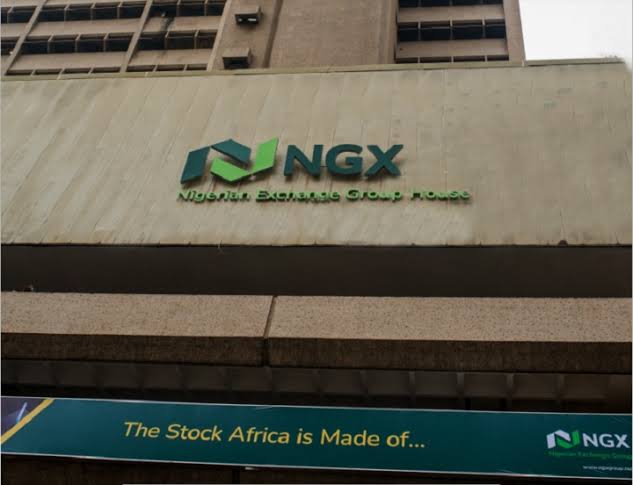
NGX ASI declines 0.32% to 245,116.49 as banking drags, turnover slips to N23.6bn
Nigerian equities fell as banking stocks led losses, with breadth turning negative and turnover moderating.

NewGold Holdings Fall 13.3% as Units Trade at 57% Premium to Their Gold
Bullion backing Africa largest gold exchange-traded fund fell to $2.53 billion in the six months to September, yet the units closed at N86,001 in Lagos, roughly 57 per cent above the metal each unit represents.
About the author
Abiodun Abdullahi
Author / Business and Markets Writer
Abiodun Abdullahi writes for BusinessPress.
More by Abiodun Abdullahi