Global markets show Europe-Africa divergence as DAX rallies, some African bourses slip
European shares rallied while several African markets declined as regional factors drove divergence.
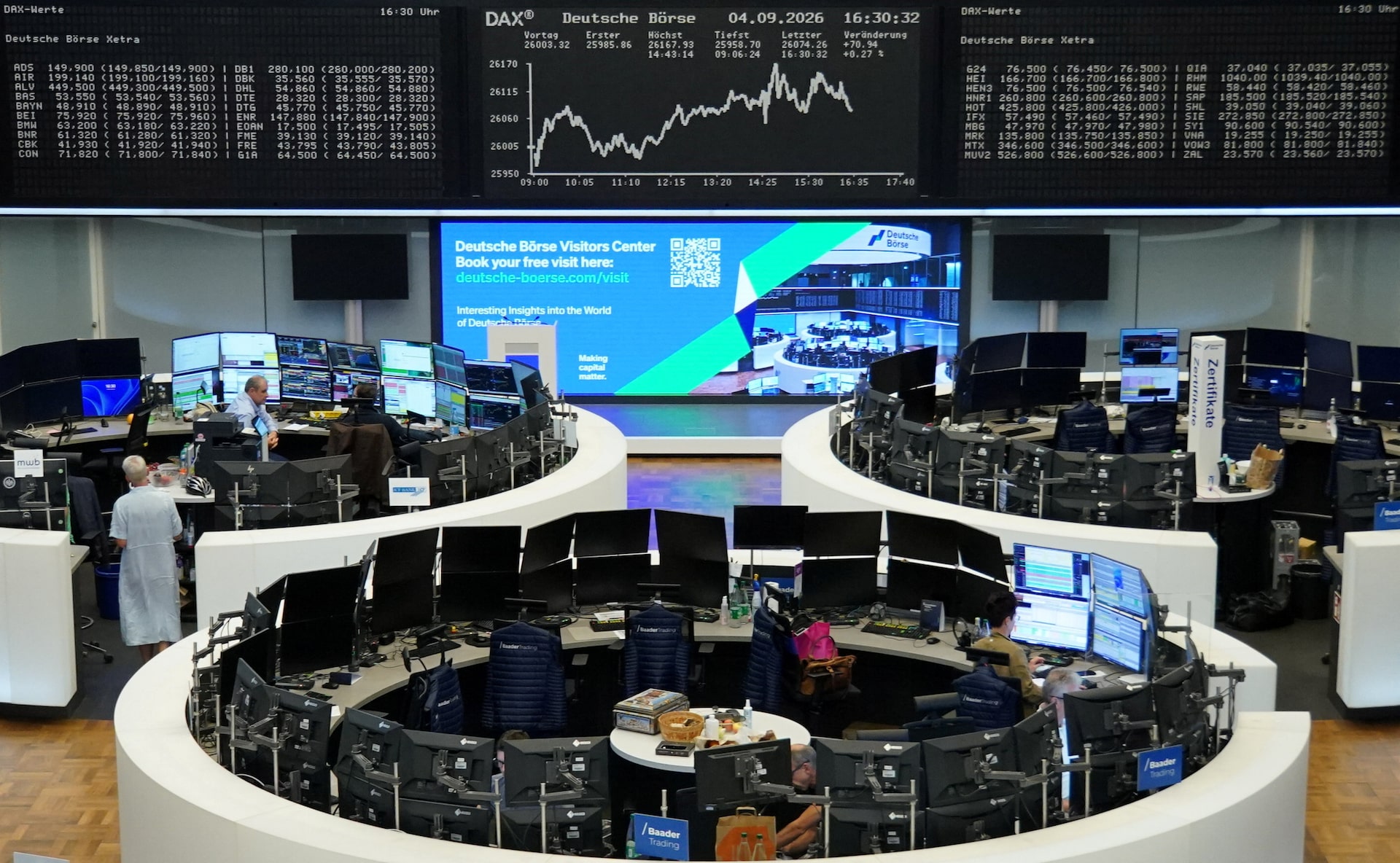
Global markets showed a notable divergence on Tuesday, October 21, 2026, with European shares rallying while several African bourses edged lower and Asian markets were mixed amid shifting risk sentiment.
In Europe, Germany's DAX surged 1.99 per cent as investors reacted positively to corporate earnings and expectations around economic policy. France's CAC 40 also gained, though sentiment was tempered by weakness in some consumer stocks, with Carrefour falling about 10.6 per cent on concerns over unrest and energy costs.
In Asia, Hong Kong's Hang Seng Index declined 1.07 per cent, while Japanese markets were relatively subdued. Chinese equities traded mixed as investors assessed economic data and policy expectations.
Across Africa, performance was uneven. Egypt's EGX30 rose 1.47 per cent, Namibia's NSX gained 1.72 per cent, but Kenya's NSE fell 0.91 per cent, Uganda's bourse slipped 0.99 per cent and South Africa's JSE declined 0.67 per cent. The divergence reflected local factors including currency moves, commodity prices and country-specific developments.
In commodities, oil prices remained elevated with Brent trading around $108.82 and WTI around $97.15, while gold hovered near $4,159.5 an ounce as investors sought safe-haven exposure amid geopolitical uncertainty. The US Dollar Index stood at 101.70.
Bond markets also showed divergence, with US Treasury yields remaining relatively elevated while some European yields moved lower. The contrasting performance across regions underscored how local dynamics are driving returns even as global macro themes remain in focus.
Strategic implications
The development carries broader implications for stakeholders across the value chain. For businesses, it may affect input costs, funding conditions or competitive dynamics depending on the sector. For policymakers, it highlights the need for coordinated responses that address both immediate pressures and longer-term structural issues.
As the situation evolves, market participants and industry players will be watching for follow-up actions, implementation details and measurable outcomes. The effectiveness of proposed measures will be key to determining whether the intended benefits materialise in practice.
In the current environment, agility and informed decision-making remain important as companies navigate changing conditions and adjust their strategies to new realities.
Longer-term outlook
Looking ahead, the trajectory of these developments will depend on policy implementation, market response and global conditions. Stakeholders across the public and private sectors will need to adapt to evolving dynamics while maintaining focus on long-term objectives.
Continued monitoring of key indicators and proactive engagement with emerging trends will be essential to navigating the period ahead. The interplay of structural factors and cyclical pressures is likely to shape outcomes for some time to come.
Outlook and considerations
As developments unfold, stakeholders will need to monitor implementation timelines, policy responses and market reactions closely. The coming weeks are likely to provide further clarity on the direction of these trends and their broader implications.
In an environment of evolving conditions, maintaining flexibility and staying informed will be key. The balance between near-term pressures and long-term opportunities will continue to shape decision-making across sectors.
Conclusion
The developments underscore the interconnected nature of policy, markets and economic activity. As stakeholders adjust to these changes, careful monitoring and strategic responses will be important to manage risks and capture opportunities.
With conditions continuing to evolve, the coming period is likely to see further adjustments as market participants and policymakers respond to emerging signals across domestic and global fronts.
Drivers of divergence
Several factors are contributing to regional divergence. In Europe, expectations of fiscal support and strong earnings from select companies are buoying sentiment. In parts of Africa, concerns about financing costs, currency pressures and commodity price volatility are weighing on markets.
Energy prices remain a key variable, affecting both importers and exporters differently across regions. Geopolitical developments are also playing a role, influencing risk appetite and capital flows between markets.
Outlook
With global policy paths diverging and local conditions varying widely, markets are likely to remain sensitive to region-specific catalysts. Investors are increasingly focused on country-level fundamentals rather than broad emerging market or global trends, leading to greater dispersion in returns across regions.
Up next
US earnings split: AT&T, United Airlines fall; Braze soars on Salesforce deal interest
Mixed earnings drove sharp stock moves as Braze surged on acquisition speculation and airlines fell on guidance.
More in Markets
See all
NGX RegCo fines 15 listed companies N123.17m for late filings as experts call for tougher sanctions
NGX Regulation imposed N123.17m in penalties across 15 companies, renewing debate over enforcement.

DMO allots N2.02trn at October 19 FGN bond auction as stop rates rise across tenors
Debt Management Office accepted higher stop rates as it allotted N2.02trn across reopened FGN bond maturities.
NGX ASI declines 0.32% to 245,116.49 as banking drags, turnover slips to N23.6bn
Nigerian equities fell as banking stocks led losses, with breadth turning negative and turnover moderating.
About the author
Abiodun Abdullahi
Author / Business and Markets Writer
Abiodun Abdullahi writes for BusinessPress.
More by Abiodun Abdullahi