
Apple Beats Street but Guides Margins Lower
Apple beat quarterly estimates with record $114.48 billion revenue but shares fell as December-quarter margin guidance of 45-46 percent flagged rising memory costs and slower services growth.
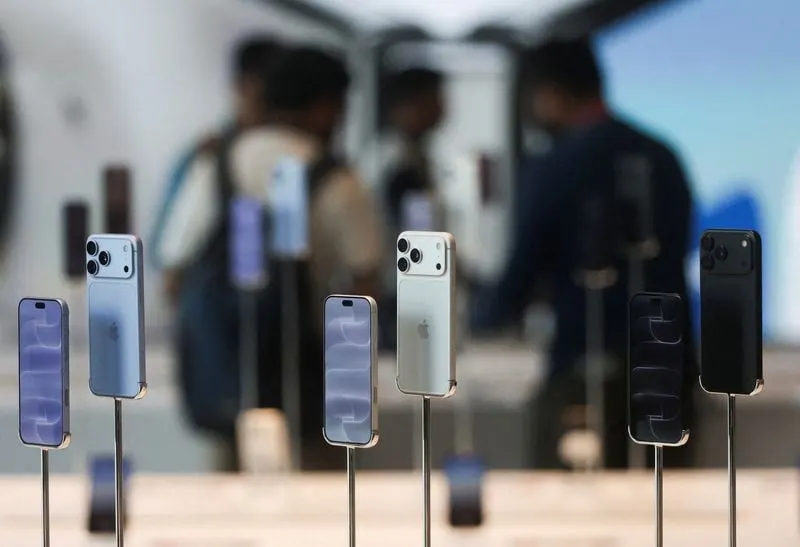
Apple beat Wall Street's estimates on revenue and profit for the fiscal fourth quarter ended 26 September, posting September-quarter record revenue of $114.48 billion, up 12 percent from a year earlier, but shares slid in extended trading as the company forecast lower December-quarter margins on rising memory-chip costs, supply constraints and slower services growth — the second straight post-earnings setup where a beat lost the argument to the outlook in John Ternus's first earnings report since he succeeded Tim Cook as chief executive at the start of September, a leadership handover that made this print a first test of the new management setup.
Earnings per share came in at $2.10 against the $1.99 estimate, including five cents of tariff refunds, and revenue of $114.48 billion comfortably cleared the $113.39 billion analysts expected, according to LSEG data gathered by CNBC and Reuters. iPhone revenue — the company's halfway-to-everything product line and half of its total sales — jumped 17 percent to $57.58 billion, a September-quarter record built on the iPhone 18 Pro launch, with only eight days of sales counted in the quarter — while Mac revenue surged 24 percent to $10.79 billion and Services hit an all-time high of $31.6 billion, up 10 percent — a fine harvest for the subscription businesses that now anchor Apple's recurring revenue
The soft spots sat elsewhere. iPad, at $6.23 billion against a $6.70 billion estimate, and wearables, at $8.30 billion versus $9.06 billion expected, while last quarter's overall gross margin of 47.9 percent was flattered by roughly a proportionate point of tariff refunds that analysts stripped out when they scored the underlying business against their models.
The margin guide that spooked the market
The market's worry listed nothing about the beat itself: revenue was up another double-digit year, and the print left the numbers on the strong side of an already-strong climax to Apple's fiscal year. The sell-off happened in the outlook. CFO Kevan Parekh guided December-quarter gross margin to 45-46 percent, below the 46.3 percent analysts pencilled in, attributing the drop mainly to higher memory costs and to costs of ramping the new Siri AI, which flow through services cost of sales. Services revenue growth was guided to 8-9 percent, well short of street hopes around 10.7 percent, while operating expense would rise 11-13 percent to $20.4-20.8 billion as research spending on AI keeps climbing.
Shares fell 2.8 percent after hours to $328.85, slipped further during the call — Reuters put the drop at roughly 4 percent by its end — after a 1.83 percent regular-session slide. The reaction reflects a market already nervous about AI-related cost lines, and Apple's version of the problem is distinctive: memory price inflation, supply constraints and the Siri rollout are the pressure points, rather than data-centre buildout.
Record year, bigger quarter ahead
Management framed the quarter inside the company's best fiscal year ever: record revenue of $478.8 billion, up 15 percent, fiscal-year EPS of $8.98, up 20 percent, quarter net income of $30.71 billion and operating cash flow of $28 billion, all of it returned to shareholders along with 24 billion dollars of buybacks and 3.9 billion of dividends. The active installed base crossed 2.5 billion devices, and the firm ended the quarter with 137 billion in cash and securities against 80 billion of debt
Guidance still points up. Apple expects December-quarter revenue growth of 7-10 percent — the largest quarter for revenue in company history, at roughly $153.8-158.1 billion — despite constrained supply for Mac and Apple Silicon machines and iPads, where demand has outpaced supply. The quarter will be the first holiday period for the iPhone Duo, the foldable that went on sale 16 October after selling out online within hours, and for the new generation of home hardware that management says completes the most ambitious lineup yet.
Why Apple's cost story is different
Apple's margin squeeze is supply-driven in a way most tech peers' problems are not. Memory prices have climbed with the global AI-driven demand for storage, and Apple is one of the largest end-market buyers of DRAM and NAND, so tightening those fabs flows quickly into hardware bills of materials. The company's answer is pricing and product mix — the iPhone Duo and iPhone 18 lineup carry higher prices, and Mac and iPad records show premium demand holding.
For the market conversation about AI spending, Apple remains an outlier: it spends less on AI infrastructure than hyperscalers and earns more from the ecosystem that AI stands on. That is why its record quarter drew shrugs while a margin guide moved the stock — investors in Apple are underwriting stability, not a growth miracle, and even a two-point margin wobble asks questions of a valuation that reached record highs late last month.
For African markets and smartphone-focused distributors, the guidance cuts in an unusual direction: supply constraints on Mac and Apple Silicon lines and customer reports of cracked screens on early Duo units suggest the mix between premium demand and component availability will get tighter into the holidays, nudging channel pricing higher as competitors with in-house memory deals respond.
Ternus's first report ends the calendar's tilt being decisive in either direction. It confirms the iPhone machine still prints cash, but pins the stock to how quickly memory costs normalise and how loudly the market greets the Siri AI rollout in December — the quarter Apple expects to make history.
Up next
Marvell to Buy Lumentum in $115 Billion Deal
Marvell agreed an all-stock $115 billion acquisition of Lumentum at a 23.9 percent premium, creating an AI connectivity leader targeting a $550 billion addressable market.
More in Markets
See allFirst HoldCo shares jump 10% as N911.24 billion pre-tax profit resets valuation
The banking group’s 60.84 per cent profit growth drew fresh buying, narrowing the holding-company discount and lifting sentiment on the NGX.
First HoldCo shares jump 10% as nine-month profit rises 60.84%
First HoldCo shares rose 10% after pre-tax profit climbed to N911.24 billion, prompting investors to reprice the banking group’s earnings outlook.

United Capital approves N18 billion dividend after record 2025 profit
Shareholders approved a final 70-kobo payment, taking the full-year distribution to N1 per share after an interim dividend.
About the author
Kwame Mensah
Markets Correspondent
Kwame Mensah writes for BusinessPress.
More by Kwame Mensah


