Guinness Nigeria’s N16 dividend tests cash generation as costs rise
Guinness Nigeria’s N16 payout is attractive for income investors, but sustaining it depends on cash flow, consumer demand and cost control.

Guinness Nigeria’s 2026 dividend distribution reached N16 per share, according to Nairametrics, a payout that puts the brewer among the more generous consumer companies on the Nigerian Exchange. The question for investors is whether the company’s cash generation can sustain that level of return as input costs, taxes and competition intensify.
The dividend follows a strong third-quarter performance in which Guinness reported profit after tax of N40.69 billion, up 53.1 per cent, helped by lower finance costs. The result reflected a combination of price increases, cost management and a reduction in foreign-exchange losses.
A high dividend is attractive in a market where inflation erodes fixed-income returns and investors are searching for income. But dividends are paid from cash, not accounting profit. Investors need to understand whether the payout is supported by operating cash flow or by one-off gains and balance-sheet adjustments.
The earnings picture
Guinness has benefited from the resilience of premium beer and spirits demand in Nigeria. Despite pressure on household budgets, consumers have continued to spend on branded beverages, particularly in urban areas and at social occasions. That has allowed the company to raise prices without losing too much volume.
Lower finance costs have also helped. The company’s debt profile and foreign-currency exposure have been a drag in previous years, especially when the naira weakened. A reduction in financing charges can lift profit even if sales are flat.
Cost management has played a role as well. Brewers are large consumers of energy, packaging and logistics, and those costs have risen sharply. Guinness has tried to offset the increase through efficiency measures, local sourcing and changes to its product mix.
Can the dividend be sustained?
The key test is free cash flow. If Guinness is generating enough cash from operations to cover capital expenditure and dividends, the payout is sustainable. If it is borrowing or selling assets to fund the dividend, the market will eventually notice.
The company’s capital expenditure needs are significant. Breweries require continuous investment in production capacity, quality control and distribution. A generous dividend policy can constrain those investments if cash is tight.
Tax is another variable. Changes to excise duties or corporate tax rules can reduce net income and cash flow. The Nigerian government has been looking for additional revenue, and alcohol and tobacco are often targets for higher taxes.
The consumer backdrop
Nigerian consumers are under pressure. Inflation has eroded purchasing power, and the naira’s recent weakness has made imported inputs more expensive. Consumers may trade down to cheaper brands or reduce consumption, which could affect Guinness’s premium portfolio.
Competition is intense. International brewers, local producers and informal alcohol suppliers all compete for the same spending. Guinness has a strong brand, but brand loyalty is not unlimited when budgets are tight.
The company’s ability to pass through costs will determine its margins. If it raises prices too aggressively, volumes may fall. If it absorbs costs, profits may suffer. The balance is delicate, and the third-quarter result suggests that management has so far managed it well.
What the dividend signals
A N16 dividend signals confidence. Companies usually do not commit to a high payout unless they believe their cash flow is stable and their balance sheet can support it. It also signals a willingness to return capital rather than hoard it for uncertain investments.
For income investors, Guinness offers a attractive yield relative to many Nigerian equities. But yield alone is not a reason to buy. Investors should consider the sustainability of the payout, the growth outlook and the risk of currency depreciation.
The stock’s valuation also matters. If the dividend yield is high because the share price has fallen, the market may be pricing in risks that the company has not yet addressed. A high yield can be a warning as well as an opportunity.
The longer-term outlook
Guinness’s long-term prospects depend on Nigeria’s consumer story. A young, urbanising population with growing disposable income is a powerful tailwind. But that story is uneven, and the company must navigate inflation, regulation and competition.
The dividend is a positive signal for shareholders, but it is not a guarantee. Cash generation can change quickly if the economy slows or if input costs rise. Investors should monitor operating cash flow, debt levels and capital expenditure in the coming quarters.
For now, the N16 payout places Guinness among the more shareholder-friendly companies on the exchange. Whether that reputation can be maintained will depend on the company’s ability to grow revenue, protect margins and generate cash through the cycle.
Up next
CBN bills hit N5.6 trillion, drive 74% of September money-supply growth
A N5.6 trillion stock of CBN bills absorbed most of September’s money-supply increase, highlighting the central bank’s heavy reliance on OMO.
More in Markets
See all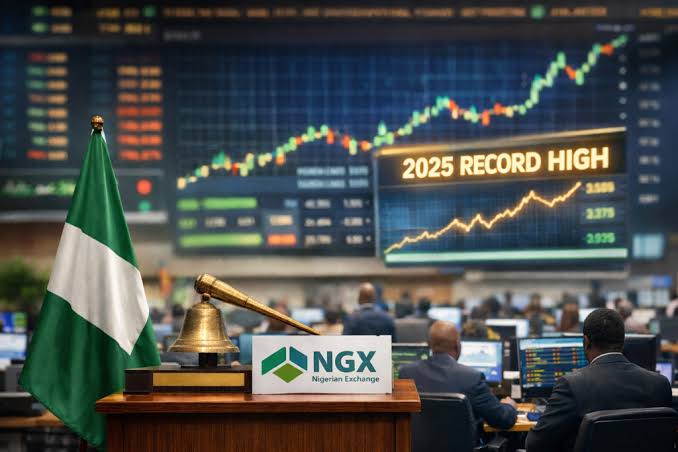
NGX turnover hits N15.06 trillion in nine months as market depth improves
Equity turnover crossed N15.06 trillion between January and September 2026, signalling deeper liquidity even as trading stays concentrated in large-cap stocks.
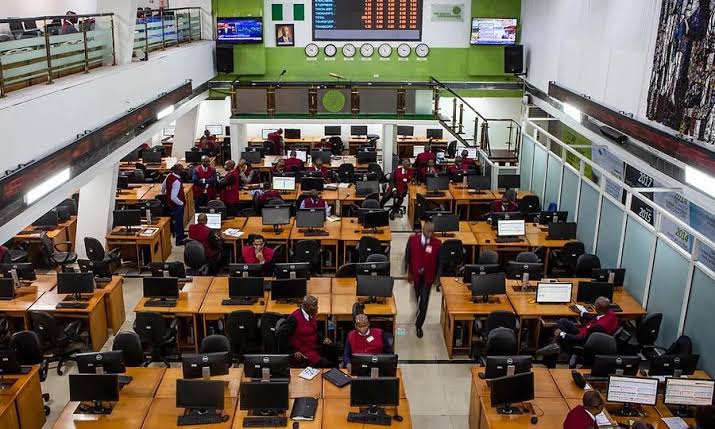
NGX market capitalisation climbs back above N160 trillion as week closes green
Nigerian equities ended the week higher, pushing market value past N160 trillion on banking and industrial gains, though currency risk remains.
NGX nine-month stock deals surpass N15.06 trillion as liquidity deepens
Nigerian Exchange turnover crossed N15.06 trillion in nine months, signalling deeper liquidity but a market still concentrated in large-cap stocks.
About the author
Musa Abdullahi
Finance Correspondent
Musa Abdullahi writes for BusinessPress.
More by Musa Abdullahi
Credit to government jumps 63% to N39.4 trillion as private lending slips
Finance10 mins ago
Tinubu, Macron postpone French state visit to Nigeria until 2027
Economy14 mins ago
FDI at 1.3% of inflows puts Nigeria’s $1 trillion economy goal at risk
Economy29 mins ago