
Marvell to Buy Lumentum in $115 Billion Deal
Marvell agreed an all-stock $115 billion acquisition of Lumentum at a 23.9 percent premium, creating an AI connectivity leader targeting a $550 billion addressable market.
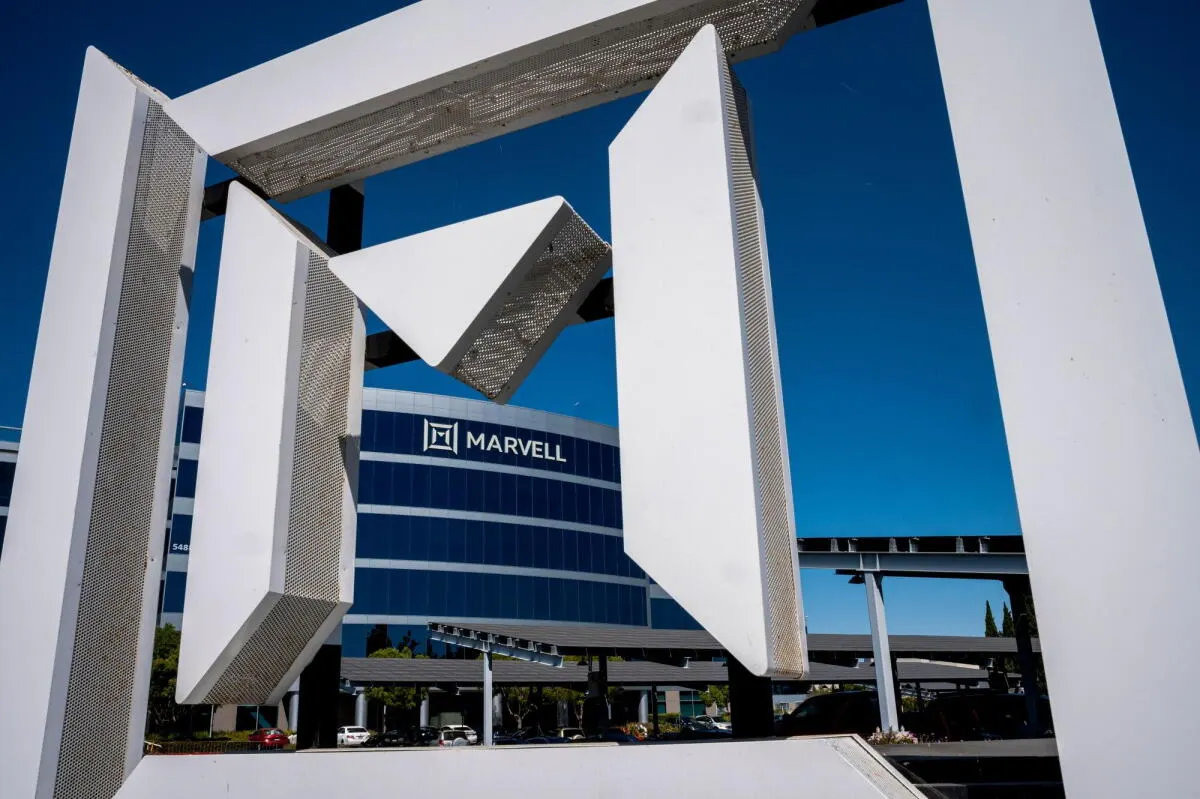
Custom-chip designer Marvell Technology agreed on Monday to acquire optical components maker Lumentum in an all-stock transaction that values the laser and optics specialist at an implied enterprise value of $115 billion, the largest technology deal of 2026 and a consolidation bet on the connectivity layer of the AI data-center boom.
Under the definitive agreement, Lumentum stockholders will receive a fixed ratio of 4.500 Marvell shares for each Lumentum share, valuing the target at roughly $1,132 per share — a 23.9 percent premium to its unaffected 28 October close, the last trading day before market speculation about a deal surfaced. Marvell holders will own about 67 percent of the combined company on a fully diluted basis and Lumentum holders about 33 percent, with the deal expected to close in the first half of 2028.
Both boards approved the deal unanimously, and Marvell's Matt Murphy will stay on as chairman and chief executive, while three Lumentum directors — including CEO Michael Hurlston — join a slimmed seven-member Marvell board. The shares fell despite the logic: Marvell slid about 9 percent in Monday trading after rising 3.4 percent premarket, and Lumentum, up briefly after the announcement, slumped 15 percent as investors balked at the all-stock structure at the end of a week in which the whole AI complex was repricing.
A full-stack connectivity machine
The strategic pitch is vertical integration across the AI signal chain. Marvell brings electrical and optical interconnect, network switching, custom XPU silicon and advanced packaging; Lumentum adds high-performance lasers, optical transceivers, optical circuit switching and specialised compound semiconductor manufacturing, including indium phosphide capability. The combined company says its total addressable market expands to $550 billion, targeting co-design from data-center scale to connections inside advanced semiconductor packages, with more than $1 billion of annual run-rate cost synergies and accretion to non-GAAP earnings per share in the first year after close.
In plain terms, the optics serve a purpose: as AI clusters push toward faster interconnect, copper links reached their useful limits, and the lasers and transceivers inside optical links have become one of the fastest-growing line items in AI hardware budgets. Owning both the electrical side and the photonics side lets Marvell sell one pre-validated connectivity stack to hyperscaler customers, and it positions the combined firm more squarely against Broadcom, which has only been advancing on the same ground.
Nvidia's quiet double own the stakes
The shareholder register tells its own story. Nvidia, the dominant AI chipmaker, holds roughly a two-billion-dollar position in each company — it invested in Lumentum in March as part of a multi-year laser supply agreement and separately in Marvell's optical portfolio — so the same anchor investor sits on both sides of the table, and a combined supplier reduces fragmentation in the optics supply chain that Nvidia depends on for its own cluster roadmaps.
That alignment supports the deal's political durability but also concentrates risk: if Nvidia's demand curve flattens, the combined company loses its anchor customer advantage. The all-stock structure transfers that beta directly to Lumentum holders, which is precisely why both stocks sold off when the market woke up afraid of AI paper again on Monday.
The market's timing test
The announcement lands at a delicate moment for AI leverage. Equity values across the chip sector slid last week on spending concerns, and an agreement paid in shares rather than cash — with an equity value around $102-80 billion depending on the measure used — gets scrutinised harder than a cash deal during a scare. Traders also noted the premium was calculated against unaffected shares from 28 October rather than Monday's elevated levels, an accounting choice that flatters the optics of the deal.
For African and emerging-market tech supply chains, the consolidation signals longer-term ordering pattern shifts: fewer, bigger optical component houses mean longer design cycles, higher minimum commitments and a tougher entry path for the regional assemblers and module houses that supply data-center and telecom buildouts, leaving expansion more dependent on the same hyperscaler capex that showed cracks on Monday.
The deal's verdict will arrive in three instalments: shareholder votes, the regulatory review, and the 2028 close, by which time the AI connectivity market will have either vindicated a $550 billion addressable market or left the largest chip deal of 2026 priced at the very top of the cycle.
Up next
Oracle Launches $20 Billion Raise for AI Buildout
Oracle filed to sell $10 billion of common stock and $10 billion of senior notes, completing the $20 billion funding plan for its AI data-center cycle through fiscal 2030.
More in Markets
See allCanadian National Railway Lifts Third-Quarter Revenue 15%
Canadian National Railway grew Q3 revenue 15% to C$4,771 million with adjusted EPS up 18%, upgraded grain-crop assumptions, and raised nine-month free cash flow 25%.

Dangote Refinery IPO Pulls Massive Retail Subscription Flood
The Dangote Refinery IPO closed after drawing over N860 billion online from 1.55 million subscribers, with retail participation potentially reaching five million, ahead of November collation.

OPEC+ Sets Painful December Production Targets Pause
OPEC+ agreed in principle to keep December oil output targets unchanged, as Brent traded near $116, the highest in six months.
About the author
Abiodun Abdullahi
Author / Business and Markets Writer
Abiodun Abdullahi writes for BusinessPress.
More by Abiodun Abdullahi


