
Canada GDP Flat in August as Business Slows
Canada's real GDP stayed flat in August for a second straight month, with a September flash estimate of minus 0.1% rotating focus.
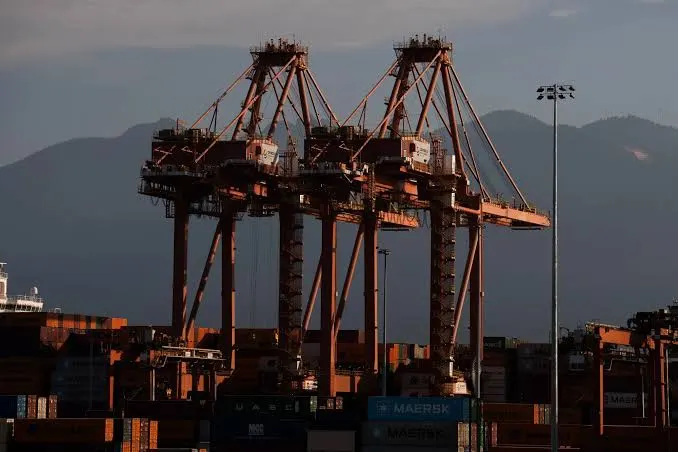
Canada's real gross domestic product was unchanged in August, for a second straight month of zero growth, according to Statistics Canada's monthly GDP report on 30 October, and the agency's flash estimate for September showed a contraction of 0.1%, hinting at what the third quarter's weakening shape looks like in aggregate.
Two consecutive monthly flat readings are enough to drag the quarterly outcome to a rate below what many expected, and the agency said the available data points to a third-quarter course of roughly 1.3% measured at an annualized pace, below the 2% figure that sits within the Bank of Canada's framework for the period. The gap between those two numbers is where business decision-makers can usefully focus.
Flat months and what they connect to
A flat month in a mature economy has no single cause, and the zero reading hides an underlying movement that went in different directions. One point that matters is the rise of retail activity according to the report's components, which suggests the economy's consumer anchors are still spending. The other is the contraction in wholesale trade by 1.4%, which belongs to the connecting-piece layer of the economy and precedes what final buyers see.
Those monthly movements have no inflationary significance on their own but do tell the balance of risks. Consumer-facing businesses are holding up better than many assume, while business-to-business selling, the wholesale layer that precedes the shelves, is under real pressure, and that combination is characteristic of an economy slowing from the business side rather than the consumer side.
The Bank of Canada's brief rate pivot
The data's timing bears weight in one direction: it arrived two days after the Bank of Canada's policy meeting on 28 October, where the central bank hiked its policy rate by 25 basis points to 2.50%. The considerations behind that decision outweigh August's flat GDP print, which the bank had already seen in advance of deciding.
That decision, taken in the face of soft output but still-elevated inflation, is the clearest window into the current policy stance economics recognises: inflation is an immediate constraint, so the central bank leans against it and accepts that output will grow more slowly as a consequence. Canadian businesses planning 2027 will now carry the rate structure that resulted from that tilt, and the fact that the bank's own inflation trajectory gives way to output growth at these reserves indicates that the softening in economic activity seen in actual monthly estimates has not altered it, at least in this quarter.
What a 1.3% quarter means globally
A G7 economy decelerating to a 1.3% annualized rate is a global demand datapoint of its own, with direct effects on the countries that sell into Canadian trade. Canada's channels to the rest of the world run through commodities, energy, motor vehicles and the travel-led consumer spending that international visitors and students bring into the economy.
For African exporters and producers, Canada's deceleration is a softer-demand signal that arrives alongside the stronger readings coming from other advanced economies, and its effect is not confined to the Canadian economy alone. Canadian firms' investment and hiring decisions follow economic cycles, and a 1.3% quarter, paired with a rate structure that has been moving tighter, means less capital expenditure on trade infrastructure, fewer business-development trips and, over time, more cautious selections of foreign suppliers. Notably, that scenario is most relevant for African and other emerging-market suppliers who sell into Canadian wholesale and retail chains and who are often more geared to the wholesale segment whose contraction was in this data.
How the next quarter reads from here
Neither August's flat month nor the September flash estimate of minus 0.1% marks a turning point in itself. Monthly GDP is noisy, and quarterly estimates that draw on a single flat month could be revised in either direction as the agency completes its data, so the true direction of the economy's trend remains uncertain.
What is already visible is the pattern that matters: an economy where the consumer is still willing to spend and the business side has pulled back, whatever the inflation consequences, which means the composition of growth is shifting rather than the level of activity collapsing. That is the composition to watch as the Bank of Canada meets again through 2027, with the remaining months of the year deciding whether the output gap that the flat months have begun to open was a one-quarter pause or the start of a more durable slowdown.
Up next
Taiwan Economy Grows at Fastest Pace in Decades
Taiwan's GDP rose 14.36% year on year in the third quarter, a four-decade record, driven by exports of semiconductors and AI hardware.
More in Economy
See all
US Labor Costs Stay Near 3.4% as Services Bend
US employment costs rose 3.4% year on year in the third quarter, a fourth straight subdued reading that shapes Federal Reserve policy.

Euro Forecasters Raise Near-Term Inflation Expectations
An ECB survey shows higher inflation forecasts for 2026 and 2027, while longer-term expectations remain at 2%.

Spanish Inflation Holds Steady as Price Pressures Persist
Spain estimates annual inflation at 4.9% in October, with offsetting movements across energy and other consumer prices.
About the author
Abiodun Abdullahi
Author / Business and Markets Writer
Abiodun Abdullahi writes for BusinessPress.
More by Abiodun Abdullahi


