
Eurozone Growth Beats Forecasts at 0.4% in Q3
Euro area GDP grew 0.4% quarter on quarter in the third quarter, beating forecasts, though France contracted and Italy stalled.
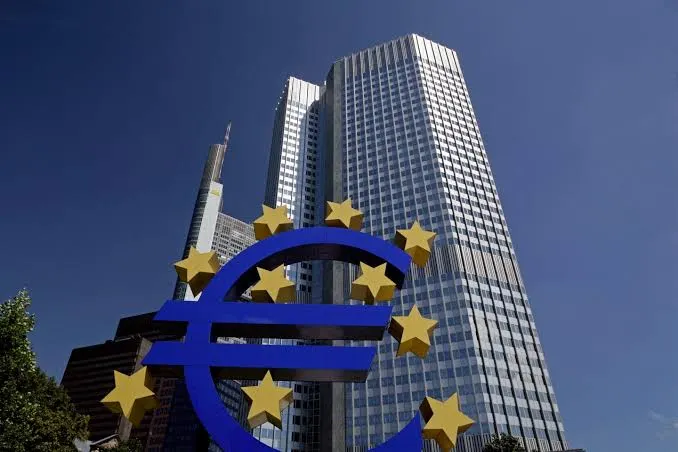
The euro area grew 0.4% quarter on quarter in the third quarter of 2026, according to the first estimate released by Eurostat on 30 October, comfortably ahead of expectations for 0.2%, although the aggregate contains an unusually wide spread of national outcomes, from Ireland's 5.5% expansion to a contraction in France of 0.1%.
The year-on-year rate was 1.3% for the euro area and 1.5% for the wider European Union, and after the second quarter's stronger-than-expected 0.6% reading, the aggregate tells a picture of an economy growing solidly, if unevenly, in the third quarter rather than one stumbling into recession.
The spread behind the headline
The quarter's growth was not evenly shared. Spain expanded 0.6%, the Netherlands and Estonia also grew 0.6%, while Ireland's 5.5% figure and Lithuania's 1.0% contraction occupy the two extremes. Italy was flat and France shrank by 0.1%, a decline that arrived unexpectedly and will draw market and policy attention in equal measure.
Before the euro area's aggregate is celebrated, and excluding Ireland, the euro area's figure was estimated at roughly 0.2% for the quarter, meaning the exclusion of a single country's outsized expansion changes the headline by half. Distortions of that magnitude are common in quarterly gross domestic product estimates, where a small number of large multinational investments can swing the print, and any investor who wants a handle on the ECB's likely reaction must look beneath it.
What the 0.4% says about the European cycle
The surprise was in the direction of strength, at a point where the European economy is holding up against a run of shocks rather than cracking. Even after a year that has included tariff friction, soft Chinese demand and an industrial sector still in retreat, the euro area's expansion extended a second quarter that was itself stronger than expected.
At a moment when global economics have moved to a period of unusual uncertainty, sustained growth in the euro area would be a significant contribution for world demand. The danger of a recession in Europe is one of the most-watched risks for global financial markets, not because the eurozone drives global growth today, but because a simultaneous downturn in Europe, China and the United States would be self-reinforcing at a time of elevated stock prices, and the third-quarter data goes a long way to removing that worry for the near term.
Why the French contraction has significance
The French economy's slight decline resonates because the euro area's second-largest economy has been the continent's main policy problem all year. The contraction arrived in a quarter where its growth has been held back by the forces that have shaped the domestic political situation: budget uncertainty, unreliability in the government's ability to secure reforms through parliament, and the public sector's consuming needs that have shaped French consumption through the past several years.
The French contraction is a signal, not yet a crisis: a single quarter's decline after years of weak growth is the difference between an economy that is stagnant and one that is beginning to move downwards. The country's prior quarters had shown near-zero expansion, with France in a holding pattern, and the movements inside it are what matter for the euro area's policy monitor going forward, where the fiscal stance and the political environment will determine whether the pattern repeats or is reversed.
What the European print offers African economics
For African economies, the trajectory of the eurozone is a substantial external factor, tied to export channels, the exchange rate of the CFA franc, and the remittance flows of African workers in Europe. A euro area growing at a more solid pace is good news for African merchandise exporters, which translate into broader demand for agricultural goods and higher-than-expected commodity prices for industrial raw materials.
The policy angle is that the European Central Bank, whose decisions shape credit conditions across economies that peg to or track the euro's broader periphery, has been holding steady, and the third-quarter growth figure gives it more latitude to keep rates elevated without condemning the bloc to recession. Where the eurozone's rate trajectory shows greater stability, African economies' borrowing costs in euro, particularly for those with euro-denominated debt, face less of the currency-mismatch exposure that has been a feature of African debt burdens in recent years.
The third quarter delivered a euro area that grew faster than almost anyone predicted, with better-than-expected numbers in the larger economies offset by a French contraction that will carry into the policy discussion in the next months. With the central bank holding rates and the growth figure exceeding forecasts, the European economy is moving into 2027 with a better platform than expected, and the remaining months of this year will confirm how broadly that growth is shared.
Up next
Lagos Economic Roundtable to Shape 2027 Development Priorities
“The economic outlook for 2027 requires deliberate policy choices that will strengthen our resilience, sustain economic growth and...
More in Economy
See all
Canada GDP Flat in August as Business Slows
Canada's real GDP stayed flat in August for a second straight month, with a September flash estimate of minus 0.1% rotating focus.

Taiwan Economy Grows at Fastest Pace in Decades
Taiwan's GDP rose 14.36% year on year in the third quarter, a four-decade record, driven by exports of semiconductors and AI hardware.

Euro Forecasters Raise Near-Term Inflation Expectations
An ECB survey shows higher inflation forecasts for 2026 and 2027, while longer-term expectations remain at 2%.
About the author
Abiodun Abdullahi
Author / Business and Markets Writer
Abiodun Abdullahi writes for BusinessPress.
More by Abiodun Abdullahi


