
Taiwan Economy Grows at Fastest Pace in Decades
Taiwan's GDP rose 14.36% year on year in the third quarter, a four-decade record, driven by exports of semiconductors and AI hardware.
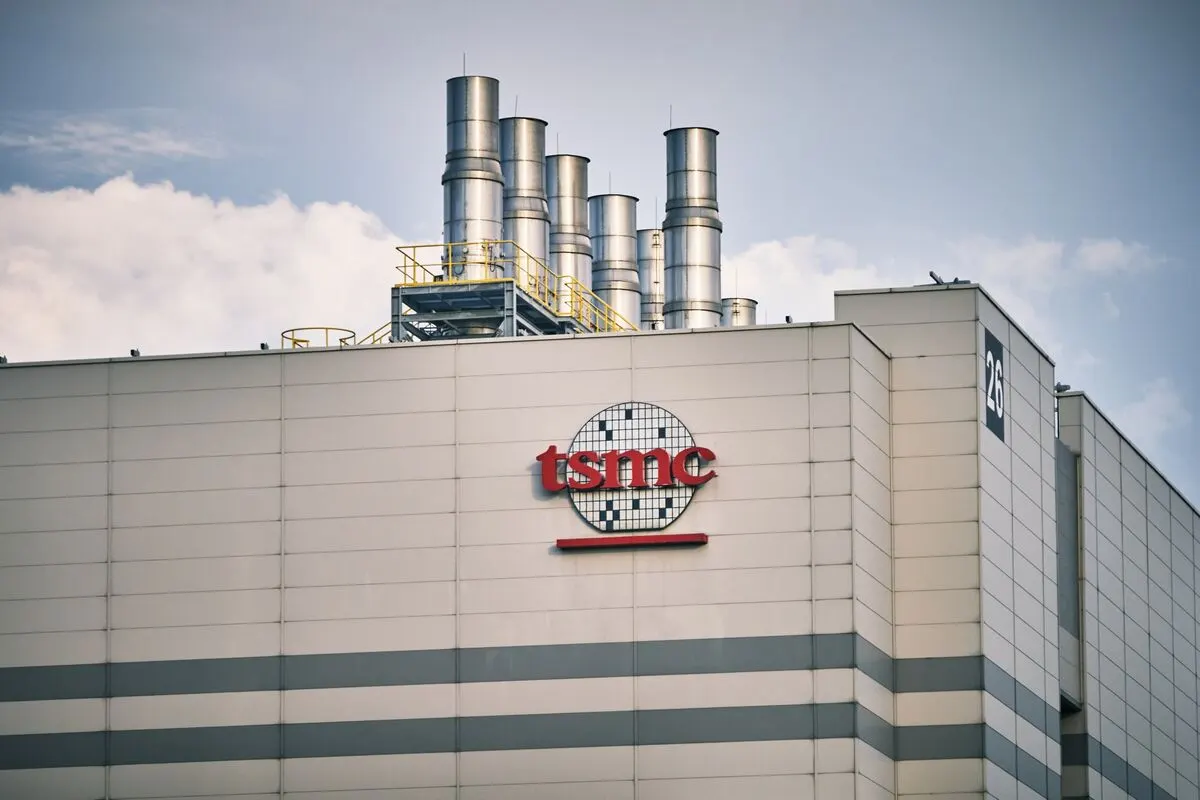
Taiwan's economy grew 14.36% year on year in the third quarter of 2026, according to the Directorate-General of Budget, Accounting and Statistics, the fastest pace since records of comparable depth stretch back nearly fifty years, after expansions of 12.95% in the first quarter and 14.22% in the second.
The quarterly record is both a domestic milestone and a reading on the global technology cycle. The same export machines that carry Taiwan's trade statistics now carry the world's data centres, from the AI accelerators designed elsewhere but fabricated by Taiwan Semiconductor Manufacturing and its domestic network of assembly and component suppliers.
What the 14% actually contains
The composition reported with the headline figure explains the engine. Exports of goods and services rose 21.12% year on year in the quarter, imports increased 20.12%, capital formation expanded 26.36%, and private consumption grew by a more moderate 5.37%.
That is the anatomy of an export-led boom with an investment leg rather than a consumption one. Orders arriving from abroad pull goods out of the island while the companies that make them build more domestic capacity, in clean rooms, tooling and factories, to keep the orders coming. Household consumption of 5.4% is solid but is a supporting line, not the engine, which is why the expansion's continuation depends on the durability of the foreign demand rather than local sentiment.
The semiconductor pull at the centre of it
TSMC's third-quarter profit rose 69% year on year, and the company's customers have been raising their capital budgets faster than any point in the industry's recent history as they build out computing capacity for artificial intelligence workloads. Every rearmament of that build-out orders Taiwanese output at multiple layers: the leading-edge chips themselves, the memory passed around the supply chain, the power and packaging components engineered domestically, and the retail electronics that enter the market once the hardware has been assembled.
This matters through Taiwan's whole trade account, which is how the island collects the income that funds its own investment programme. A pull of this strength, coming from markets that have been running large deficits with the island for decades, is the mechanism by which Taiwan converts the global investment surge into a domestic industrial one, with wages, capacity and supply contracts moving together.
What the figure means for global monetary thinking
The pace of the growth leads directly to the questions central bankers in importing countries now have to answer. When a large trading economy reports output growth above 14% and exports above 21%, it demonstrates that some of the demand which central banks elsewhere had hoped to cool is still running strong.
Consumers and companies paying higher prices for AI-capable devices, information-technology equipment and the infrastructures supporting it are feeding that demand. Policymakers trying to bring inflation to target have to decide whether the price strength coming out of the technology supply chain is an escuse that monetary policy in their own economies can handle, or whether it represents a longer-term repricing, as occurred during the semiconductor market saw in the early days of the recent AI build-out.
Why African importers and builders should take note
The Taiwanese surge has two practical implications for African economies, neither of which requires being an exporter of semiconductors. The first concerns pricing: the equipment businesses buy in, from servers to telecoms hardware to power electronics for grid and refinery projects, is increasingly priced against a supply chain running at record capacity use. That tightness supports higher prices for the imported technology and, in an AI-accelerated world, a wider premium for the latest-grade performance.
The second is industrial positioning. Taiwan's quarter shows what participation in a high-value global electronics chain is worth to a small economy's domestic investment, and Nigeria's long ambition to convert its scale into a manufacturing policy continues to point in that direction. Building the level of supplier credit, vocational depth and infrastructure that turns one factory into an ecosystem takes decades, which is the correct horizon on which to read Taiwan's growth figure, rather than as a caution for African countries to give up on building electronics value chains.
Where the risks to the record lie
A quarter of this size carries natural questions about its continuation. The AI build-out is capital intensive, and its customers' spending plans are board decisions that can be re-timed within a year, meaning the island's main export run can decelerate as quickly as it accelerated if data-centre orders pause. Taiwan's preceding quarters in this expansion now include three readings in a row above 12%, so the fourth quarter's contribution will be watched nearly as much as the record itself.
For now, the record is a statement about the distribution of growth in the world economy: a sizeable slice of 2026's expansion is arriving through a supply chain Taiwan controls, and the economies on the buying end are still competing for that output rather than showing signs of retreat.
Up next
Cameco Weighs Quarterly Report Against Nuclear Boom
Cameco's third quarter showed $43 million of net earnings, a small adjusted net loss and $267 million of adjusted EBITDA.
More in Economy
See all
US Labor Costs Stay Near 3.4% as Services Bend
US employment costs rose 3.4% year on year in the third quarter, a fourth straight subdued reading that shapes Federal Reserve policy.

Canada GDP Flat in August as Business Slows
Canada's real GDP stayed flat in August for a second straight month, with a September flash estimate of minus 0.1% rotating focus.

Euro Forecasters Raise Near-Term Inflation Expectations
An ECB survey shows higher inflation forecasts for 2026 and 2027, while longer-term expectations remain at 2%.
About the author
Tunde Balogun
Economics Correspondent
Tunde Balogun writes for BusinessPress.
More by Tunde Balogun
OPEC+ Sets Painful December Production Targets Pause
Markets1 min ago
India GST Collections Jump 23% to Rs 2.31 Lakh Crore
Economy53 mins ago
Lagos Economic Roundtable to Shape 2027 Development Priorities
Business58 mins ago


