Dangote Cement moves to net cash as nine-month profit rises 31%
Stronger cash generation funded expansion and distributions as the group shifted from year-end net debt to a positive net-cash position.
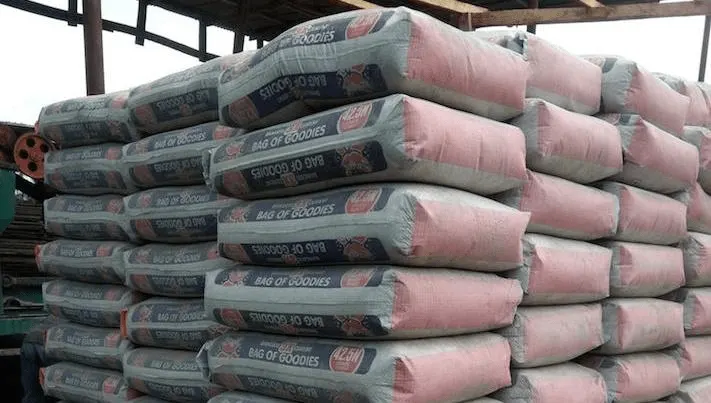
Dangote Cement reported a shift from net debt to net cash on 28 October as stronger operations generated enough funds to support expansion, debt repayment and shareholder distributions. Nine-month profit after tax increased 31.2% to N974.8 billion, according to its earnings release.
The balance-sheet change is the central development for investors assessing the manufacturer's capacity to finance further growth. It also needs careful interpretation: a positive net-cash measure does not mean that the company has no borrowings or that all cash is available for a new dividend.
Cash generation changes the funding position
In its nine-month release , Dangote Cement reported operating cash flow of N1.827 trillion and net cash of N51.1 billion, against net debt of N682.9 billion at December 2025.
The movement represents an improvement of about N734 billion in the stated net position. Because net debt offsets relevant cash against borrowings, it answers a different question from the gross amount owed to lenders.
For an expanding manufacturer, that distinction is important. Debt maturity dates, the location of cash and continuing investment commitments all influence financial flexibility. A consolidated net-cash position strengthens the starting point, but does not eliminate the need to manage individual obligations as they fall due.
Sales growth combines volume and revenue per tonne
Group revenue rose 19.6% to N3.774 trillion, while cement volumes increased 9.4% to 22.1 million tonnes. Pan-African volumes grew 14% to 9.1 million tonnes.
BusinessPress calculations indicate that revenue grew by roughly 9.3% more per unit of reported volume after allowing for the increase in tonnes sold. This is an aggregate relationship, not a pure price increase: product mix, market mix and currency translation can also affect the result.
The distinction matters for evaluating construction demand. Higher turnover is not evidence that customers bought 19.6% more cement. The separately disclosed volume increase provides the clearer physical demand indicator, while the revenue comparison explains the value generated from that larger sales base.
Energy spending rises more slowly than output
Dangote Cement said fuel and power costs increased 2%, against group volume growth of 9.4%. Its reported earnings before interest, tax, depreciation and amortisation reached N1.766 trillion, with a margin of 46.8%.
Those movements are consistent with lower aggregate fuel and power cost per tonne on the stated comparison. They do not isolate how much came from fuel prices, energy mix, plant efficiency or shifts between operating markets.
The commercial implication is nonetheless material. Energy is an input that must be paid for before the finished product reaches customers. Improving the relationship between energy spending and tonnes sold can release resources for other costs and investment, provided that the effect survives changes in utilisation and fuel markets.
Exports create an additional route for Nigerian production
The company reported that Nigeria's cement and clinker exports increased 41.8% to 1.5 million tonnes. It identified 26 clinker shipments to Ghana, Cameroon and Côte d'Ivoire.
For Nigerian manufacturing, exports can widen the customer base beyond domestic construction activity. They can also improve plant utilisation where production capacity exceeds immediate local demand. That opportunity depends on the economics of moving material to the destination, rather than on production cost alone.
Freight, port handling and the receiving market's demand determine whether a shipment creates attractive returns. Export growth therefore demonstrates activity, but does not establish that every external sale carries a higher margin than a Nigerian sale. The release should not be used to infer a countrywide trade surplus from one producer's volumes.
Free cash flow provides room, rather than a new payout promise
Dangote Cement reported free cash flow of N1.26 trillion and dividends paid of N753.8 billion. Its stated expansion capital expenditure was N566.7 billion.
The relationship indicates that reported free cash flow covered the distributions already made. It does not constitute an announcement of another payment. Further investment, operating requirements and board decisions will shape the use of future cash.
The accounts cover the nine months ended September, with board approval on 27 October and the release dated 28 October. They show a larger earnings base and a stronger reported funding position. The next test is whether that cash-generating capacity persists as expansion commitments proceed and the group converts additional production into collected sales.
Up next
CAP pretax profit rises 21% as tax limits net earnings growth
Operating expenses grew more slowly than sales, improving profitability before a larger tax charge narrowed the gain reaching shareholders.
More in Corporate
See allBUA Cement board approves Q3 results ahead of October 30 filing
BUA Cement's board has approved its nine-month results, with the company set to file the statements by October 30 after a first half marked by strong revenue and profit growth.

Shipping data show Nigeria became a net petrol exporter in March
The one-month trade shift followed the Dangote refinery's production ramp-up, but it does not establish that petrol imports have ended permanently.
Ikeja Hotel financing relief lifts profit despite weaker operations
Higher finance income and the absence of comparative finance costs supported nine-month earnings, while the latest quarter weakened.
About the author
Ngozi Eze
Companies Reporter
Ngozi Eze writes for BusinessPress.
More by Ngozi Eze