BUA Cement board approves Q3 results ahead of October 30 filing
BUA Cement's board has approved its nine-month results, with the company set to file the statements by October 30 after a first half marked by strong revenue and profit growth.
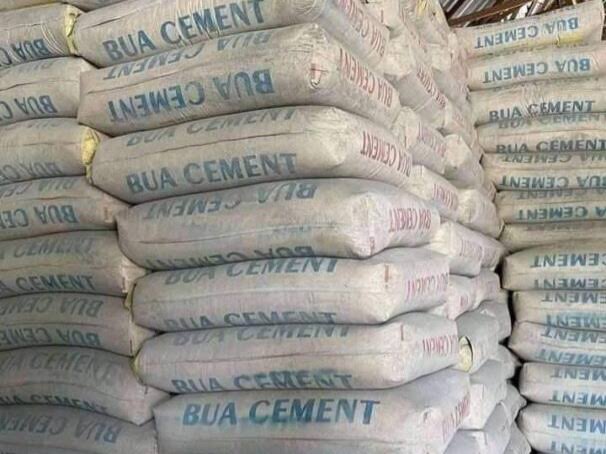
BUA Cement’s board has approved the company’s unaudited financial statements for the nine months ended September 30, 2026, setting the stage for a third-quarter filing that will be scrutinised for evidence that the cement maker’s strong first-half earnings can survive a tougher operating environment.
The board met on Tuesday, October 20, and approved the results, according to a regulatory notice signed by Company Secretary Hauwa Satomi. The company said it would file the statements through the Nigerian Exchange’s Issuers’ Portal on or before Friday, October 30, 2026. A closed period remains in force until 24 hours after the results are released.
The filing deadline matters for investors because BUA Cement is one of the largest companies on the NGX and a bellwether for the construction and building-materials sector. Its results will also provide clues about the health of infrastructure spending, household demand and the cost of energy.
A strong first half
BUA Cement reported revenue of N728.93 billion in the first half of 2026, up 25.6 per cent from N580.30 billion in the same period of 2025. Profit after tax rose 79.6 per cent to N324.88 billion, while earnings per share increased to N9.59 from N5.34.
The profit growth was faster than revenue growth, which suggests that the company benefited from higher prices, lower costs or both. Gross margin improved, and operating expenses grew more slowly than sales. That is a sign of operating leverage: as volumes rise, fixed costs are spread over more units.
BUA Cement’s first-half results were among the strongest in the sector. The company has invested heavily in new capacity, and those investments are beginning to pay off. Its plants are running closer to full utilisation, and its distribution network is reaching more customers.
Cash flow and capex
Operating cash flow rose 85.37 per cent to N278.45 billion in the first half, while free cash flow increased 61.96 per cent to N217.78 billion. That is a healthy conversion of profit into cash, which gives the company flexibility to fund capital expenditure, pay dividends and service debt.
Capital expenditure rose 285.11 per cent to N60.67 billion, reflecting the company’s ongoing expansion. BUA Cement is investing in new production lines and logistics infrastructure to reduce costs and increase market share. Those investments are expensive, but they are necessary to compete with Dangote Cement and other producers.
The company raised N233.27 billion in new borrowings during the first half. That increased its debt burden, but it also provided the funds needed for expansion. The key question is whether the new capacity will generate enough cash to service the debt without straining the balance sheet.
Dividends and shareholder returns
BUA Cement paid dividends of N338.64 billion in the first half, according to the company’s financial statements. That was more than its first-half profit after tax, which means the payout was partly funded from retained earnings or borrowings.
A dividend payout ratio above 100 per cent is unusual for a company that is also investing heavily. It may reflect the board’s confidence in future cash flows, or it may be a way to return cash to shareholders after a period of strong profitability. Investors will want to know whether the payout is sustainable.
If the company maintains a high dividend, it could support the share price. If it cuts the dividend to fund capex or reduce debt, the market may react negatively. The third-quarter results and any accompanying commentary will provide clues.
The operating environment
Nigeria’s cement industry is cyclical, but it has structural growth drivers. The country has a large housing deficit, and the government is spending heavily on roads, bridges and other infrastructure. Those factors support long-term demand for cement.
In the short term, however, the industry faces headwinds. Inflation is high, interest rates are elevated and household budgets are under pressure. The cost of diesel, which is used to power trucks and generators, remains a significant expense. Rainfall can also disrupt construction activity.
BUA Cement’s first-half results suggest that the company has been able to pass on some cost increases through higher prices. Analysts at CardinalStone estimated that average realisations rose 13 to 25 per cent across the sector in the first half, with BUA showing the strongest pricing-led revenue growth. That pricing power may not last if demand weakens.
What the third quarter will show
The third quarter covers July to September, a period that includes the peak of the rainy season in many parts of Nigeria. Construction activity typically slows during heavy rains, which can reduce cement volumes. If volumes fell, the company’s revenue growth may have slowed.
Costs are another uncertainty. Diesel prices, exchange rates and energy costs can change quickly. BUA Cement has invested in alternative fuels and captive power to reduce its exposure, but it is not immune to input-cost inflation.
The company’s debt profile will also be in focus. Higher borrowings mean higher interest costs, particularly if the loans are dollar-denominated or tied to market rates. A rise in finance costs could eat into profit growth.
Why the filing matters
BUA Cement’s results are important beyond the company itself. They provide a read-across to Dangote Cement, Lafarge Africa and other building-materials companies. They also signal whether the construction sector is holding up despite the weak macroeconomic environment.
The NGX requires listed companies to file their quarterly results within a specified period. BUA Cement’s decision to approve the results ahead of the deadline is a sign of good corporate governance. It gives investors time to analyse the numbers before the market opens on the following trading day.
The closed period prevents directors and insiders from trading the company’s shares until the results are public. That rule is designed to prevent insider trading and ensure that all investors have access to the same information.
What to watch
Investors will look for revenue growth, margin trends, cash flow, debt levels and dividend signals. They will also listen for management commentary on demand, pricing and capacity utilisation. Any guidance on the full-year outlook will be closely watched.
BUA Cement’s shares have benefited from the broader market rally and the company’s strong earnings. The third-quarter results will determine whether that performance is sustainable. If the numbers disappoint, the stock could come under pressure. If they beat expectations, the company could regain momentum.
[irp] [irp] [irp] [irp] [irp]
Up next
Senate summons NMDPRA, NNPC, NEITI over conflicting fuel import data
The Senate public accounts committee has summoned NMDPRA, NNPC Limited and NEITI after the agencies presented conflicting petrol import figures for 2022 and 2023.
More in Corporate
See all
FG, FAAN, Bi-Courtney end 20-year MMA2 dispute with settlement
The federal government, FAAN and Bi-Courtney have signed agreements to end their long-running MMA2 dispute, with the operator waiving a N132 billion claim and FAAN set to collect concession fees.
AVA Capital posts 9M PBT of N2.63bn, PAT N1.84bn as client funds grow
AVA Capital reported strong nine-month results with growth in client funds and profitability.

Brewers face share price erosion as International Breweries, Champion lag despite mixed earnings
Brewer shares have come under pressure as weak demand and cost pressures weigh on valuations.
About the author
Ngozi Eze
Companies Reporter
Ngozi Eze writes for BusinessPress.
More by Ngozi Eze
Shettima urges states to establish electricity markets under Electricity Act 2023
Economy5 hrs ago
US housing starts fall to 1.221m, pending sales hit record low as mortgage rates stay elevated
Economy5 hrs ago
Federal Government and Bi-Courtney End Nearly 20-Year MM2 Dispute in N132 Billion Concession Settlement
Corporate