
Cross River Plots 15,000 Tonne Coffee Weekend Plan
Cross River State targets 30 million coffee seedlings and 15,000 tonnes annual output with 6,000 hectares of plantations across three LGAs.
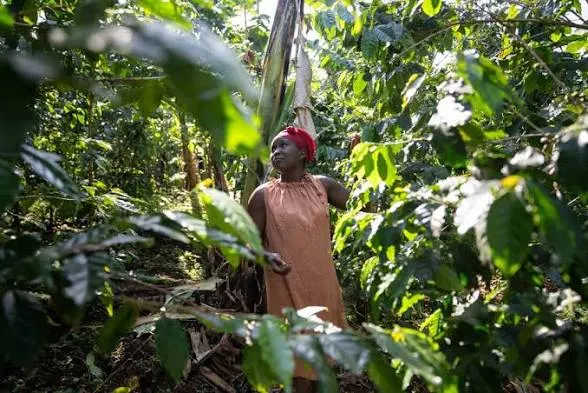
Cross River State has announced an agricultural expansion programme targeting 30 million coffee seedlings and an eventual 15,000 tonnes of annual coffee production, with a partnership to establish 6,000 hectares of plantations across three local government areas — one of the largest single-state coffee cultivation commitments Nigeria has seen, and a bet that positions the South-South state to enter an export crop whose global demand story is running cleaner than any of the country's traditional staples.
The programme, announced by Governor Bassey Otu's administration and reported by the News Agency of Nigeria this week, designates Odukpani, Akamkpa and Akpabuyo local government areas as the plantation corridors, with the partnership structure bringing private-sector cultivation capacity into what the government presents as a value-chain programme spanning nurseries, farming, processing and marketing. The state's ambitions rank among Africa's continental coffee revival plans — a crop whose production economics, climate requirements and price environment make Nigeria a late but potentially competitive entrant in the African coffee story.
Nigeria's hidden coffee inheritance
Nigeria's coffee history is quietly rich. The crop was cultivated commercially through the mid-20th century — with production concentrated in the Cross River basin's highland belt, Kogi's slopes and Taraba's Mambilla plateau — before the sector's collapse through the structural adjustment decades, when price controls, smuggling economies and the rust-affected plantations pushed farmers out. Robusta from Nigerian farms still surfaces in the regional trade statistics, but the volumes rank nowhere near the continental output that Ethiopia, Uganda, Ivory Coast and the East African belt deliver; the coffee Nigeria drinks is substantially imported.
The revival economics are different this time. Coffee's 2020s price environment — developer-grade roaster demand, the climate change pressure on traditional producers and the specialty segment's premium structure — has made African coffee investment a development-finance theme, with global roasters sourcing African origins for both commercial and sustainability narratives. For Nigeria, importing coffee while possessing suitable land has long been the industry's structural irony; the Cross River programme is the first state-level attempt to correct it at plantation scale.
What 30 million seedlings and 6,000 hectares actually build
The scale is realistic to consider. Six thousand hectares of planted coffee, maturing over a three-to-five-year productive cycle with yields dependent on husbandry quality, would produce — at Nigerian-viable yields for robusta of roughly one-and-a-half tonnes per hectare — an eventual 9,000-10,000 tonnes per cycle, and the 15,000-tonne target implies further area expansion or yield intensification. Every tonne of Nigerian coffee consumed domestically — the instant-coffee, cafe and beverage industrial demand whose volumes the country currently imports — builds the import-substitution case that Nigeria's FX-conservation arithmetic needs.
The supply-chain build matters more than the agronomy. Coffee's transformation economics — pulping, drying, milling, grading and the quality-control certification whose specialty-market access requires — need infrastructure whose absence killed the previous Nigerian coffee sector. The state's pairing of plantation establishment with processing partnerships determines whether the programme ultimately exports green beans at a commodity discount or builds the value-chain whose margin capture the revival requires.
The agronomy and economics that will decide
Coffee's agronomy is demanding in ways that peg the programme's realism. Robusta varieties suit Nigeria's lowland humid corridors — Cross River's ecology matches West African neighbours whose robusta output anchors the Ivorian industry — but plantation establishment requires nurseries whose genetic quality, fertilisation programmes, shade management and pest control the extension systems must deliver. Labour intensity — harvesting is hand-picking — makes the crop an employment programme as much as an export industry, and its rural-income generation is the social case the state's messaging emphasises.
The commercial case runs through quality and market access. The global coffee trade's mid-chain — the roasters, traders and certification bodies whose sourcing standards govern access — has been courting African origins, but premium pricing follows cup quality and traceability whose delivery requires post-harvest discipline most Nigerian rural supply chains have struggled to sustain. The state programme's processing partnerships are the variable to watch: plantations without processing investment produce low-value cherries; plantations with washing stations, drying infrastructure and certification produce export-grade coffee whose price difference runs to multiples.
The wider African coffee moment
Across the continent, coffee production is expanding its geography: Ivory Coast's rebirth programmes, Uganda's volume scaling, and the East African belt's specialty-market maturation have rewritten the African coffee map through the 2020s. Nigeria's entry — if the Cross River programme's execution delivers — would follow a pattern several West African states have demonstrated: state-facilitated plantation programmes that combine land, inputs and private processing capacity to rebuild a sector the commodity-price collapses of the 1990s destroyed.
For Cross River, the programme is also a fiscal and jobs statement: an administration diversifying a state economy whose oil-linked revenues have declined with the Federation Account's shifts, using an asset base — land, climate, labour — whose agricultural value the state's forestry-endowed ecology carries. The next milestones that will show whether the coffee promise becomes production: nursery establishment rates, the hectares actually planted through the coming year and the processing partnerships that convert cherries into the exportable grade the 15,000-tonne target implies.
Up next
Nigeria Eyes 50m Savings From Local Data Hosting
Nigeria projects roughly 50 million dollars in savings from shifting government and regulated data hosting into domestic infrastructure.
More in Agriculture
See all
BUA Foods Profit Rises Despite Lower Sales
BUA Foods reports higher nine-month profit as lower input and operating costs offset declining revenue.

Presco Cuts Debt as Pretax Profit Advances
Presco reports higher nine-month pretax profit, lower borrowings and reduced finance costs as it prepares additional plantation output.

Livestock Feeds Returns to Profit as Financing Costs Ease
Livestock Feeds reports a nine-month profit despite lower revenue, supported by stronger gross profit and reduced financing costs.
About the author
Abena Ofori
Agribusiness Correspondent
Abena Ofori writes for BusinessPress.
More by Abena Ofori


