
China Factory Surveys Diverge on October Growth Path
A private China manufacturing index held at 52.0 for an eleventh month above 50 while the official gauge fell to 49.3, splitting the recovery between exporters and heavy industry.
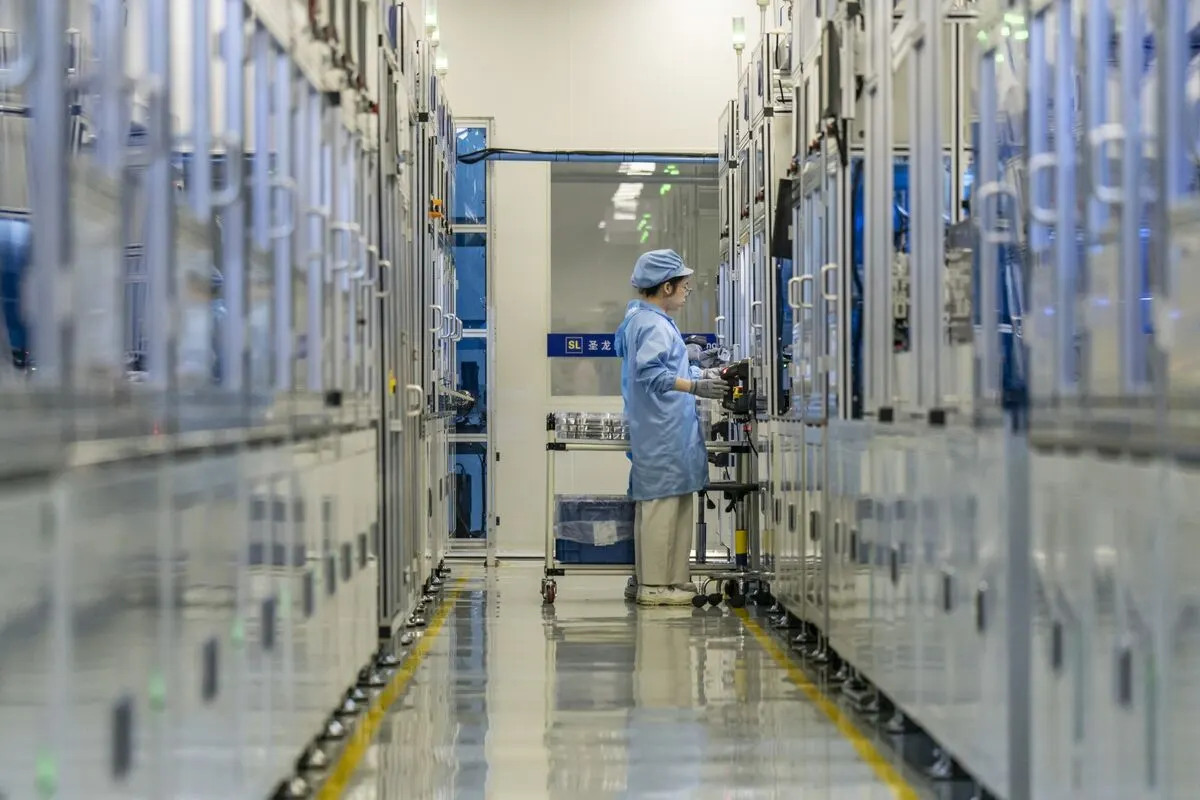
China's factories closed October at a pace private-sector pollsters have not seen in years, with the RatingDog/S&P Global China General Manufacturing PMI holding at 52.0 — its eleventh straight month above 50 and the longest improving streak since mid-2021 — even as the official government index fell back to 49.3, a divergence released on Monday that tells two very different stories about the world's second-largest economy.
The private survey, weighted toward export-oriented and private firms, reports output growing at its sharpest rate since April, total new orders rising for a seventeenth consecutive month and new export orders up for a fourth straight month, with panel firms pointing to new product launches, better production capability and demand from clients in Asia, Europe and Africa. The official National Bureau of Statistics measure, which samples a broader array of large, often state-linked domestic firms, slipped below the growth threshold on softer domestic and external demand, with output at 49.8 and new export orders at 48.7.
Neither survey is wrong; the divergence describes who is winning. The recovering cohort of Chinese manufacturing is private, plugged into global supply chains and competing on cost and speed, while the drag sits with heavier industrial segments tied to domestic construction, infrastructure spending and state-linked orders that have yet to turn.
Prices tell the inside story
The most commercially revealing detail inside the private survey is price behaviour: output charges fell outright for a second time in three months amid intense competition, export charges declined for the first time in nearly a year, and although input prices rose for a sixteenth consecutive month — metals and fuel cited — the pace of input inflation eased below the year-to-date average. Chinese factories are thus growing faster while selling cheaper, passing through their cost relief to defend volume.
That mix matters far beyond China. A factory sector that grows by discounting exports manufactured goods to the rest of the world applies direct price competition to developing-market industry — from Nigerian consumer goods brands to Indian electronics assemblers — but it also re-anchors global goods inflation closer to zero, a relief valve for central banks from Abuja to Warsaw that have been navigating more sticky services inflation.
What it means for commodity demand
Manufacturing demand is the backbone of bulk commodity consumption, and the private-survey story has a commodity reading. Purchasing activity rose at its strongest pace in eight months, investment-goods producers accelerated while consumer-goods makers slowed, and firms restocked broadly — points that lean positive for metals demand, even as output prices and ex-factory charges stayed restrained in the official data.
Nigeria and other oil exporters have an indirect interest too. A factory economy still expanding, but decelerating marginally, keeps crude-derived freight and industrial demand stable rather than booming; more importantly for oil exporters, the survey period covered weeks in which Middle East dynamics and war-driven logistics costs shaped the industrial raw materials basket directly, meaning next month's prints will test how much of October's cost relief survives any Middle East de-escalation.
Pockets of demand and weakness
Underneath the October numbers there is heterogeneity. New export orders grew for a fourth month with growth slowing to a three-month low, and anecdote points to accelerating investment-goods exports alongside decelerating consumer and intermediate-goods exports — Chinese plants selling machinery and industrial equipment faster than they sell textiles and toys, a structural signal of which economies are building out and which are adjusting consumption.
Employment rose, but only marginally, and backlogs of work rose for a ninth month, suggesting the recovery may not yet be broad enough to lift hiring strongly — a data point that dovetails with the official index's softer employment at 48.4 and with Chinese policymakers' stated concern about the quality of job creation.
Business confidence slipped to a nine-month low even as operations expanded, so the pattern at the start of the fourth quarter is one of steady output growth with cautious management expectations, more consistent with stabilisation than a boom. For global investors, the divergence between the headline PMIs is thus less a contradiction than a map: Chinese private factories are on the growth side, while the heavier state-linked segments arguably need the stimulus that Beijing has been rolling out incrementally through the autumn.
For African trade and manufacturing planners the actionable read is narrow but useful — Chinese export pricing is becoming more competitive again, which improves the landed-cost economics of capital goods imports, while sharpening the challenge for nascent African manufacturing sectors that compete with Chinese finished-goods imports in the same consumer categories.
Up next
Eurozone Factories Hold Growth as Costs Surge Again
The S&P Global Eurozone Manufacturing PMI eased slightly to 52.7 in October for a ninth straight month of growth as input costs hit a five-month high, keeping ECB rate pressure alive.
More in Economy
See all
China Factories Slip Back Below Growth Line in October
China's October manufacturing PMI fell to 49.3 from above 50 in September, with new orders at 49.4 and production at 49.8, NBS data shows.

India GST Collections Jump 23% to Rs 2.31 Lakh Crore
India's October goods-and-services tax collections rose 23% to Rs 2.31 lakh crore, with net receipts up 26%, after stamp-duty cutoffs.

Korea Exports Double in October on Chip Demand
South Korea's October exports surged 93.7% to $115.28 billion, the second-highest month ever, as semiconductor shipments rose 259%.
About the author
Abiodun Abdullahi
Author / Business and Markets Writer
Abiodun Abdullahi writes for BusinessPress.
More by Abiodun Abdullahi


