
North-East Poultry Farmers Warn Sector Near Collapse
Poultry farmers in Borno, Yobe and Adamawa seeking government intervention as input costs threaten the North-East poultry sector with collapse.
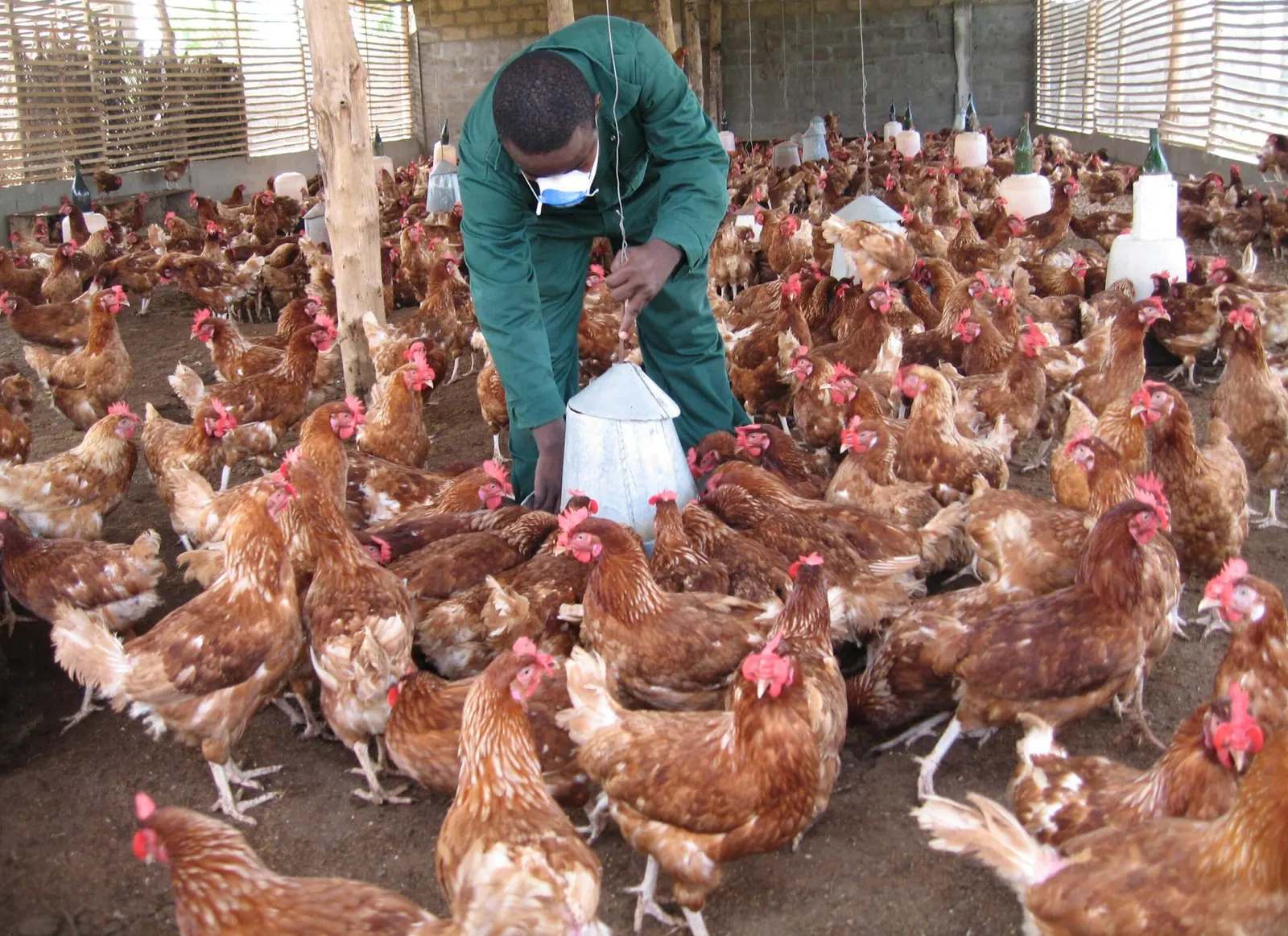
Poultry farmers across Nigeria's North-East have issued a formal call for government intervention to save their sector from collapse, with farmers in Borno, Yobe and Adamawa describing input-cost escalation as a threat to productivity that has pushed small and mid-scale egg and broiler operations out of business — one of the food sector's most job-dense industries asking for relief in the same season projections show national food insecurity deepening.
The call, reported by the News Agency of Nigeria this week through interviews with farming associations across the three states, centres on the arithmetic that has destroyed the sector's margins: feed costs — the dominant share of poultry production economics — have risen alongside the grain prices whose supply has weakened through the northern harvest distress; day-old chick availability and pricing have been constrained by the industry's breeding-stock import dependence; and energy costs for brooding and processing add to a cost stack that retail price ceilings cannot absorb.
Why poultry economics are breaking first
Poultry is the protein industry most exposed to grain-price volatility: feed conversion rations for eggs and broilers make maize and soy the direct production inputs, so grain shortages and price inflation transmit to operating costs within weeks. Nigeria's 2026 grain supply outlook — with USDA forecasting national maize production down five percent for 2026/27 and rice output lower still — has exactly that transmission: the feed mills whose raw materials the farms buy are repricing upward while farm-gate egg prices track a consumer price ceiling that the crisis-hit market keeps low.
The sector's structure worsens the squeeze. Nigerian poultry production is dominated by small and medium-scale operations — backyard and mid-scale farms of a few thousand birds — whose owners lack the working-capital buffers, contract-feed pricing and vertical-integration scale that shield the few large integrated producers. When input inflation outpaces output prices, the exit is instantaneous: birds are sold for slaughtering, coops go dark and the industry's productive capacity — breeding stock, incubation infrastructure, trained farm labour — dissipates exactly when the economy needs animal protein supply most.
What the region's collapse would cost
The North-East context sharpens the stakes. The region's agricultural economy has been rebuilding for a decade through recovery programmes, with poultry among the livelihoods whose restoration supports the return of displaced households to productive work. A sector collapse in Borno, Yobe and Adamawa does not merely subtract egg supply; it removes the income engine for the smallholder families whose economic stability underwrites the fragile peace economy, and deepens the food-security gap in states whose food systems' distress has already been documented across the region's conflict-affected corridors.
Nationally, the poultry sector is among the country's largest — millions of direct and indirect livelihoods across feed milling, hatcheries, farms, distribution and retail — and delivers the protein majority that consumers access most affordably. Projections in the country's recent food-security assessments already see more than 33 million Nigerians facing acute food insecurity by mid-2027; a poultry sector's contraction on top of grain shortfalls channels that arithmetic into protein deficiency, whose public-health effects land on children's nutrition first.
What intervention would actually address
The farmers' asks through the intervention call are concrete. Input relief: subsidised or credit-financed feed inputs, and support for local soya and maize production whose supply base relieves the mills' import dependence. Breeding-stock support: national hatchery capacity financing to reduce day-old chick import and price volatility. Financing for working capital: the sector's core structural gap — the seasonal working capital that bridging farms need between production cycles, which commercial bank credit lines at prevailing rates cannot serve profitably.Extension and disease control: biosecurity, vaccination and veterinary support whose failure risks the disease outbreaks that periodically wipe out production.
The federal and state policy architecture addresses each need partially: agricultural development banks, the commodity-input support programmes that state governments — Kaduna's fertiliser distribution a recent example — have revived, and the Central Bank's intervention funds whose agricultural credit windows have historically carried farm-sector lending. The call's urgency reflects the gap between those programmes' paper capacity and the sector's actual delivery, which the 2026 harvest distress has made existential rather than academic.
A sector test for the food-security agenda
The North-East poultry crisis is a compressed version of Nigeria's broader food-economy question: whether the support architecture designed for agricultural transformation can respond at the speed the current crisis requires. Wheat and rice get the policy attention because their staple status makes their shortages headline emergencies; poultry gets neglected precisely because its gradual suffocation occurs through thousands of small balance-sheet deaths that no market index registers until egg prices spike and protein consumption falls.
The intervention decision also carries 2027 arithmetic. Egg and broiler supply cycles are short enough that a properly structured input-and-credit programme announced this quarter could rebuild production within the year — a speed of impact few sectors can match, and one reason development economists list poultry among the best value-for-money interventions in a food crisis. For the region's recovery programmes, whose agricultural components have been among their most effective stabilisers, the poultry sector's survival is a state-level indicator of the peace dividend policy's real-world delivery.
The farmers' request lands on a federal food-security agenda that has been quieter than its crisis arithmetic demands. What the sector needs is not rhetoric: it is feed input finance, breeding-stock capacity and credit market access — interventions whose costs are small relative to the collapse they would prevent, and whose productivity returns arrive in months. The North-East call for help is the sector's exhaustion signal, and the response calendar that follows will show whether Nigeria's food-security architecture can act on the scale its projections now document.
Up next
Markets Head Into US Midterm Vote, Yields in Focus
Investors head into the US midterm elections watching fiscal policy, Treasury issuance and sector leadership, with Democrats expected to win the House and a heavy earnings week ahead.
More in Agriculture
See all
BUA Foods Profit Rises Despite Lower Sales
BUA Foods reports higher nine-month profit as lower input and operating costs offset declining revenue.

Presco Cuts Debt as Pretax Profit Advances
Presco reports higher nine-month pretax profit, lower borrowings and reduced finance costs as it prepares additional plantation output.

Livestock Feeds Returns to Profit as Financing Costs Ease
Livestock Feeds reports a nine-month profit despite lower revenue, supported by stronger gross profit and reduced financing costs.
About the author
Abena Ofori
Agribusiness Correspondent
Abena Ofori writes for BusinessPress.


