Baxi Exit Shows Nigeria's Offline Agent Banking Model Under Stress
Onafriq's wind-down of Baxi highlights a broader unit-economics crisis in Nigeria's offline agent banking model as inflation, costs and instant digital payments squeeze the business that once brought millions into the financial system.
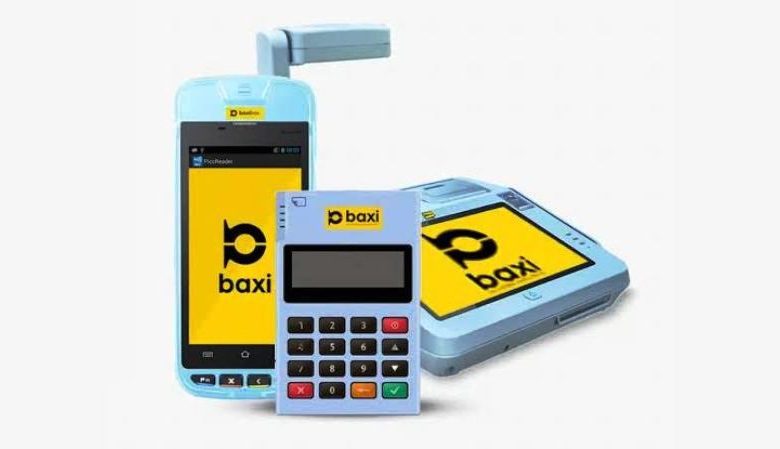
Onafriq's decision to wind down Baxi after five years in Nigerian agent banking is not only a corporate exit — it is a stress signal for a business model that once formed the backbone of financial inclusion in Africa's most populous country.
Agent banking brought millions of previously unbanked Nigerians into the formal system by turning neighbourhood shops into cash-in, cash-out and transfer points. The exit of a pan-African network from the vertical raises the question of whether offline agent economics can survive the digital payments boom they helped launch.
The unit-economics squeeze
Agent networks earn small fees per transaction. Those fees must cover agent commissions, cash-in-transit logistics, float management, technology, compliance and head-office overhead. When inflation erodes the real value of transaction fees, naira depreciation raises imported technology costs, and volumes decline at the counter, the margin stack collapses from both sides.
Super-agents that scaled on volume hoped to cross-sell insurance, credit and merchant services to convert thin payment margins into richer revenue. In practice, those adjacencies have been slower to develop than pitch decks assumed, leaving many operators dependent on the cash-out flow that banks and fintech apps are steadily digitising away.
Instant payments changed consumer behaviour
Nigeria's instant payment infrastructure has improved dramatically. Account-to-account transfers on bank and fintech applications now handle a growing share of routine payments, particularly in urban areas where smartphone penetration is high and agent density is also high — the exact segments that once drove agent transaction volumes.
Agents remain essential where cash still dominates, in rural markets and among older or lower-income customers. But the volume centre of the market has tilted toward rails that never pay an agent commission.
What consolidation means for inclusion
If Baxi's wind-down is followed by other exits, agent density could fall in marginal markets, partially reversing inclusion gains. Alternatively, the network that remains may be leaner, better capitalised and more integrated with bank and government cash-transfer programmes — fewer agents, but more sustainable ones.
Regulators will be watching either outcome. Financial inclusion policy still depends on physical cash access points, even as digital payments scale. The post-Baxi map of Nigeria's agent network will show whether the model is consolidating for strength or fragmenting under pressure.
Up next
REA Boss Warns New NARE Structure Risks Derailing Nigeria's Electricity Momentum
Rural Electrification Agency CEO Dr. Abba Aliyu has warned that creating a new NARE structure risks derailing Nigeria's electricity momentum, arguing public intervention is still needed to bridge commercial viability gaps.
More in Technology
See all
Mainstack CEO Says Nigeria Must Measure Startups by Revenue, Not Raise Rounds
Mainstack chief Ayobami Oyaleke is urging Nigeria's startup ecosystem to judge success by revenue, retention and risk management rather than funding volumes, warning against over-reliance on debt.

EBRD Backs Beacon Power Services With $20.9 Million for Smart Metering Push
The European Bank for Reconstruction and Development agreed a $20.9 million project financing with Beacon Power Services to deploy smart meters across six Nigerian distribution companies.

Global PC Shipments Fall 20.1%, Squeezing Nigeria's Import-Dependent Market
Worldwide PC shipments dropped 20.1 per cent in the third quarter of 2026, IDC says, the sharpest third-quarter fall on record, leaving Nigeria's imported laptop market exposed to higher prices.
About the author
Chinedu Nwosu
Technology Editor
Chinedu Nwosu writes for BusinessPress.
More by Chinedu Nwosu