Banks Lend More to Traders as Manufacturing's Share of Credit Shrinks
Nigerian banks increased lending to traders in the first half of 2026 while manufacturing saw a sharp drop in outstanding credit, according to a Nairametrics Research analysis of Central Bank sectoral data.

Nigerian banks increased lending to traders in the first half of 2026, while manufacturers saw a sharp drop in outstanding bank credit, according to an analysis of sectoral credit data published by the Central Bank of Nigeria.
Average credit to trade and general commerce rose 62 per cent compared with the same period last year, reaching N5.94 trillion in H1 2026 from N3.66 trillion in H1 2025 — the strongest year-on-year growth in absolute naira terms among expanding sectors. Manufacturing credit fell by about 26.94 per cent to N5.71 trillion from N7.81 trillion.
What the data measure
The figures track outstanding loan balances — the amount borrowers owed banks on average during the period — rather than the value of fresh loans approved. Overall, 12 of the 17 sectors monitored recorded increases, while five declined, yet average outstanding credit across the economy was only slightly higher than a year earlier.
That means the growth in trade and several other sectors came alongside substantial reductions elsewhere, rather than a broad surge in lending to businesses. Financial services remained the second-largest recipient of bank credit after industrial oil and gas, while agriculture, construction, power and transport also recorded growth.
Manufacturing's shrinking share
Manufacturing's decline is structural as well as cyclical. As recently as H1 2022, the sector accounted for 16.43 per cent of total outstanding bank credit; by H1 2026 that share had fallen to 9.58 per cent — leaving manufacturers behind trade and general commerce in the distribution of bank loans.
Industrial oil and gas remained the largest single recipient of credit, though its outstanding balance also fell, as did general services, information and communication technology, and real estate. Manufacturers have previously raised concerns about a N1.92 trillion fall in manufacturing credit during 2025; the first-half data show the pressure continued into 2026.
Will lower rates reverse the trend?
The CBN reduced its benchmark Monetary Policy Rate to 23 per cent in September 2026, after the period covered by these figures. Whether that translates into cheaper loans depends on bank pricing behaviour, not only the policy rate. Manufacturers Association of Nigeria Director-General Segun Ajayi-Kadir has warned that prime lending rates around 30 per cent could continue to limit affordable access to finance even after the benchmark cut.
Subsequent CBN reports will show whether manufacturing credit recovers, whether trade's share keeps expanding, and whether lower policy rates actually reduce the cost of borrowing for the productive sector.
Up next
Coronation Merchant Bank Named Nigeria's Best Sales and Trading Team at Euromoney Markets Awards 2026
Coronation Merchant Bank has been named Nigeria's Best Sales and Trading Team at the Euromoney Markets Awards 2026, recognising its client franchise and execution across fixed income, currencies and equities.
More in Finance
See all
Ecobank Cuts SuperSavers Rates as MPR Reset Reaches Nigerian Savers
Ecobank Nigeria has cut interest rates on its SuperSavers product effective October 16, with reductions of up to 3.18 percentage points across four deposit tiers after the CBN's MPR reset to 23%.
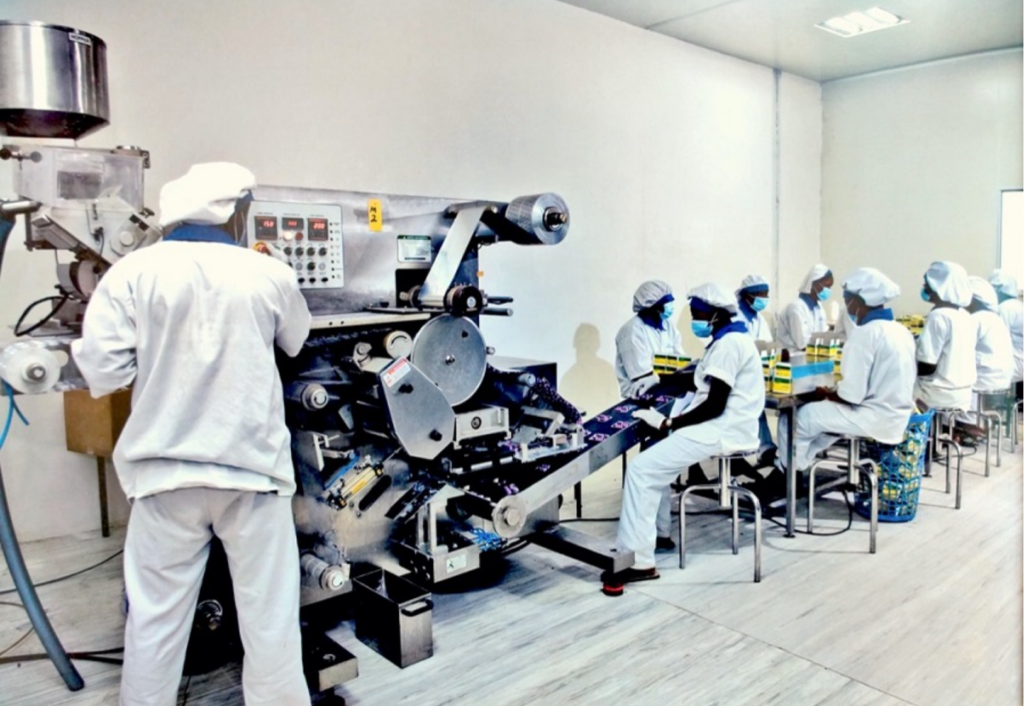
MeCure Industries Opens ₦14 Billion Commercial Paper Offer Priced at 21% Yield
MeCure Industries has opened a Series 8 commercial paper offer of up to ₦14 billion under its ₦40 billion programme, priced at a 21% gross implied yield as the drugmaker funds working capital ahead of expanding production investment.
IMF Says Nigeria's N4.65 Trillion Bank Recapitalisation Is Only the First Step
The International Monetary Fund has said Nigeria's bank recapitalisation is necessary but not sufficient, urging stronger supervision, better buffers and timely recognition of non-performing loans.
About the author
Musa Abdullahi
Finance Correspondent
Musa Abdullahi writes for BusinessPress.