OPay targets up to $4.42bn valuation as it prices New York IPO at $19-$21 per share
SoftBank-backed OPay is seeking up to $366 million with roughly 16 million ADSs priced at $19-$21, targeting a $4.42bn valuation on the NYSE under ticker OPAY with Stanbic Africa investing up to $200m.

OPay has set a target valuation of up to $4.42 billion for its initial public offering on the New York Stock Exchange, seeking as much as $366 million from an offering of roughly 16 million American Depositary Shares priced between $19 and $21 each, the Nigeria-focused payments company said on Friday, October 23, 2026, according to Reuters reporting of the company's filing.
The pricing terms advance an offering first registered with the United States Securities and Exchange Commission on October 9, when the company disclosed that first-half 2026 revenue more than doubled to $467.1 million and net income rose to $90.9 million from $21.7 million a year earlier. The company will trade under the ticker OPAY, with Citigroup, Deutsche Bank, Standard Bank and CICC listed among the underwriters.
Valuation resets in a tougher window
The maximum valuation of $4.42 billion is only modestly above the $4 billion implied when OPay first registered its filing in October, but the offering window has become materially harder in the interim. Reuters notes that renewed inflation pressure and the selloff in artificial-intelligence stocks have dampened appetite for new listings, with several companies delaying their flotation plans. Pricing a $19 to $21 band into that market is therefore an explicit bet that the deal can price without a discount.
Institutional support has been baked in. Non-binding indications of interest of up to $270 million have been received from investors including Redwheel Group and the Coronation Africa Frontiers Fund, and Stanbic Africa Holdings has separately agreed to invest as much as $200 million through a concurrent private placement. That cornerstone structure reduces the risk of an undersubscribed book and lowers float volatility in the early trading days.
[irp]
What makes the business profitable
OPay's financial profile is unusual among African fintechs. Loan financing accounted for about half of revenue in 2025, with transaction-based and loan-facilitation services splitting the other half, and it is lending, rather than pure payments, that produced the 2026 profit jump. The company had about 50 million monthly active users as of July 31, according to its prospectus, and operates in Nigeria, Indonesia, Egypt and Pakistan.
The model's concentration is the central risk investors should evaluate before subscribing. Revenue from Nigeria made up 88 per cent of 2025 sales, meaning the company's valuation is effectively a play on Nigerian consumer digital adoption, lending appetite and the stability of the naira in which many of those loans are denominated. Geographic diversification Indonesia, Egypt and Pakistan is real but small relative to the home market.
[irp]
Nigeria context and the secondary listing
The IPO arrives at an awkward moment for the naira: the currency weakened more than 2 per cent last week on tight dollar demand, and Nigerian companies' 2026 dollar earnings still dominate conversations about the timing of capital conversion. A company with Nigerian tailwinds but New York listing obligations will be closely watched as a live test of whether diaspora and institutional demand can absorb local listings at scale.
The filing also contains a domestic chapter. OPay told regulators and investors that it plans to pursue a secondary listing on the Nigerian Exchange after completing the New York offering, subject to market conditions and approvals, and that intention lines up with the Nigerian Capital Market Master Plan launched by Vice President Kashim Shettima, which targets N750 trillion in domestic market capitalisation by 2036 and prioritises dual listings for Nigerian unicorns. Nigerian investors who miss the New York allocation may still access the stock locally at a future point.
[irp]
Why the timing matters for Nigerian fintech
SoftBank entities own 6.6 per cent of OPay pre-offering, according to Reuters, and the founder-led register, which includes SoftBank entities, raises the usual structural questions for governance-and-lockup dynamics after listing. The float will be small relative to the total share count, and the concurrent private placement's shares will be subject to standard resale restrictions.
The offering also sets a benchmark for other Nigerian-founded fintechs that have considered public options, including Moniepoint, Flutterwave and Interswitch. A clean listing at the higher valuation band would validate the African consumer lending thesis; a forced price cut or withdrawal would confirm the global pullback affecting new listings. The subscription will therefore be tracked in Lagos and Abuja as an economic signal as much as a corporate transaction.
[irp]
Up next
Fed decision due Wednesday as the 10-year Treasury yield fights the 5% line
The Federal Reserve meets October 27-28 with the decision at 7 p.m. Nigerian time Wednesday, and the 10-year Treasury yield closed Friday at 4.99% after an artificial-intelligence-driven whipsaw through the week.
More in Markets
See all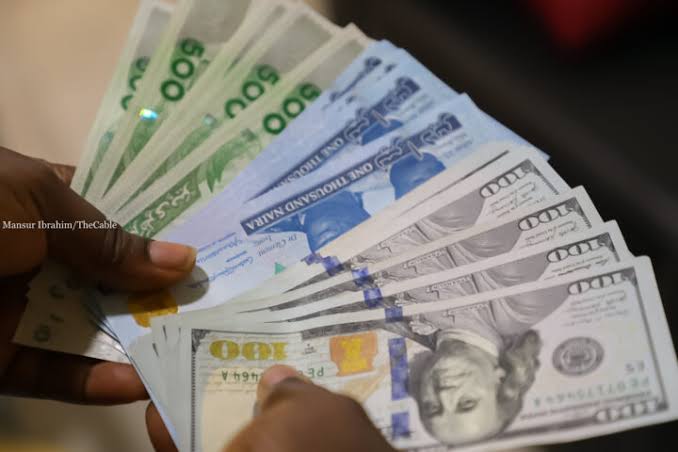
Naira weakens 2.17% to N1,361.84/$ even as official-parallel premium narrows to 1%
The naira depreciated 2.17% at the official window in the week ended October 23, 2026 to N1,361.84/$ while the parallel rate slipped to N1,375, narrowing the premium to 0.97% from 2.83% as interbank turnover hit $1.01bn.
FGN bond yields edge higher while Treasury bill yields dip ahead of the auction
Fixed-income markets ended the week ended October 23, 2026 with average FGN bond yields up 1bp to 16.4% and average Treasury bill yields down 4bps to 18.2%, as system liquidity strengthened to N6.66trn.
Dow slides 653 points as oil surge weighs on Wall Street; S&P logs second straight weekly loss
US stocks closed lower on October 23, 2026 as Brent rallied to $116.72: the Dow fell 1.23% to 52,215.16, the S&P 500 lost 0.52% and the Nasdaq gave back 0.21%.
About the author
Adaeze Okonkwo
Markets Editor
Adaeze Okonkwo writes for BusinessPress.