Naira weakens 2.17% to N1,361.84/$ even as official-parallel premium narrows to 1%
The naira depreciated 2.17% at the official window in the week ended October 23, 2026 to N1,361.84/$ while the parallel rate slipped to N1,375, narrowing the premium to 0.97% from 2.83% as interbank turnover hit $1.01bn.
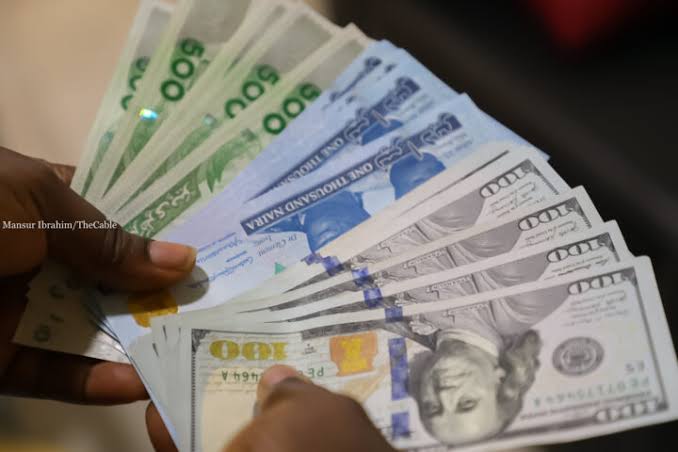
The naira weakened 2.17 per cent week-on-week to N1,361.84 per US dollar at the Nigerian Foreign Exchange Market in the week ended October 23, 2026, while the parallel-market rate eased a narrower 0.36 per cent to about N1,375, narrowing the official-parallel premium to just 0.97 per cent from 2.83 per cent, according to Proshare's weekly market analysis based on central-bank data.
The narrower premium is the significant part of the print. For most of the year, divergence between the official window and the street rate has signalled the sort of arbitrage behaviour that distorts trade finance and tempt panic conversions. A premium below 1 per cent, achieved despite an absolute depreciation, suggests the two markets are converging on a single price, which is one of the stated aims of the foreign-exchange reform programme.
Where the pressure came from
Official data show the weighted NFEM rate rose steadily through the week, from N1,334.20 on October 16 to N1,361.84 on October 23, as interbank turnover spiked to about $1.01 billion on Friday, its highest October level and roughly triple the previous session's $316.5 million, with 315 deals recorded, according to CBN figures. Analysts attribute the surging demand to corporate year-end foreign payments, festive-season import cover and pre-election positioning, with the FX order book pushing intraday rates as high as N1,395.
The forward market confirms that market participants expect more weakness, not less. The one-month contract traded at about N1,397 per dollar, the three-month at N1,432, the six-month at N1,485 and the one-year at N1,582, a curve that depreciates more than 15 per cent over twelve months, according to the weekly FX snapshot carried by the Government and Business Journal.
[irp]
Reserves keep building as buffers
Despite the depreciation, Nigeria's gross external reserves rose $52.90 million to $55.15 billion as of October 21, 2026, a level above $55 billion that provides the central bank with the wherewithal to smooth disorderly moves. The combination of rising reserves, accelerating depreciation and population surges in the order book is unusual: it implies the pressure is coming from structural dollar demand rather than an erosion of Nigeria's own buffers.
Central-bank intervention of about $200 million during the week was, on net, outweighed by that demand, which is why the official rate moved more than the parallel rate. The statistical detail matters for corporates: official purchases remain available at NFEM rates near N1,362, versus street rates in the N1,375-1,383 range, so companies with formal invoices and payment orders retain an advantage over informal converters.
[irp]
What it means for corporates and investors
For businesses, the week's movements raise the value of timing. Importers lining up dollar demand for the year-end should expect the NFEM price to remain above N1,350 near-term, and the forward curve offers certainty at a cost of roughly 2.5-3 per cent for six-month cover. Activities that can be invoiced in naira, or delayed until new dollar inflows arrive post year-end, reduce conversion pain.
For investors, the narrowing premium together with elevated reserve levels is a bullish datapoint for orderly growth in the FX market even as the rate itself softens. Central to next week's pricing will be the Federal Reserve's October 27-28 decision and oil market developments: stronger Brent, which closed the week at $116.72 a barrel, supports dollar inflows for Nigerian exporters, but a hawkish Fed increases the dollar's global bid. Both will feed directly into the naira's path.
[irp]
The range to watch
Market analysts project the official rate trading in the N1,350-N1,400 window near-term, with parallel quotes close behind as the premium stays thin. A breakdown of that convergence, back toward 2-3 per cent, would signal renewed stress; further convergence toward a single effective rate would be a milestone for the exchange-rate reform.
The week's data ultimately captured a market in transition: rates moving lower, but loosely controls binding on both sides. Investors and corporates should assume the market will remain two-ended, official and parallel, until year-end dollar demand is exhausted, and that any intervention-driven narrowing of the spread will continue to favour formal, documented transactions.
[irp]
Up next
FGN bond yields edge higher while Treasury bill yields dip ahead of the auction
Fixed-income markets ended the week ended October 23, 2026 with average FGN bond yields up 1bp to 16.4% and average Treasury bill yields down 4bps to 18.2%, as system liquidity strengthened to N6.66trn.
More in Markets
See all
Naira falls N28 to N1,365 per dollar in sharpest one-day decline since 2025
The official rate weakened 2.1 per cent as dollar demand overwhelmed CBN intervention, reviving concerns about import costs and inflation.

African central banks lift gold reserves 113% in shift away from dollar
African gold reserves rose 113% as central banks diversified away from dollar assets, strengthening resilience but raising valuation and liquidity questions.
Naira falls to N1,365/$ in sharpest one-day decline in 18 months
The naira weakened by N28 to N1,365 per dollar as heavy demand overwhelmed CBN intervention, reviving inflation and external-reserve concerns.
About the author
Adaeze Okonkwo
Markets Editor
Adaeze Okonkwo writes for BusinessPress.
More by Adaeze Okonkwo