SEC approves Coronation Insurance delisting as buyout scheme advances
The SEC has approved the delisting of Coronation Insurance from the NGX under a buyout scheme by its majority owner, moving minority shareholders a step closer to a cash exit.

Coronation Insurance's minority shareholders are one step closer to a cash exit, after capital-market regulators approved the delisting of the insurer's shares from the Nigerian Exchange in connection with a buyout offer structured by its majority owner, according to reporting on the Securities and Exchange Commission's approval published this week.
The transaction will see Coronation Insurance's shares delisted from the NGX, with the majority shareholder buying out investors who elect to sell under a scheme of arrangement process, the standard Nigerian corporate-delisting mechanism that requires both regulatory approval and court sanction. The approval from the SEC, the capital market's apex regulator, removes one of the remaining procedural hurdles on the path to the delisting becoming effective.
What the scheme means for minority shareholders
Minority investors in the insurer now face the choice between submitting their shares for cash under the scheme's terms and remaining as shareholders of an unlisted company. Delisting schemes of this kind typically set the consideration with reference to the company's net asset value and the prevailing market price, and the decision for small holders is essentially whether the offer reflects fair value for an asset that would otherwise trade with limited liquidity.
The process also ends a particular kind of market story. Coronation Insurance has been a listed insurer since the listing-by-introduction of its predecessor entity, Wapic Insurance, in 2018, and its shares have consistently traded at a discount to book value, a frustration shared by small investors across the Nigerian insurance sector, where the sector's stocks have historically been among the exchange's least liquid names. The buyout converts that trapped equity into cash for electing shareholders and concentrates ownership under the Coronation financial group, which operates banking, insurance and asset-management franchises across the region.
[irp]
Part of a broader delisting wave
The transaction joins a run of NGX delistings over the past two years, in which subsidiaries of multinationals and listed conglomerates have converted family-held or parent-held listings into private entities, citing cost of compliance, low liquidity and valuation mismatches as the rationale. For every departing company, the exchange loses a listing, and investors lose a trading venue, but the Securities and Exchange Commission has generally approved schemes where the exit consideration is fair and disclosures adequate.
The pattern raises a sector-level question that the NGX and regulators have been debating: whether Nigeria's listed market is doing enough to keep mid-cap companies, particularly those in the insurance, healthcare and consumer categories, exited or retained. Policy responses, including the market's push for new listings, the NGX's private-market listing initiatives and incentives for family-owned businesses to come to market, are being weighed against the arithmetic that prompts companies to leave.
[irp]
The insurance industry backdrop
Coronation Insurance's move also lands within the insurance sector's recapitalisation cycle, in which underwriters have been raising capital, consolidating and repositioning ahead of the National Insurance Commission's new minimum capital thresholds. Ownership consolidation is one of the strategic responses to that pressure, and majority shareholders seeking full control of balance sheets ahead of the next phase of competition have increasingly pursued either full buyouts or mergers, of which Coronation's own combination with other insurance interests has been part.
For the wider financial group, taking the insurer private simplifies governance ahead of the next phase of the group's growth, including the cross-selling arrangements between banking, insurance and asset management that holdcos can execute more flexibly without a listed associate's market discipline and disclosure calendar. For the exchange, the insurer's departure removes one of the smaller insurance stocks, a category that had lingered with limited float, and makes the sector's remaining names, larger and more liquid, an easier proposition for institutional portfolios.
[irp]
What investors should watch
Nearer-term markers include the scheme's court-sanctioned meeting and the consideration's payment timeline, which determine when electing shareholders receive cash. Investors in other insurance stocks should also watch whether the transaction's valuation benchmark, which is likely to trade at a premium to the prevailing market price but a discount to book value, becomes a reference point in the sector's continuing valuation debate.
The delisting is a small transaction in the NGX's N160.5 trillion market, but it is representative of a structural reallocation: capital moving from small, illiquid listed insurers to private vehicles with concentrated ownership. Whether that improves the sector's efficiency, by consolidating capital under serious owners, or only shrinks the investable universe of listed risk carriers, is the question that Coronation's exit adds evidence to as the NGX's insurance sector continues its recapitalisation-era reshaping.
[irp]
Up next
Bank of Agriculture anchors N200bn intervention on N350,000/tonne maize price floor
The Bank of Agriculture is launching a N200bn intervention built on guaranteed minimum prices, including a N350,000 per tonne maize floor, positioning itself as lender and offtaker for staple crops.
More in Corporate
See all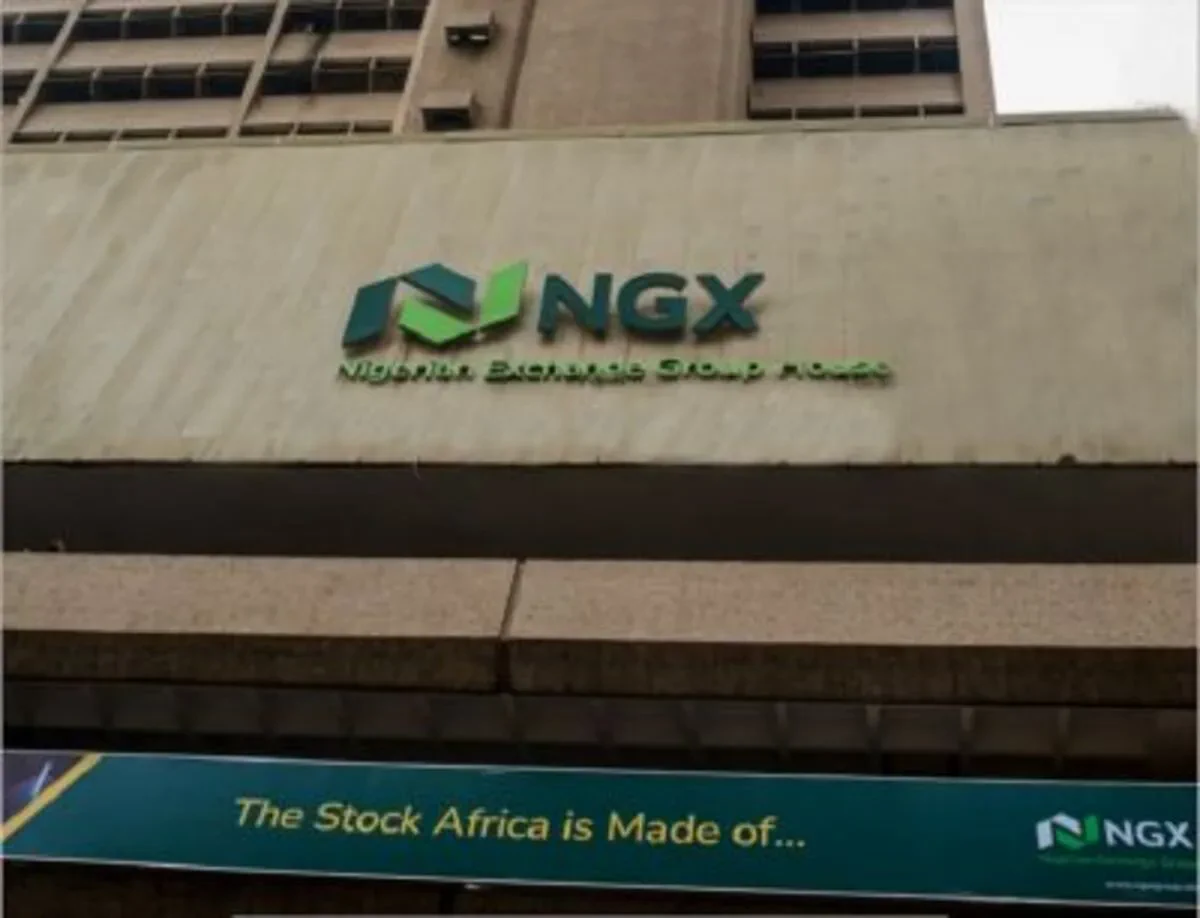
NGX Group nine-month profit before tax jumps 83.29% to N20.58bn
NGX Group posted a 9M 2026 profit before tax of N20.58bn, up 83.29% year on year, on revenue of N27.26bn, driven by transaction fees that grew 112.39%, even as THEWILL calculations show a softer Q3.
First HoldCo pre-tax profit rises 60.84% to N911.24 billion
Strong interest income and lower provisions lifted First HoldCo’s nine-month profit, boosting dividend expectations and bank-sector sentiment.

Dangote Refinery extends IPO as African investor demand surges
The extension gives more investors time to participate in a landmark listing that tests African capital-market depth and refinery valuation.
About the author
Yaw Boateng
Corporate Reporter
Yaw Boateng writes for BusinessPress.