Fed decision due Wednesday as the 10-year Treasury yield fights the 5% line
The Federal Reserve meets October 27-28 with the decision at 7 p.m. Nigerian time Wednesday, and the 10-year Treasury yield closed Friday at 4.99% after an artificial-intelligence-driven whipsaw through the week.
The United States Federal Reserve meets on October 27 and 28, 2026, with its policy decision scheduled for 7 p.m. Nigerian time on Wednesday, and it will land against a bond market that spent the past week fighting the 5 per cent line on the 10-year Treasury yield, according to data compiled from Reuters and Proshare market reports.
The benchmark 10-year yield closed Friday at 4.99 per cent, up 3.7 basis points on the day after posting its biggest one-day drop in nearly four years on Thursday, when it dipped below 5 per cent for the first time in a month. The whipsaw leaves fixed-income investors with an unsettled picture heading into the decision, and Nigerian borrowers, banks and asset managers with dollar-linked positions inherit the consequences directly.
Angst about the cost of the AI build-out
The week's rate moves were driven less by inflation data than by doubts about the sustainability of the borrowing that is financing artificial-intelligence data centres. A report involving Meta Platforms triggered the largest single-day fall in the biggest semiconductor index since June on Thursday, and the safe-haven demand it produced briefly pulled long yields under 5 per cent. Friday's rebound in yields suggested the market had not settled the question of whether the next wave of capex is financeable at current rates.
That structural tension is the reason the Fed matters more than usual. Short-term rates set by the committee interact with a long end already repricing fiscal supply and private credit, so any guidance that keeps policy tighter for longer would extend the pressure that has kept long borrowing costs near 5 per cent even as headline inflation cooled in recent months.
[irp]
What the decision could set off
The published schedule places the rate statement at 7 p.m. Nigerian time on Wednesday and the chair's press conference at 7.30 p.m., which is the moment FX desks in Lagos and Abuja will be scrambling to reprice. A decision and guidance perceived as hawkish would lift the dollar, raise US yields, and tighten dollar liquidity globally, all of which feed directly into the cost of serving dollar obligations for Nigerian corporates and the direction of portfolio flows into Nigerian fixed income.
The reverse is also true. Any dovish tilt, including signals that the Treasury market's volatility has itself become a policy concern, would ease funding conditions, help emerging-market bonds and give Nigeria's own reform-driven recovery room to attract the long-term capital that Central Bank of Nigeria Governor Olayemi Cardoso said policymakers are trying to attract.
[irp]
Nigeria's stakes are unusually high right now
The timing collides with three Nigerian storylines. First, the naira has been under pressure, weakening to about N1,375 per dollar on the parallel market even as official rates weakened more than 2 per cent last week, so a dollar-strengthening Fed outcome would add to FX demand. Second, Nigeria's own yields on FGN bonds have been rising again after the recent 350-basis-point cut, and relative value against a 5 per cent US yield is what stops or triggers carry-trade reversals. Third, corporate treasurers hedging fuel and dollar costs face whipsaw risk in exactly the sessions surrounding the decision.
Domestic money-market evidence already points to the fragility. Central Bank of Nigeria interventions and forward contracts show participants pricing continued depreciation, with the one-year forward contract at about N1,581 per dollar, and that pricing embeds assumptions about both domestic policy stances and the global rate environment that the Fed will refine this week.
[irp]
How to watch the outcome
Three signals will transform the read-through. The size and shape of any policy change matters less, in an uncertain inflation environment, than the forward guidance attached to it; the dots or minutes framing the neutral rate determine whether the market prices a longer hold or cuts. The Treasury curve's behaviour during the press conference window is a live test of whether the AI-borrowing narrative is easing or intensifying. And the reaction of emerging-market currency crosses, particularly the naira and peers such as the Kenyan shilling, cedi and rand, will show how much convexity is priced into Nigeria's current calm.
For Nigerian investors, the pragmatic posture is to avoid the temptation of a single-scenario bet. Positions in dollar assets, naira fixed income and FX forwards should all be sized for a wider distribution of Fed outcomes, because the market's own setup, near 5 per cent on the 10-year and unsure about the pace of the AI build-out, means the meeting can move both the dollar and Treasuries sharply in either direction.
[irp]
Up next
Dow slides 653 points as oil surge weighs on Wall Street; S&P logs second straight weekly loss
US stocks closed lower on October 23, 2026 as Brent rallied to $116.72: the Dow fell 1.23% to 52,215.16, the S&P 500 lost 0.52% and the Nasdaq gave back 0.21%.
More in Markets
See all
FGN bond yields edge higher while Treasury bill yields dip ahead of the auction
Fixed-income markets ended the week ended October 23, 2026 with average FGN bond yields up 1bp to 16.4% and average Treasury bill yields down 4bps to 18.2%, as system liquidity strengthened to N6.66trn.

OPay targets up to $4.42bn valuation as it prices New York IPO at $19-$21 per share
SoftBank-backed OPay is seeking up to $366 million with roughly 16 million ADSs priced at $19-$21, targeting a $4.42bn valuation on the NYSE under ticker OPAY with Stanbic Africa investing up to $200m.
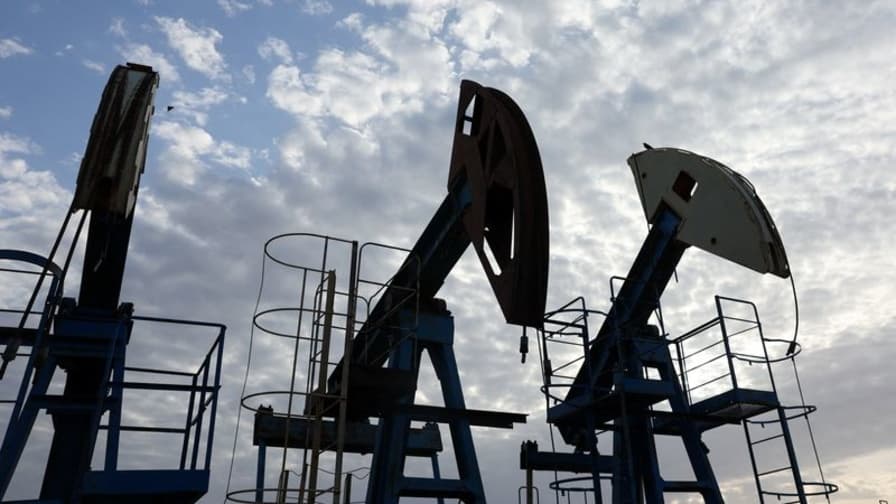
Brent tops $116 a barrel, a six-month high, as Houthi attacks stoke supply fears
Brent crude settled at $116.72 on October 23, 2026, its highest close since April and a third straight weekly gain, while WTI held above $103 and Nigerian Bonny Light traded near $124.
About the author
Kwame Mensah
Markets Correspondent
Kwame Mensah writes for BusinessPress.