Samsung chip earnings dominate record quarterly profit as devices lose money
Semiconductor earnings account for almost all group operating profit, highlighting the widening gap between AI components and device profitability.
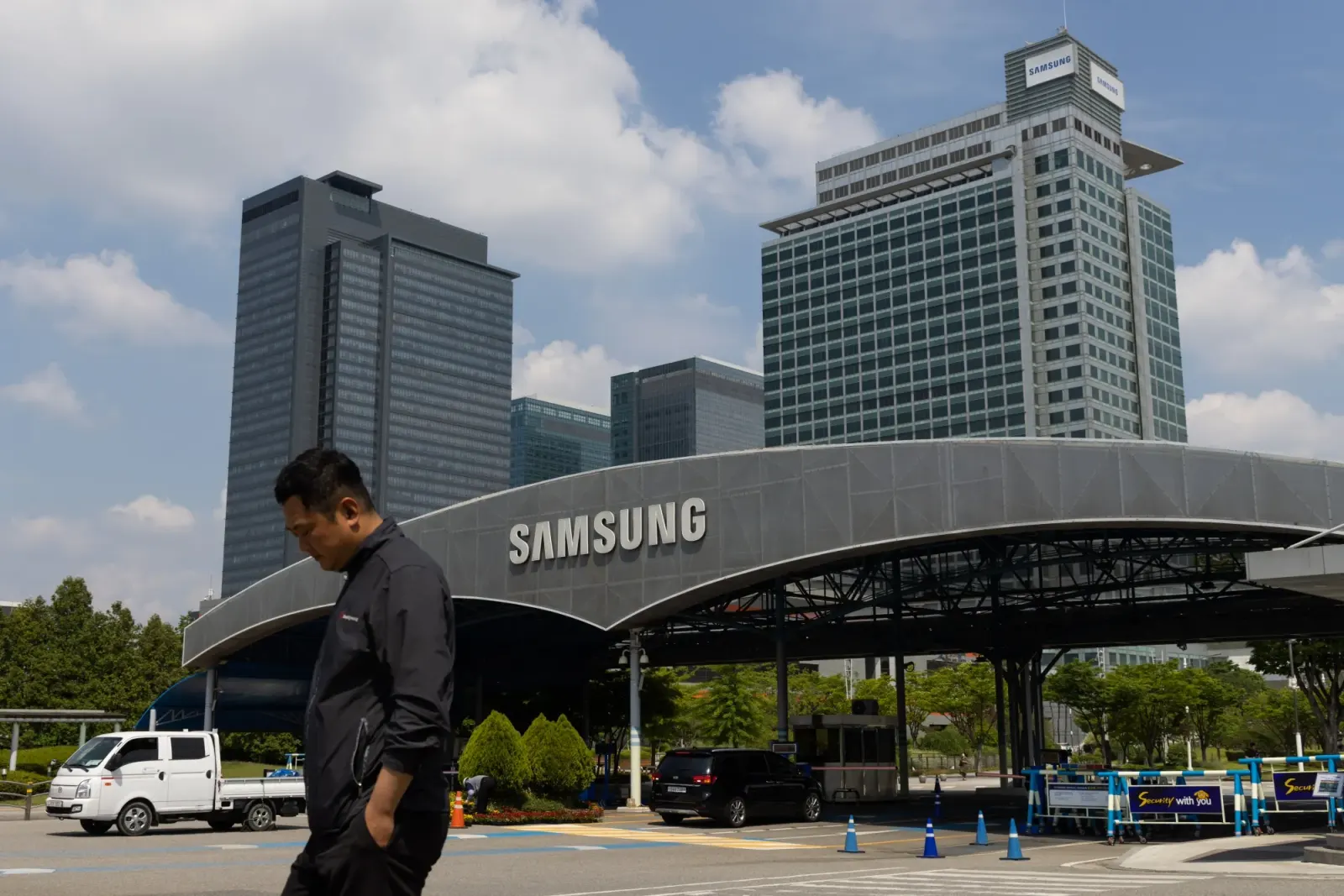
Samsung Electronics reported quarterly operating profit of 107.4 trillion won on 29 October, with its semiconductor division accounting for almost all of that result while its device business remained in loss. Consolidated revenue reached 195.3 trillion won for the three months ended September.
The contrast is central to the announcement. Demand for artificial-intelligence memory is creating exceptional returns in one part of the business, while higher costs and competitive pressures continue to constrain the products sold directly to consumers and network operators.
Semiconductors dominate the profit mix
In its official earnings release , Samsung reported Device Solutions revenue of 147.1 trillion won and operating profit of 106.5 trillion won. The Device eXperience division recorded an operating loss of 0.8 trillion won.
BusinessPress calculations put semiconductor operating profit at about 99% of the consolidated total. That ratio describes the concentration of the result; it does not mean that the remaining businesses had no revenue or strategic value.
For investors, concentration changes the risk assessment. A large gain from a particularly profitable product cycle can support the whole group, while leaving earnings sensitive to demand, pricing and supply conditions in that segment. It should not be treated as evidence that every product category is generating similar margins.
Memory demand transmits into the price of computing
Samsung said server demand supported higher memory prices and that it expanded high-bandwidth-memory sales. Its stated strategy prioritises AI-related memory and storage products.
Memory is an input into computing systems, so stronger supplier pricing can affect the cost of equipment bought by cloud providers and other operators. That creates a commercial link between semiconductor profitability and the economics of deploying computing capacity.
The effect on a particular customer depends on contracts, system design and the timing of equipment purchases. The release does not establish a specific price increase for a Nigerian data centre or a retail computer. It provides evidence of the manufacturer's demand and pricing environment, rather than a local quotation.
Mobile revenue growth does not prevent a loss
The combined mobile and networks businesses reported revenue of 37.7 trillion won and an operating loss of 0.6 trillion won. Samsung said revenue increased from both the previous quarter and a year earlier.
The result demonstrates why stronger turnover is not enough to establish profitability. A company can sell a higher value of products while cost pressure absorbs the contribution those sales generate.
For African distributors and consumers, the relevant commercial questions include product availability, wholesale pricing and the mix of premium and lower-priced devices. The global revenue increase does not establish stronger shipments in Nigeria or a change in a local distributor's margin. Those outcomes require market-specific evidence.
Capacity investment must catch up with demand over time
Samsung reported third-quarter capital expenditure of 29 trillion won and a full-year expectation of approximately 84.4 trillion won. Most of the planned annual spending is allocated to Device Solutions.
Manufacturing capacity takes time to build and qualify. An investment commitment does not become immediate supply, and equipment installed today may serve demand in later periods. That timing matters when customers are competing for advanced components.
For shareholders, the investment question is whether the eventual capacity earns an adequate return through the cycle. High current profitability can finance expansion, but it does not guarantee that demand and prices will remain unchanged when the new facilities are fully productive.
Shareholder returns remain partly a future decision
Samsung announced a third-quarter dividend totalling 30 trillion won and said detailed plans for remaining 2026 returns and its next policy would be finalised at a board meeting scheduled for January 2027.
The completed announcement and the future plan should be kept separate. A prospective buyback or distribution cannot be treated as already executed, and an indicated range is not a fixed payment to each investor.
The immediate result is a business increasingly shaped by AI infrastructure demand, with semiconductor earnings offsetting pressure elsewhere. For African technology buyers, the main relevance is the concentration of supply investment and profitability in advanced computing components. It does not remove the need to assess the cost and availability of the particular devices or systems they intend to purchase.
Up next
BNP Paribas profit rises 13.5% as revenue outpaces costs
Institutional banking led divisional growth as the group improved operating efficiency while credit costs remained a deduction from earnings.
More in Technology
See all
OpenAI opens ChatGPT advertising to Nigerian businesses at $25 daily
The low minimum spend gives SMEs access to AI-powered advertising, but measurement, privacy and brand safety remain uncertain.
African banks ramp up AI spending despite data and fairness risks
Lenders are using AI for credit, fraud and customer service, but weak data, bias and job displacement raise governance questions.
MultiChoice rewrites DStv and GOtv playbook as streaming gains ground
The pay-TV group is balancing satellite economics with streaming investment, local content and rising sports-rights costs.
About the author
Chinedu Nwosu
Technology Editor
Chinedu Nwosu writes for BusinessPress.
More by Chinedu Nwosu