Secure Electronic Technology Q3 Revenue Falls 15.5% as Quarterly Loss Doubles
The listed lottery operator reported revenue of N920.7 million for the third quarter against N1.09 billion a year earlier, with a loss after tax of N105.8 million and accumulated losses of N2.92 billion against equity of N3.48 billion.
Secure Electronic Technology Plc, the listed lottery operator, reported a 15.5 per cent fall in third-quarter revenue and a quarterly loss more than double the comparative period, with unaudited results filed with the Nigerian Exchange showing a business whose top line is shrinking faster than its costs.
For the three months to September 30, 2026, the company reported revenue of N920.7 million against N1.09 billion in the third quarter of 2025, with a loss after tax of N105.8 million compared with a loss of N45.4 million. Loss per share widened to N1.88 from N0.81. For the nine months to September, revenue was N2.87 billion against N3.11 billion a year earlier, a decline of 7.7 per cent, and the loss after tax was N118.3 million against N92.9 million, with loss per share of N2.10 against N1.65.
Administrative expenses for the third quarter were N114.6 million, and the company employed 72 staff at the end of the period. Total assets stood at N4.33 billion, down from N4.71 billion a year earlier, with property, plant and equipment of N1.02 billion and intangible assets of N2.14 billion. Equity was N3.48 billion, and accumulated losses rose to N2.92 billion as at September 30, 2026. The audited 2025 full-year figures were revenue of N4.24 billion, a loss after tax of N166.8 million, loss per share of N2.96, equity of N3.60 billion and total assets of N4.45 billion, with prizes and winnings of N2.32 billion and ticket costs of N1.60 billion incurred during the year.
The margin a lottery operator works with
The company's own 2025 accounts set out the arithmetic that explains everything else. Revenue of N4.24 billion came against prizes and winnings of N2.32 billion and ticket costs of N1.60 billion, which leaves roughly N320 million to cover administration, distribution and everything else before any profit. That is the operating shape of the business: the product is the prize, the physical product is the ticket, and what is left over is a thin margin on which the entire cost base has to fit.
Read that way, the third-quarter numbers are not so much a shock as the mechanical consequence of the revenue line. A 15.5 per cent fall in quarterly revenue against a cost base that includes N114.6 million of administrative expenses in the quarter converts a modest loss into a larger one, because there is no margin buffer to absorb it. The nine-month loss of N118.3 million is now most of the N166.8 million the company lost in the whole of 2025, which tells investors how much of the annual deficit has been consumed by the first three quarters of 2026 and how little room is left for the fourth.
There is also a question about the revenue line itself. A fall of 7.7 per cent over nine months followed by a 15.5 per cent fall in the third quarter means the deterioration accelerated during the period, rather than the year starting weakly and recovering. In a lottery business, that pattern is usually a volume story, and volume in this sector is where the competition bites: licensed national lottery operations now share the same wallet as sports-betting platforms, and regulatory attention to both has been tightening in parallel.
The balance sheet is thinner than the headline suggests
The scale of the company deserves attention alongside the results. Total assets of N4.33 billion contain N2.14 billion of intangible assets, close to half the asset base, and N1.02 billion of property, plant and equipment. Against that, accumulated losses of N2.92 billion sit inside an equity base of N3.48 billion, meaning that retained losses now account for roughly 84 per cent of shareholders' funds.
That combination is the structural risk in the accounts. An intangibles-heavy balance sheet carried by a business with negative retained earnings and falling revenue is exposed on both sides: the assets that support the going-concern value are precisely the ones that are hardest to value if the brand underperforms, and an impairment against them would remove most of the equity cushion in a single adjustment. Nothing in the third-quarter figures suggests an impairment is imminent, but the sensitivity is worth stating plainly, because the equity in this business is more fragile than the total assets figure suggests.
Offsetting that, the company is not over-levered in any obvious way. Total assets fell modestly over the year while equity was broadly stable, and the loss is being absorbed by accumulated earnings rather than by an expanding liability stack. The right description of the position is a small, loss-making, asset-backed business in a market where scale is the main defence.
What to watch
Three items will determine whether the third quarter was a low point or a new direction. The first is the fourth quarter, because the 2025 comparison base and the cash position together determine whether a full-year loss narrows or deepens. The second is revenue composition: whether the decline is spread across games, which would suggest a market-share problem, or concentrated in a single product, which would be a mix issue. The third is the treatment of the intangible assets at the audited year-end, because the full-year audit is where an impairment judgement becomes binding.
For shareholders, the arithmetic is unforgiving and should be stated plainly: with roughly N320 million of residual contribution on the 2025 revenue base and a third-quarter revenue line running at 15.5 per cent below the prior year, the operating result moves against the company unless revenue stabilises. The absence of a cash crisis is not the same as the absence of a problem, and the more useful question is what the company does with a shrinking market: deepen the licensed product, reduce the fixed cost base, or accept that the national lottery licence is now a smaller business than it was two years ago.
Up next
Lasaco Assurance Returns to N1.25bn Profit on Cost Cuts, Not Revenue Growth
Insurance revenue rose 3.71 per cent while service expenses fell 22.79 per cent, the company still used N416.82 million of operating cash, and free float narrowed to 12.78 per cent as two shareholders lifted their combined stake to 87.21 per cent.
More in Corporate
See all
NNPC Profit Rises 33% to N7.2 Trillion as Oil Output Hits Five-Year High
NNPC Limited reported a 33% rise in profit after tax to N7.2 trillion for 2025, even as revenue fell 24%, with crude output at a five-year high of 1.77m bpd.
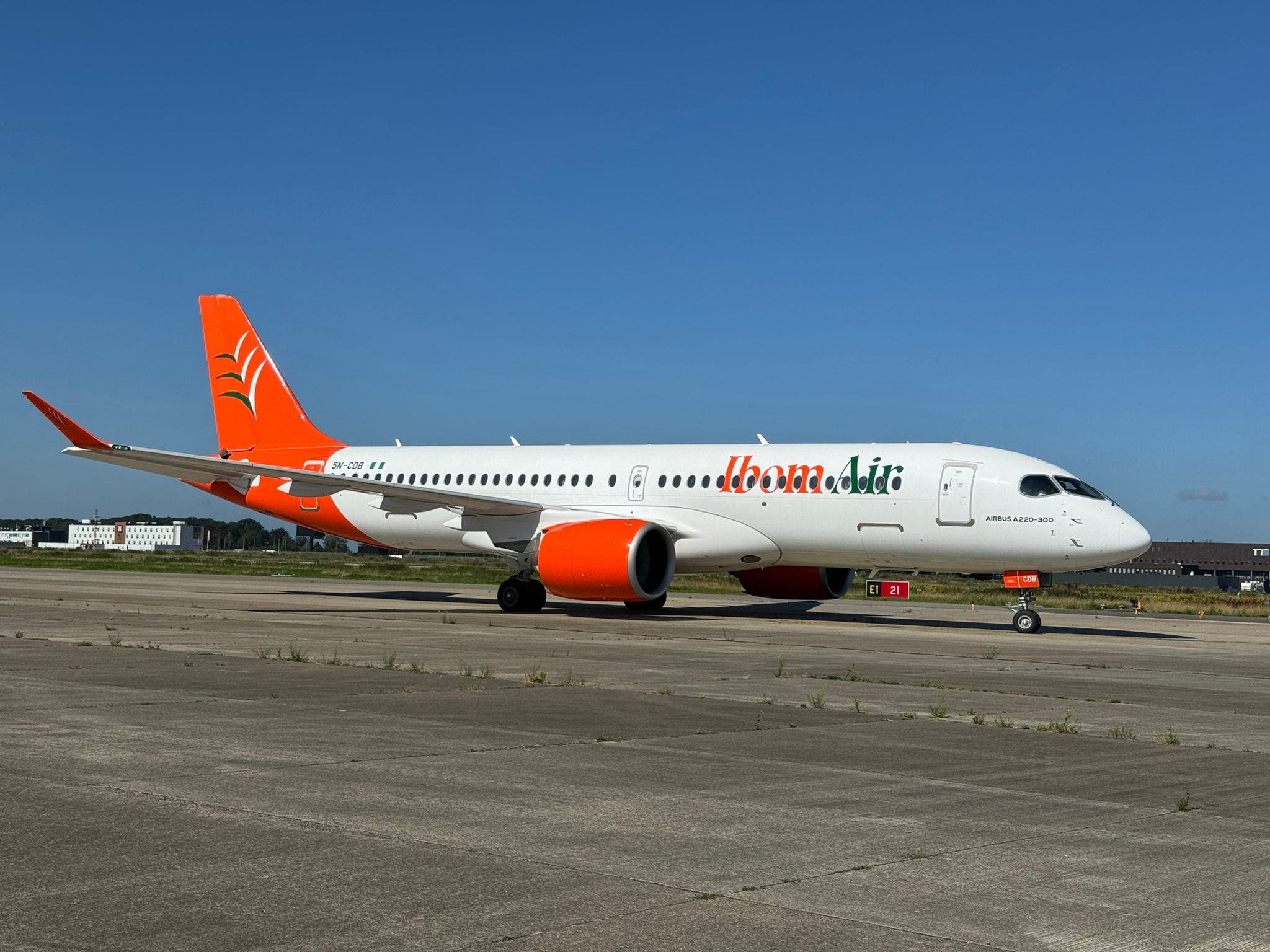
Ibom Air Appoints Two Executive Directors
Ibom Air has appointed Mfon Udomah as Executive Director, Finance, and Dr Eno Udoma-Eniang as Executive Director, Legal and Corporate Affairs.

Sunbeth Global Plans N150 Billion Commercial Paper for Cocoa Season
Sunbeth Global Concepts plans to raise up to N150 billion under a N500 billion commercial paper programme to fund cocoa purchases and a processing expansion.
About the author
Yaw Boateng
Corporate Reporter
Yaw Boateng writes for BusinessPress.
More by Yaw Boateng