Nigeria Confirms First Bundibugyo Ebola Case With 44 Contacts Under Monitoring
Laboratory tests confirmed the Bundibugyo strain in a woman who arrived from Uganda on October 3 and fell ill four days later, with 44 contacts identified, no vaccine available for the strain and WHO recommending no travel or trade restrictions.
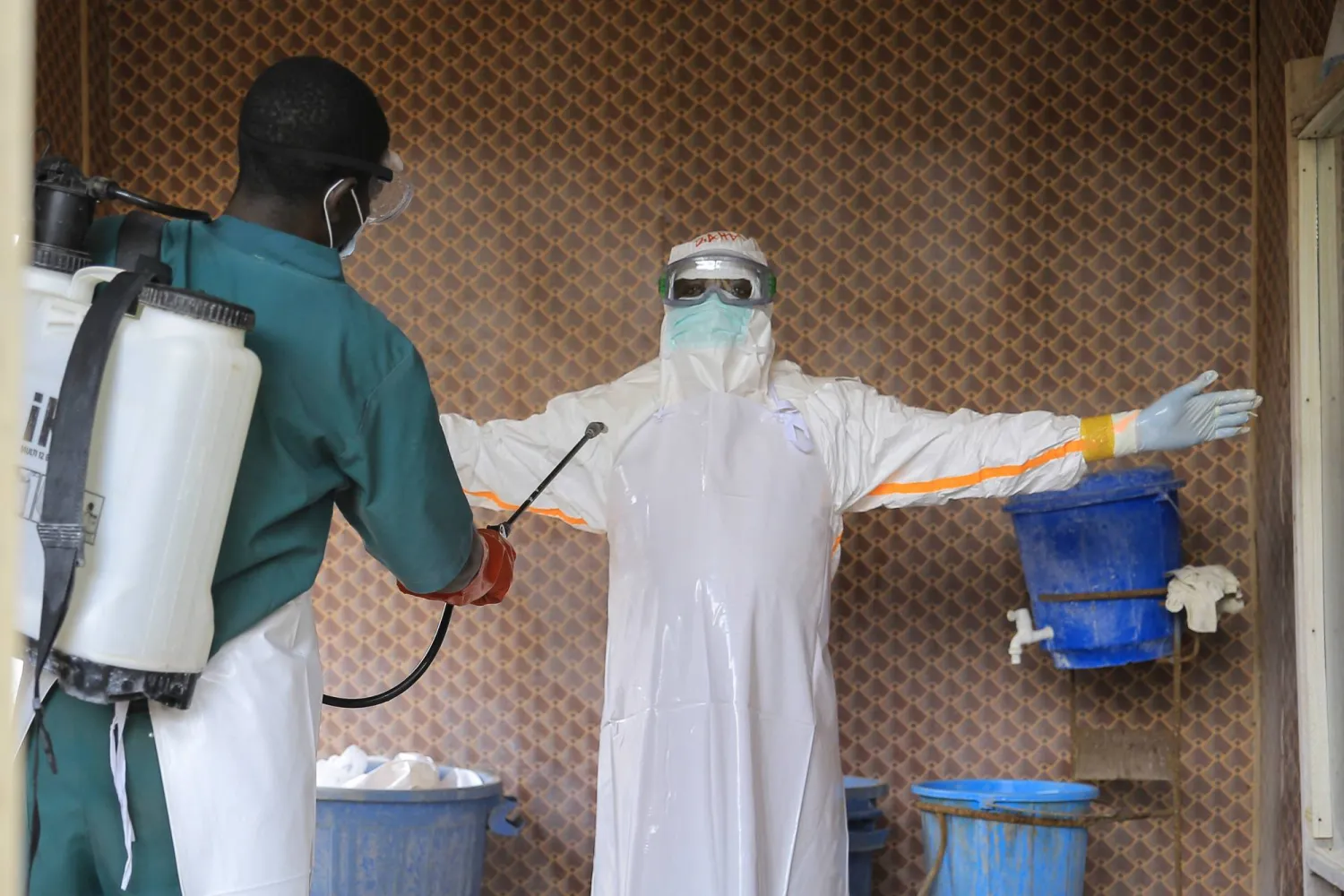
Nigeria confirmed its first case of Ebola Bundibugyo virus disease on October 20, 2026, after laboratory tests on a woman who arrived from Uganda on October 3 and fell ill four days later confirmed the strain, with 44 contacts identified and under monitoring in the Federal Capital Territory.
The Coordinating Minister of Health and Social Welfare, Professor Muhammad Pate, disclosed the case at a media conference in Abuja, saying the patient was in isolation and receiving care at a private hospital in the capital and describing the case as contained. He said public health teams were tracing and monitoring people who might have been exposed, including healthcare workers, patients and caregivers, and that surveillance had been intensified nationwide with facilities urged to maintain a high index of suspicion.
According to the Nigeria Centre for Disease Control and Prevention, which activated its incident management system, laboratory confirmation came on October 20 after three levels of molecular testing. Olajumoke Babatunde, director of the NCDC's public health laboratory service, said the strain was Bundibugyo. The patient was admitted to a private health facility on October 11, and an official told Agence France-Presse that she was a diplomat who had deteriorated into multi-organ failure. Uganda's Ministry of Health said the patient had only transited Uganda and had been on a business trip to the eastern region of the Democratic Republic of Congo, adding that travel through Uganda does not establish where infection occurred. The World Health Organization said the source of infection remained under investigation.
A different virus from the one Nigeria has seen
The strain matters more than the location. The 2014 to 2016 West Africa outbreak, which killed 11,000 and recorded 20 cases in Nigeria, was driven by Zaire ebolavirus, for which licensed vaccines and approved treatments exist. Bundibugyo, the species now circulating in the eastern DRC, has neither a vaccine nor a specific treatment, as WHO states plainly. For a business audience the practical consequence is that there is no medical countermeasure to fall back on. Containment depends entirely on early detection, isolation, contact tracing and infection prevention, and every one of those steps depends on institutions functioning at the point of first contact with a patient.
The scale of the regional outbreak gives that context a sharp edge. Congolese health authorities reported more than 9,000 confirmed cases and 4,381 deaths since the outbreak was declared in mid-May, the deadliest in that country's history, with WHO's figures as at October 18 above 9,500 cases and 4,200 deaths. Africa Centres for Disease Control and Prevention director general Dr Jean Kaseya described the Bundibugyo outbreak as the most geographically extensive in history, spanning three regions of Africa, with a fatality rate close to 50 per cent. Nigeria is the fifth country to detect a case since May, after the DRC, Kenya, which has recorded nine infections since October 6, and the Netherlands, where a linked case has been identified. Uganda, which reported cases earlier, has declared itself free of active cases.
The epidemiological detail is that this is an imported case, not a local transmission chain, and that difference is the whole of the current risk. One traveller with one exposure history is a surveillance exercise. A single contact testing positive converts it into an outbreak in a country of more than 220 million people with a health system that already struggles to detect ordinary cases early.
What it means for businesses
Three business consequences follow from the facts as they stand, and all three are about preparedness rather than panic.
The first concerns the private hospital where the patient was admitted and treated for several days before diagnosis. WHO said infection prevention and control measures are being ramped up at that facility, and Pate said it is receiving immediate support. For operators of private hospitals and clinics, that means a step change in screening, isolation capability, documentation and personal protective equipment cost, at facilities that have been treating patients with febrile illness without suspecting a viral haemorrhagic fever. The financial exposure is not only the direct cost of controls but the reputational cost for any facility associated with a case that went undetected for several days.
The second is travel and continuity. WHO has not recommended any restrictions on travel and trade with affected countries, and it advises countries to sustain readiness and disease surveillance instead. In the absence of restrictions, the immediate economic cost should be limited, which is precisely why businesses with personnel in the eastern DRC, in Uganda or in transit through them should use this window to put in place screening protocols, travel health advice, contingency cover for staff who may be quarantined, and clear rules on who travels and when. Those steps are cheap when made in advance and expensive when made in a hurry.
The third is insurance and credit risk. Re-emergence of a haemorrhagic fever in Nigeria after a twelve-year gap will be priced into infectious-disease terms in life, health, credit and event-cancellation cover, and corporate risk officers who assumed the 2014 precedent was closed should review exclusions and accumulate limits. The 2014 experience is the reference point: it did not become a Nigerian economic event, but it did become a pricing event for anyone insured in the region.
The question that determines what happens next
The transmission question is narrow and it is answerable. Nigeria has identified 44 contacts, who are being monitored. The pattern of the index case, a traveller arriving on October 3, falling ill on October 7 and seeking care on October 11, means the exposure window is short and defined, and it is the period the contact tracing is designed to cover. If all 44 remain negative through the incubation period, the public health risk falls back sharply.
Watch the reassembly of the travel and exposure history, because it determines how the case is classified. Uganda has said the patient transited rather than resided, and the exposure is presumed to be in the eastern DRC. If that holds, the case is a border screening success rather than a failure, and Nigeria's own precautions should hold without any change in travel guidance. If the history turns up a domestic exposure, or if any contact develops symptoms, the response changes character entirely, and the private sector's contingency planning becomes immediate rather than prudent.
For now, the appropriate reading is that Nigeria has an imported case with a contained response, inside a regional outbreak that is the most geographically extensive on record and for which no vaccine exists. The minister's confidence is justified on the evidence so far. The sensible business posture is the one the health authorities themselves are asking for: heightened surveillance, prompt reporting through the NCDC's toll-free line on 6232, and a plan for the possibility that the next piece of news is worse than this one.
Up next
Secure Electronic Technology Q3 Revenue Falls 15.5% as Quarterly Loss Doubles
The listed lottery operator reported revenue of N920.7 million for the third quarter against N1.09 billion a year earlier, with a loss after tax of N105.8 million and accumulated losses of N2.92 billion against equity of N3.48 billion.
More in News
See all
Aviation Ministry Approves Lagos Airport Monorail Design as Financing Talks Advance
The five-stop line from Ikeja Railway Station to Murtala Muhammed International Airport Terminal 1 has an approved design but no published cost or construction schedule, while the terminal reconstruction it is meant to serve is already under way.

Federal Government and Bi-Courtney End Nearly 20-Year MM2 Dispute in N132 Billion Concession Settlement
Settlement agreements signed in Abuja end the long-running MM2 dispute: Bi-Courtney waives N132 billion in damages, the government writes off arrears and restores the hotel project, and regional flights are permitted within terminal capacity.

United Nigeria Airlines Launches N20bn Commercial Paper, a First for Local Carriers
United Nigeria Airlines is raising N20 billion through its inaugural commercial paper issuance, the first by a domestic Nigerian airline, under a N100 billion programme arranged by Meristem Capital.
About the author
Amaka Obi
Senior Business Reporter
Amaka Obi writes for BusinessPress.
More by Amaka Obi