Dangote Buys 25% of Kenya Pipeline for $327 Million as Lamu Refinery Looms
The $327 million purchase of 25% of Kenya Pipeline, disclosed in London, aligns the group with the Kenyan government equity plan for the $16 billion Lamu refinery and the East African allocation of its Lagos IPO.
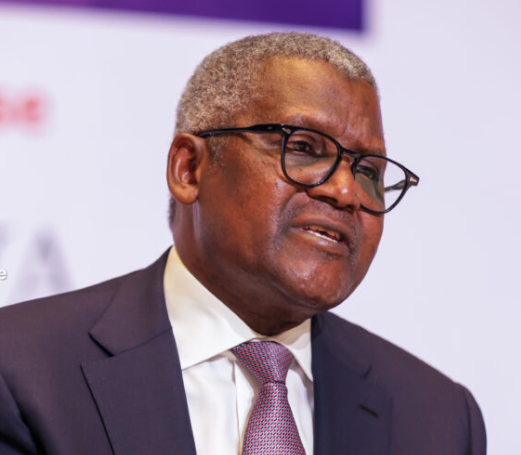
Aliko Dangote has acquired a 25% stake in Kenya Pipeline Company, the state-owned operator of Kenya petroleum transportation and distribution network, in a deal valued at approximately $327 million, expanding the Nigerian industrialist's footprint in East African fuel logistics.
Dangote disclosed the acquisition on Wednesday, October 21, 2026, at an event in London, according to Bloomberg, as reported by Nairametrics. He said: "We bought 25% of their pipeline network for the distribution of petroleum products." He did not disclose which of his companies acquired the stake.
The size of the transaction is documented in Nairobi market data. A Nairobi Securities Exchange report issued on Monday, October 19, recorded a block transaction of approximately 4.5 billion Kenya Pipeline shares at a value of 42.5 billion Kenyan shillings, about $327.4 million. Kenya Pipeline's market valuation stands at approximately 163.9 billion shillings.
What a quarter of Kenya Pipeline actually owns
Kenya Pipeline Company was established in 1973 and began commercial operations in February 1978, growing into the country's central petroleum logistics asset. Its network spans approximately 1,342 kilometres, supported by petroleum storage depots, pumping stations and loading facilities, connecting the coastal import facilities at Mombasa with inland consumption centres and neighbouring East African markets, with an estimated annual handling capacity of 14 billion litres of petroleum products. The company was wholly state-owned until it sold 65% of its shares through an initial public offering earlier in 2026, and it now trades on the Nairobi Securities Exchange while still carrying the strategic responsibility of national fuel supply.
For an investor, the stake is a claim on the physical movement of refined products through the only established distribution corridor from Mombasa into inland Kenya and the wider region. That is a different asset class from refining: it earns on throughput and storage, it has regulated pricing exposure, and it does not depend on refining margins. For Dangote's group, the logic is vertical. The same group is building a $16 billion refinery in the Lamu archipelago, modelled on its 700,000-barrel-per-day Lagos plant, and a pipeline network that moves product inland is the natural downstream half of a refinery that has not yet started producing.
The price paid against the market value
The arithmetic of the block transaction is instructive. A 25% slice of Kenya Pipeline's stated market valuation of 163.9 billion shillings is roughly 41 billion shillings, against the 42.5 billion shillings paid in the block, a premium of about 3.7 per cent to the pro-rata market value. That is a modest but real premium, and it is worth understanding what it signals about how the stake was priced.
Block trades in newly listed companies often clear at a discount when a large seller needs to exit quickly, or at a premium when the buyer is signalling a strategic intention and expects to obtain board representation and influence over future transactions. A premium of this size, in a deal where the acquirer publicly framed the purchase as part of a broader regional plan rather than as a financial investment, points to the second reading. It is also small enough that it does not look like a control premium being paid for a take-private. The 25% holding sits below any blocking threshold, which means the stake is a foothold, not a takeover, and further purchases remain possible.
Three ways the Kenya strategy now interlocks
The stake arrives inside a broader set of moves that connect Dangote's refining ambition to Kenyan and regional capital. The Kenyan government announced in September that it plans to acquire an equity interest in the $16 billion Lamu refinery through the National Infrastructure Fund, a decision President William Ruto disclosed at the project's groundbreaking on September 30. The refinery, expected to cost between $16 billion and $17 billion with completion targeted around 2030, has also been the subject of litigation in Kenya, where a court earlier lifted restrictions on the project.
Alongside both, the group has offered East African investors nearly 20% of its $1.6 billion initial public offering in the Lagos refinery, an allocation expected to raise up to $300.4 million through approximately 729 million global depositary receipts priced at 53.50 Kenyan shillings each, with regulatory approvals obtained in Kenya and Uganda.
Set against each other, the three transactions form a deliberate structure: a public-market anchor of Kenyan investors in the Nigerian refinery, a Kenyan state holding in the Kenyan refinery, and now a private holding in the Kenyan logistics network. If it holds, the result is a company whose crude and product flows, refinery capacity and distribution reach in East Africa are aligned across three jurisdictions, with each national interest holding a piece of the same chain.
What the disclosure leaves unresolved
Several things are still unknown, and each matters for anyone pricing the position. The acquiring entity is unnamed, which determines whether the stake sits on a consolidated industrial balance sheet or on a financial investment book, and it decides who answers to Kenyan minority shareholders and regulators. Governance rights, board representation and any commercial agreements between the group and Kenya Pipeline are undisclosed, and those are what turn a 25% financial position into commercial advantage. Whether the transaction required any regulatory clearances in either jurisdiction is not stated.
There is also a strategic risk that runs the other way. Owning a quarter of a national fuel distribution network puts the group inside the political economy of Kenya's fuel pricing, a market where importers, transporters and regulators have argued for years over the cost of moving product inland. Any further accumulation of Kenyan energy infrastructure by a foreign competitor will attract scrutiny, and the group's Lamu project is already subject to domestic legal challenge. The stake makes the group a participant in the asset it was previously a customer of, which is the point, but also makes its East African position harder to keep separate from Kenyan domestic politics. For now, the disclosed facts are a price, a percentage and a network. The governance details that determine what an investor actually owns are the ones still to come.
Up next
Ondo, OCTAGRAM Agree 9m scfd CNG Mother Station at Ore Industrial Park
The Omotosho project would compress and truck gas to industrial and transport customers beyond pipeline reach, moving from a Licence to Establish towards construction approval and offtake deals.
More in Corporate
See allOnafriq Winds Down Baxi Agent Banking Business in Nigeria
Pan-African payments network Onafriq is winding down Baxi, its Nigerian agent banking business, after five years, citing inflation, naira depreciation, rising operating costs and the rapid growth of instant account-to-account payments.

Nigeria's Certified Cloud Register Will Decide Who Handles Banks' Sensitive Data
Nigeria's certified cloud register, launching under NITDA's National Sovereignty framework, will decide which cloud and data infrastructure providers can handle banks' and other regulated-sector data from October 2026.

Renda Secures $1.9 Million Pre-Seed Funding for Expansion
Renda has raised $1.9 million in pre-seed funding to expand its operations, according to BusinessDay, in a round that adds to recent venture deal flow in Nigeria's technology and services market.
About the author
Yaw Boateng
Corporate Reporter
Yaw Boateng writes for BusinessPress.
More by Yaw Boateng