
Seplat declares interim dividend of US5 cents plus special of US14 cents per share for November payment
Seplat Energy has declared an interim dividend of five US cents per share together with a special dividend of 14 US cents, with a qualification date of 12 November 2026 and register closure on 13 November, ahead of payment on about 27 November.
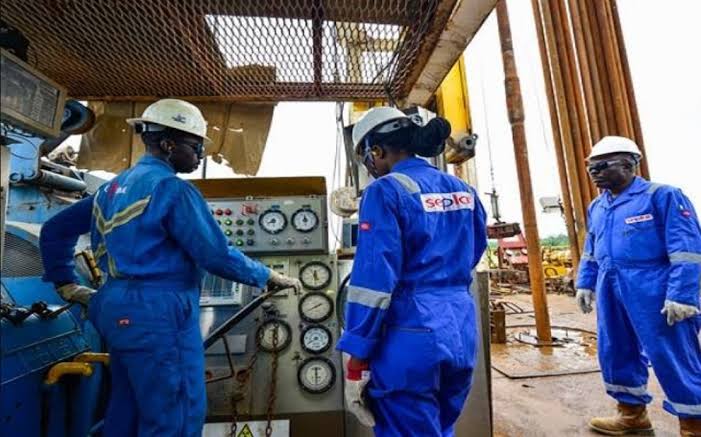
Seplat Energy, the Nigerian independent oil and gas producer, has declared a combined interim and special dividend for its shareholders, underlining the strength of the cash generation that has made the company one of the exchange's most consistent payers. The board approved an interim dividend of five United States cents per share, together with a special dividend of fourteen United States cents, bringing the total payout declared at the announcement to nineteen US cents per share.
The calendar for shareholders
The company's timetable gives shareholders clear dates to hold or trade around. The qualification date is 12 November 2026, meaning only investors whose names appear on the register by that date qualify for the payment. The register closes on 13 November 2026 and reopens after the allocation cycle, and payment is scheduled for on or about 27 November 2026. Holders who bought shares in the days before the qualification date should note the exchange's settlement cycle, because trades executed too close to the cut-off will not settle in time to enter the register.
For shareholders paid in naira, the company's notice indicates that the exchange rate applied will be derived from the prevailing market rate around the qualification date. Currency conversion of dollar dividends has been a live issue for Nigerian institutional investors, whose reporting is naira-based, and Seplat's announcement gives pension funds and asset managers an explicit window to book the income.
[irp][irp][irp][irp][irp]
Why a special dividend matters
The structure of the payout carries a message beyond its size. An ordinary interim dividend is a statement about recurring cash flow; a special dividend is a statement about balance-sheet surplus, typically expressing the distribution of proceeds that the company does not immediately need for its capital programme. Issuing both together, as Seplat has, tells the market that the upstream business is generating enough cash to fund its commitment to gas and power investments while still distributing a meaningful slice of surplus to owners.
That combination is unusual in Nigerian upstream equities, where the pattern has historically been to reinvest aggressively in production growth and return cash only when reinvestment opportunities thin out. Seplat's positioning, an expanded production base after its transformative acquisition of an onshore portfolio, mature fields generating stable cash flow, and a growing gas business positioned behind the country's domestic gas expansion, allows it to thread the middle path: invest in the future while paying for the present.
What it signals for the sector
The declaration lands amid a strong quarter for Nigerian energy earnings. Crude prices have spent the month near $110 a barrel, and producers with cost discipline have converted the environment into free cash flow that funds both dividends and programme risk. Seplat's peers listed on the exchange, including the larger integrated producers, have similarly declared interim distributions during the autumn results season, and the cumulative effect is that Nigerian upstream income is becoming a durable alternative to local fixed income: equity dividends in a market where government paper still yields in the high teens.
Investors watching the declaration should note the qualification arithmetic. Shares whose settlement misses 12 November will not qualify, and the register closure on 13 November produces the familiar no-trading window in the counter. The dividend will be paid in US dollars to holders of record outside Nigeria and translated into naira for domestic holders at the applicable rate.
November's payment will be the second such distribution this year for many holders of Seplat shares, and the cumulative dividend history, supported by free cash flow from mature fields and a hedged cost base, has turned the stock into one of the exchange's leading income plays. For a company operating in an industry where capital discipline has historically been the exception, the message of a nineteen-cent combined payout, declared alongside continued investment in gas, is a deliberate one: the era when Nigerian producers returned nothing to shareholders is over, and cash returns are now part of the sector's underlying investment case.
Up next
Tinubu defends proposed $21.7 billion foreign loan plan as financing for infrastructure and productive assets
President Bola Tinubu has defended a proposed $21.7 billion external borrowing plan, describing the funds as financing for infrastructure and productive assets intended to support growth and job creation rather than consumption.
More in Corporate
See allDangote Refinery extends IPO as African investor demand surges
The extension gives more investors time to participate in a landmark listing that tests African capital-market depth and refinery valuation.
Unilever Nigeria posts N184 billion Q3 revenue and N26.4 billion profit
Unilever sustained profitable growth despite consumer pressure, declaring an interim dividend as pricing and cost controls protected margins.
BUA Cement board approves Q3 results ahead of October 30 filing
BUA Cement's board has approved its nine-month results, with the company set to file the statements by October 30 after a first half marked by strong revenue and profit growth.
About the author
Ngozi Eze
Companies Reporter
Ngozi Eze writes for BusinessPress.
More coverage


