
Tinubu defends proposed $21.7 billion foreign loan plan as financing for infrastructure and productive assets
President Bola Tinubu has defended a proposed $21.7 billion external borrowing plan, describing the funds as financing for infrastructure and productive assets intended to support growth and job creation rather than consumption.
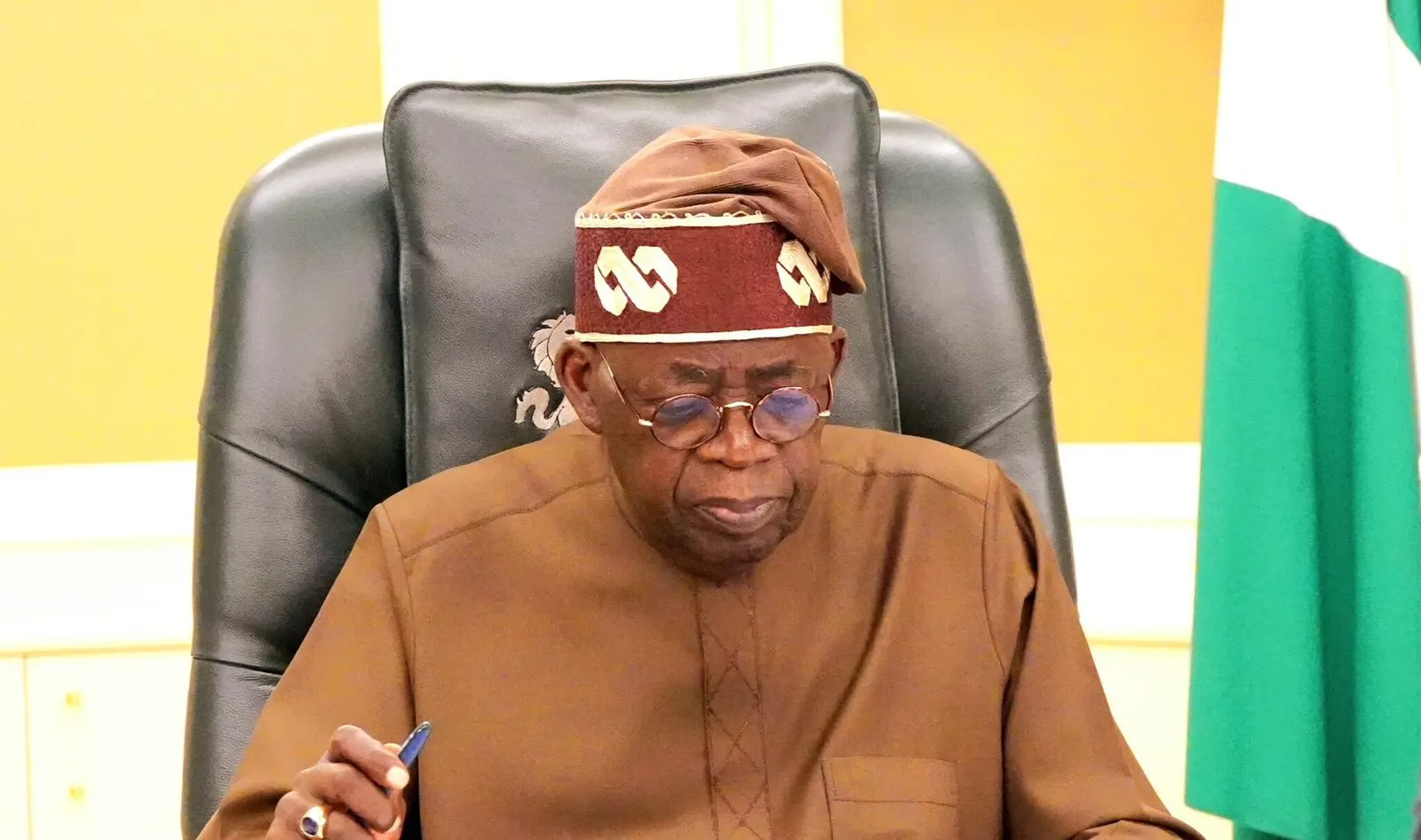
President Bola Tinubu has mounted a public defence of the federal government's proposed external borrowing plan of $21.7 billion, arguing that the money is intended to finance infrastructure and productive assets rather than to plug a hole in recurrent spending. The intervention sets the terms of a debate that will run through the National Assembly's consideration of the request, and it arrives at a moment when the country's external position is materially stronger than in previous borrowing cycles.
The argument for borrowing into strength
The fiscal logic behind external borrowing at this point in the cycle differs from the urgency that drove similar requests in past years. Nigeria's external reserves stand near $55.25 billion, the highest level in 18 years, and the country has run successive current account surpluses that sent net inflows flooding into the reserves. Borrowing from that position is less about survival and more about smoothing the path of capital expenditure: infrastructure projects are lumpy, tax receipts are cyclical, and external debt with multi-year tenors lets a government build assets whose returns stretch beyond a single budget year.
The President's framing, that the funds would target infrastructure and productive assets to support growth and jobs, responds to the standard critique of external borrowing, which is that Nigeria's debt-service ratio has historically been inflated by loans taken for consumption or for projects that never repaid themselves. The distinction matters for creditors as much as for citizens. Multilateral lenders price and structure their offers against a country's debt sustainability analysis, and a borrowing programme tied to visibly productive assets tends to attract better terms, longer tenors and more concessional windows than one associated with budget support alone.
[irp][irp][irp][irp][irp]
The questions the National Assembly will ask
Approval of the plan requires legislative scrutiny, and the questions that process raises are familiar. How much of the $21.7 billion is commercial borrowing at market rates, and how much comes from concessional windows whose interest and grace periods make the effective burden far lighter? What foreign-exchange assumptions underpin the debt-service projections, given that the naira has been stable around N1,347 per dollar but remains sensitive to oil prices? And which specific projects have been costed and staged, so that parliament can monitor disbursement against delivery rather than approve a headline number and lose sight of it?
Those questions are sharpened by the composition of Nigeria's existing debt. Domestic borrowing has crowded out private credit at high cost, which is one reason the central bank's tight stance has weighed on the banking system, while Eurobond issuances in recent cycles have taken on yields that reflect emerging-market risk premia. A fresh external programme that is genuinely concessional would ease the pressure on domestic markets and leave more room for private credit; one that leans on commercial issuance would add to the debt-service line that already absorbs a significant share of federal revenue.
What the money could do
The productive-assets argument has visible anchors in the economy's binding constraints. Power transmission and distribution require tens of billions of dollars over the next decade to end the reliability gap that keeps much of the country's manufacturing running on self-generation. Rail corridors, road networks and port infrastructure determine the logistics cost that makes Nigerian goods uncompetitive in export markets. Agricultural value chains, whose post-harvest losses the summit heard measured in billions of dollars annually, need cold-chain and storage infrastructure that no single fiscal year can fund. Each of these is a candidate for the borrowing plan's proceeds, and each produces cash flows or tax receipts that can be hypothecated against repayment.
The counter-argument emphasises sequencing and absorptive capacity. Nigeria has taken external loans for projects that were subsequently aborted, mismanaged or left incomplete, and oversight bodies, including the National Assembly and the audit office, have repeatedly flagged procurement failures. Borrowing $21.7 billion into an implementation system with those scars requires visible reforms in project preparation and expenditure control before the money moves, or the debt will arrive before the assets.
What the debate will settle is not whether infrastructure should be built, but how quickly the country can afford to build it and on what terms. The reserves cushion of $55.25 billion gives Nigeria far more negotiating room than it had when external buffers were thin and every borrowing request carried an air of emergency. Whether the plan converts that credibility into cheaper money and visible assets will be the measure by which the next fiscal cycle is judged.
Up next
Federal government pitches one-million-hectare tree crop expansion to European investors in Brussels
Nigeria has presented a plan to expand tree crop plantations by one million hectares to European investors in Brussels, positioning cocoa and other tree crops as an investment frontier while rehearsing compliance with the EU's deforestation regulation.
More in Economy
See allNigeria spent N5.28tn on domestic debt service in H1 2026
Nigeria spent N5.28 trillion servicing domestic debt in the first half of 2026, with interest and rental payments accounting for N4.95 trillion, according to the Debt Management Office.
Nigeria Unveils $78.5 Billion, 65-Project Investment Pipeline at IMF-World Bank Meetings
Nigeria has unveiled a pipeline of 65 investment projects requiring a combined $78.5 billion in capital, pitched to global investors at the IMF and World Bank Annual Meetings in Bangkok.
Nigeria Spent $1.82bn Servicing External Debt in First Half of 2026
Nigeria's external debt service fell year-on-year in the first half of 2026, but domestic debt obligations continued to dwarf the foreign bill, DMO data shows.
About the author
Tunde Balogun
Economics Correspondent
Tunde Balogun writes for BusinessPress.
More by Tunde Balogun
NESG survey: 74.4 per cent of households accept government's right to tax, but trust in tax authorities remains low
Business38 mins ago
UNDP announces nearly $35m for Horn of Africa and Rwanda climate resilience
Agriculture
Australian energy exports hit ten-year low in newly released annual accounts
Economy
More coverage


