
United Nigeria Airlines Raises N22bn In First Airline CP
United Nigeria Airlines raised N22bn in Nigeria's first airline commercial paper issuance, an oversubscribed debut tranche of a N100bn programme backed by investment-grade ratings.
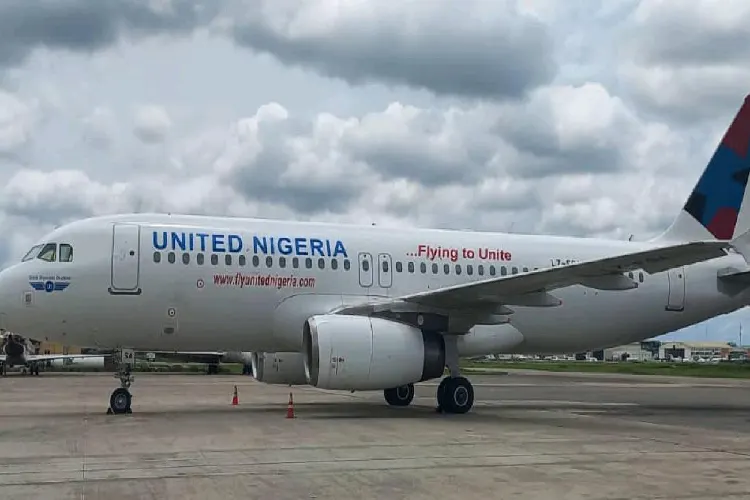
United Nigeria Airlines has raised N22 billion through the first tranche of a N100 billion commercial paper programme, closing Nigeria's first-ever airline commercial paper issuance oversubscribed by more than N5 billion and, in doing so, forcing the capital markets to answer a question they have dodged for decades: whether Nigerian aviation is an investable industry.
The deal crossed its initial N20 billion target within a single window, with investor demand exceeding the offer by more than N5 billion. In a clearly structured response, the airline absorbed 10 percent of the excess subscription, lifting proceeds to N22 billion, while returning the remainder to subscribers whose applications could not be fully accommodated — a level of allotment discipline more commonly associated with established large-cap issuers than with a debut credit. The paper was issued in two series, with tenors of 270 days and 364 days supporting the airline's working capital and fleet expansion ambitions.
Credit ratings did the heavy lifting
Two independent agencies put investment-grade labels on the transaction before it went to market: Agusto & Co assigned short-term ratings of A3 and a long-term grade of BBB- with a stable outlook, while DataPro rated the short-term paper A1 and the long-term programme BBB. Meristem Capital Limited acted as lead issuing house, working alongside Cordros Capital and other dealers — bringing together the rating, drafting and distribution architecture that Nigerian airlines have rarely assembled in one transaction.
The ratings matter because the commercial paper market prices risk with unusual speed. Nigerian companies issued N1.61 trillion of commercial paper in 2025 — a 40 percent jump from N1.15 trillion in 2024 — at an average discount rate that rose to 22.38 percent, on tenors averaging 233 days. Against that backdrop, an unrated debut issuer with loss-making operations would struggle to clear even a fraction of the market. United Nigeria Airlines instead arrived with a revenue history that grew from N10.3 billion in 2021 to N90.8 billion in 2025, and profit after tax rising from N1.3 billion to N23.8 billion over the same stretch — figures that let asset managers, insurance companies and high-net-worth individuals price the paper as an operating-business credit rather than a speculative venture.
An airline that behaves like an investable company
The subscriber mix is as significant as the size. Asset managers and insurers participate in commercial paper when the obligor's cash generation is predictable and the instrument's liquidity horizon is short; high-net-worth individuals follow distributions in institutional sizes. United Nigeria Airlines' credibility rests on a network spanning 14 destinations across Nigeria and Ghana, formal membership of the IATA Multilateral Interline Traffic Agreement secured in 2026, and global distribution system agreements with Amadeus and Sabre completed in the same year — institutional infrastructure that makes its ticket inventory sellable through worldwide travel agents and gives the revenue line a verifiability that domestic-only carriers rarely offer.
What it says about Nigeria's funding markets
The transaction lands in a market with a paradox at its centre. Every bank in the system is cash-rich after the N4.65 trillion recapitalisation completed in March, yet the working-capital door for productive-sector borrowers has stayed stubbornly narrow, with banks raising prime lending rates in several sectors even as the central bank cut its benchmark to 23 percent. In that environment, the strongest private issuers are working around the banks: commercial paper and corporate bonds are now the preferred route for companies with the credit standing to do it, and the list has expanded through 2026 from consumer-goods multinationals to fintechs, construction groups and now an airline.
For Nigeria's aviation sector, whose carriers have historically financed aircraft and operating costs through dollar-denominated leasing obligations, a naira-denominated short-term market is a structural discovery. The instrument helps airlines match financing to the fact that aviation revenue is largely generated in naira — sidestepping the exchange-rate exposure that pushed several domestic carriers into distress when the naira devalued sharply between 2023 and 2024. Working-capital cycles funded in the currency of ticket sales give domestic operators a cleaner balance-sheet path than the leasing-dominated model their competitors rely on.
The wider read for investors and the government
The most consequential signal of the deal is for the wider industrial funding conversation: if an airline can tap commercial paper at investment-grade spreads, the gating question for other infrastructure-adjacent industries is not investor appetite but disclosure quality. Ratings agencies rewarded a graded revenue history, an audited profit trajectory and an international distribution footprint — none of which required subsidy. Companies in shipping, haulage and energy services that can produce the same evidence base now have a visible template and, arguably, a market that has already priced one precedent.
There is also a message for the federal government. Aviation reform debates in Nigeria often fixate on bank loans and government-backed financing schemes, yet the deal in the market shows the private sector can fund its own expansion at rates the DMO has helped establish as market benchmarks. As the main carrier prepares further tranches under its N100 billion programme, the more meaningful test will be whether successive issues price lower as track records build — a dynamic that would give Nigerian aviation, for the first time, a cost-of-capital curve of its own.
Up next
Four Nigerian-Americans Win US Midterm Elections As Diaspora Clout Grows
Will Jawando, Junior Ezeonu, Oye Owolewa and Carol Kazeem won offices in the US midterms while Georgia's Segun Adeyina still leads his race, extending Nigerian diaspora political power.
More in Finance
See all
Nigeria FX Defences Firm At 55bn Reserves And 115 Oil
Nigeria holds about 55 billion dollars in gross reserves with a record 46 billion net position as Bonny Light trades near 115 dollars per barrel.

Nigerias Top Firms Lift Nine-Month Profits To N12.1tn
Twenty-two large Nigerian listed companies reported N12.1tn nine-month pre-tax profit, up 35.4 percent on the year as banks and cement groups led delivery.

Access Holdings Profit Rebounds To N667.4 Billion
Access Holdings posts N667.4bn nine-month pre-tax profit as Q3 earnings rebound 78.4%, leading Nigerian bank earnings season delivery.
About the author
Musa Abdullahi
Finance Correspondent
Musa Abdullahi writes for BusinessPress.
More by Musa Abdullahi


