
JPMorgan to Open Nigerian Merchant Bank as Nigeria Joins Its Frontier Bond Index
The US banking giant plans to establish a merchant bank in Nigeria before the end of 2026 and has added the country to a new emerging-market bond index, in twin votes of confidence for the capital market.
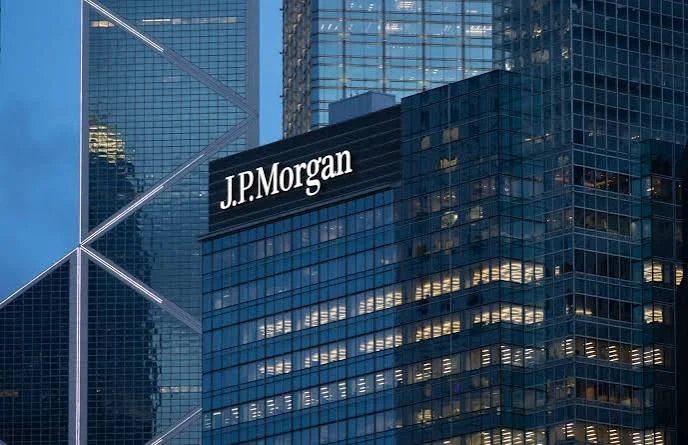
JPMorgan Chase plans to establish a merchant banking presence in Nigeria before the end of 2026, a move senior executives say will deepen the bank's engagement with African institutional and corporate clients.
The plan was disclosed at a Nigeria-Asia financial connectivity dialogue convened in Singapore in September 2026 by the Central Bank of Nigeria, the Nigerian Exchange Group and FMDQ. Dapo Olagunju, managing director for West Africa at JPMorgan, said the merchant bank would position the firm as a full participant in Nigeria's capital markets rather than a remote provider of cross-border services.
Index inclusion
Days earlier, JPMorgan announced that Nigeria would be included in its new GBI-EM Edge index, a diversified benchmark for emerging-market local currency bonds that spans roughly 26 markets and about $328 billion in assets under management. Nigeria was assigned a weighting of 7.4%, putting it among the larger components of the index.
Analysts estimate the index inclusion could draw fresh passive and active flows into naira-denominated debt over time, lowering borrowing costs for the government.
Index inclusion matters because funds that track a benchmark must hold its constituents. For Nigeria, it widens the pool of investors able to buy federal government securities and raises the country's profile in emerging-market portfolios where African assets held a 44.5% share of the edge benchmark.
Why the twin moves matter
Together, the bank's physical expansion and the index inclusion signal a maturing relationship between Nigeria and global finance. The country has spent the past two years rehabilitating its foreign exchange regime, clearing a backlog of unmet dollar obligations and tightening monetary policy, steps that foreign investors had demanded before re-engaging.
The government has also courted foreign capital directly, including a non-deal roadshow in the United States in September 2026 with about 120 investors, where officials described strong appetite for Nigerian assets.
What comes next
Establishing a merchant bank requires licensing and operational approvals from Nigerian regulators, and the timeline could shift. But the direction is notable: a top-tier global institution is preparing to put local capital and people behind a market it once served mostly from a distance.
For Nigerian corporates, the arrival of a global merchant bank could improve access to structured finance, advisory and cross-border capital markets expertise that has historically been concentrated among a handful of local and regional players.
Up next
IMF Projects Nigeria's Economy Will Grow 4.2% in 2026 as Global Growth Holds at 3.1%
The IMF has projected that Nigeria's economy will expand by 4.2% in 2026 and 4.3% in 2027, outpacing a global economy held back by tighter conditions and uneven momentum.
More in Finance
See all
CBN's Liquidity Squeeze Keeps Banks Tight Despite Trillion-Naira Inflows
The Central Bank of Nigeria is mopping up excess cash to keep money-market conditions tight, supporting the naira and inflation but keeping borrowing costs elevated.
KuCoin Nigeria Wins SEC Approval-in-Principle for Regulatory Incubation
KuCoin Nigeria has secured conditional approval-in-principle from the Securities and Exchange Commission to join its regulatory incubation programme.

Five Nigerian Lenders Post Combined N2.29 Trillion Profit in First Half of 2026
Five leading Nigerian financial institutions reported a combined pre-tax profit of about N2.29 trillion in the first half of 2026, cementing banking's dominance of corporate earnings.
About the author
Musa Abdullahi
Finance Correspondent
Musa Abdullahi writes for BusinessPress.


