
Banks Raise Prime Lending Rates In Eight Sectors Despite CBN Cuts
Nigerian banks raised average prime lending rates in eight key sectors including agriculture, construction and manufacturing despite successive cuts to the central bank policy rate.
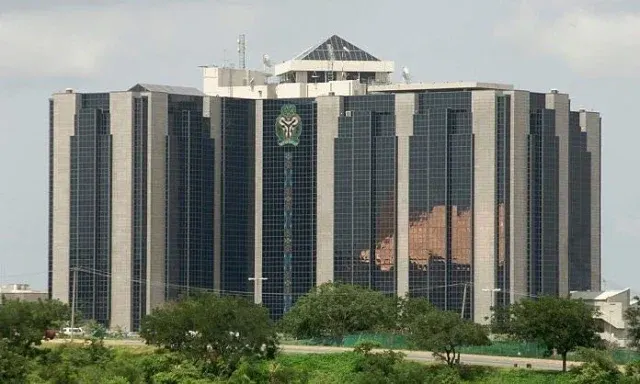
Nigeria's commercial banks have raised their average prime lending rates in eight key sectors of the economy, quietly defying the central bank's monetary easing and dashing the immediate hope of cheaper loans for the businesses that drive the country's manufacturing, construction and agricultural ambitions — a divergence that economists warn is delaying the real-economy impact of the CBN's most aggressive rates cycle in a generation.
A review of lending-rate data published by Vanguard showed that despite successive interest rate reductions by the Central Bank of Nigeria, prime lending rates have climbed in sectors including agriculture, construction and manufacturing, even as banks cut their maximum rates elsewhere in the market. Government borrowing rates rose to 26.49 percent from 25.52 percent, while human health and social work lending climbed to 26.96 percent from 26.11 percent. That pattern is almost the inverse of what the policy path was designed to produce, and it comes at the worst possible moment for productive-sector borrowers holding working-capital loans priced at these benchmarks.
The policy path the banks are not following
The central bank's easing began in September 2025 with the first cut in five years, taking the Monetary Policy Rate from 27.5 percent to 27 percent, followed by a further 50-basis-point reduction in February 2026 to 26.5 percent. By far its most dramatic move, however, came in late September 2026, when the Monetary Policy Committee slashed the benchmark by 350 basis points to 23 percent, a recalibration Governor Olayemi Cardoso justified on the basis of a yawning gap between the official benchmark and market rates that had been trading well below 20 percent for months.
The gap reveals the paper market's judgement and the credit market's stubbornness simultaneously. Treasury bills and Open Market Operations instruments migrated down as liquidity improved and the central bank withdrew from the extreme scarcity pricing of 2024, but banks' own rate cards drifted upward instead. The result is a credit system in which the benchmark has reset lower while the rate a manufacturer actually pays at the counter has not followed — a textbook failure of policy transmission, and one for which Nigeria's own institutions have been sounding the alarm.
Why banks are pricing risk, not policy
The answer banks give is short: funding and risk. Nigerian lenders price loans off their own cost of funds and their credit loss expectations, neither of which is directly moved by a policy-rate headline. That arithmetic is being stretched by three forces at once. The central bank's high cash-reserve requirements on both regular deposits and non-TSA public-sector deposits sterilise a large share of loanable funds, pushing banks to recover their carry from the narrower pool of lending they are permitted to extend. Government securities at 20 percent and above, even after the September reset, remain attractive enough — and carry no customer risk — that Nigerian banks have the strongest balance-sheet incentive to keep deposits parked in fixed income. And Nigeria's asset-quality environment has left banks, in the aggregate, extraordinarily selective about who receives credit, as the post-recapitalisation industry has channelled the bulk of its growth into treasury operations rather than new lending to small and medium-sized enterprises.
The CBN took the unusual step of publishing its own diagnosis through its money market survey, which showed prime lending rates in agriculture, construction and manufacturing moving against the easing cycle, and gave bank treasurers no rhetorical cover. “Sustained high borrowing costs could weaken private investment, slow employment creation and constrain improvements in productive capacity,” the central bank warned, stopping short of a directive but making clear that it considers the divergence a policy concern rather than a market phenomenon.
Bank spreads versus the real economy
For businesses, the practical effect is a double squeeze. Working-capital loans contracted at pre-September benchmark levels continue to repay at the old elevated spreads, and the finance teams planning the quarter or the dry-season harvest cannot yet bank on interest relief. Larger, better-rated corporates with commercial-paper access have an escape: Nigerian companies have raised well over N1.3 trillion in commercial paper issuance in the first nine months of 2026 alone, a route that bypasses the bank market entirely and pays a lower effective rate to the strongest issuers. That financing migration, however, also entrenches the two-tier credit market — safer, better-recognised issuers enjoy cheaper funding, while the weaker but often higher-employment segments of the economy are left to the banks' higher prime rates, reinforcing the very exclusion that the easing cycle nominally addresses.
Households are in the same position. Consumer and mortgage lending remained constrained through the easing cycle, with banks responding to idiosyncratic risk by raising their headline rates even as policy costs fell. For central bank policymakers, that raises the awkward but obvious question: what does transmission now require — a still-lower benchmark rate, lower reserve requirements that free loanable funds, or direct pressure on banks to reprice their books more aggressively?
Implications for the November MPC meeting
The next Monetary Policy Committee meeting, scheduled for November 24, lands precisely as banks' latest rate cards render the CBN's transmission challenge visible in raw data. A committee that has chosen “recalibration” as the framing for its September cut is unlikely to ease simply because bank spreads have not behaved; the more consequential variable is whether the central bank directs complementary policy — reserve-ratio adjustments, supervisory pressure on bank pricing, liquidity instruments that reduce funding cost without trapping cash — at the transmission gap itself.
The risk of inaction is that Nigeria's growth dialogue continues to run through the fixed-income market even though the productive economy waits for credit. The September reset aligned the CBN's benchmark with the market; bank rate cards aligned the credit market with the borrower's reality. Until those two align with each other, the central bank's inflation victory will continue to price as a bright macroeconomic headline — and as a very expensive loan at the branch counter.
Up next
World Bank Sees Global Food Prices Rising 7 Percent In 2027
The World Bank projects a further 7 percent rise in global food prices in 2027 after an estimated 10 percent increase in 2026, deepening pressure on Nigerian households.
More in Economy
See all
Tinubu Tells 32nd Economic Summit Government Is Rewriting Nation’s Story of Underperformance
President Bola Tinubu told the opening of the 32nd Nigerian Economic Summit in Abuja on Monday, October 26, that his administration is rewriting what he called the country’s decades-old story of economic underperformance, as lawmakers, ministers and private-sector leaders gathered for this year’s edition.
Nigeria's September Inflation Seen Easing to About 15.5% Ahead of NBS Release
Analysts project headline inflation near 15.5% as disinflation continues, though high oil prices and sticky food costs keep the single-digit target at a distance.
CBN's First-Half FX Sales Fall to Lowest in 19 Years as Naira Stabilises
Lower intervention reflects a calmer currency market and record reserves, but analysts caution it may also signal compressed import demand rather than a self-sustaining market.
About the author
Musa Abdullahi
Finance Correspondent
Musa Abdullahi writes for BusinessPress.
More by Musa Abdullahi


