
Asian Chip Stocks Whipsaw As Democrats Sweep Raises AI Regulation Risk
Samsung and SK Hynix fell more than 4.5 percent before recovering as the Democratic US midterm sweep raised, then moderated, fears of binding AI and data-centre regulation.
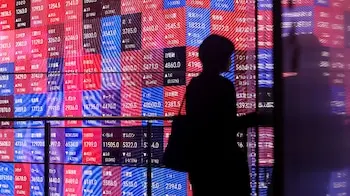
Asian semiconductor stocks went through the sharpest single-day repricing of the artificial intelligence trade since the summer sell-off on Wednesday, tumbling 4 percent or more in early trading before staging a near-complete recovery, as Democratic gains in the US midterm elections raised the perceived risk that Congress will turn data-centre and AI regulation from a political talking point into binding law.
Samsung Electronics and SK Hynix, the two Korean chipmakers closest to the global AI memory cycle, each dropped more than 4.5 percent in the first hours of trading, driving South Korea's KOSPI down as much as 4 percent intraday — before nearly recovering the entire loss as analysts reassessed the arithmetic of a veto. In the United States, election-night coverage from CNBC showed AI-linked holdings such as Tesla and SpaceX falling more than 4 percent as results indicated a convincing Democratic win in both houses of Congress and in Texas, where the governor's race carries direct implications for the country's densest cluster of AI data-centre construction.
The trade at the centre of the volatility
The market's concern is specific rather than abstract. The AI infrastructure buildout — the data centres, power purchase agreements and semiconductor fabrications running from Texas and Virginia through Ireland to Malaysia — has been priced on the assumption that permitting would stay fast, power capacity would keep expanding and no capex constraint would slow the pace of GPU deployments. A Democratic-controlled Congress, particularly one that won key governorships in data-centre-heavy states, shifts the parameters: committees will now hold hearings on AI safety, energy consumption and local-community impacts, and legislation on any of those fronts would land on the companies with the largest planned pipelines of new computing capacity.
Strategists were quick to argue this is not the same as a policy certainty. "AI regulatory fears triggered by a Democratic sweep look somewhat overdone. Even if the next Congress passes a bill tightening AI regulation, President Trump can still exercise a veto," Tomo Kinoshita, global market strategist at Invesco Asset Management, said in commentary picked up by Asian market watchers. That arithmetic — a Democratic legislature blocked by a Republican president — argues for pricing incremental friction rather than sweeping preemption, however much the political momentum has shifted.
Why memory and Korea drew the first risk
The outsized reaction in Seoul is not incidental. Samsung and SK Hynix sit at the meeting point of the two technology cycles that matter most: AI acceleration, where HBM memory is the binding physical constraint, and the broader storage commodity cycle, where pricing has moved jaggedly over two years. A policy shock to AI capex, real or perceived, translates directly into uncertainty about the highest-margin, most capital-intensive segment of the next 24 months — which is why Korean chipmakers bore the largest dislocation while also showing the fastest willingness to bid back in once the initial read on legislative politics settled down.
Taiwan's semiconductor complex, the manufacturer behind nearly all of the world's advanced AI accelerators, held a similar profile with smaller percentage swings, and Taiwan's broader market spent much of Wednesday in negative territory as strategists reconsidered how quickly Taiwanese capacity would come online across the next two years of data-centre builds. Both markets recovered ground that, in the abstract, belongs to longer-dated policy risk rather than to any change in cash flow expected this quarter.
The veto, the energy debate and the year-end calendar
The more durable story for investors is the energy question embedded in the same politics. A Democratic Congress has an interest in governing the buildout's physical footprint — power procurement, cooling water, grid-interconnection queues — where the relevant committees now align with jurisdictions that have been pushing back for months against data-centre utility rates. Legislation to set national AI standards, if it ever reaches a reconciled bill, would need to survive a House-Senate negotiation and a presidential veto, neither a given. In the interim, state and local authority over permitting and utility rates remains the binding constraint on data-centre expansion — which is precisely what makes the Texas governor's race, won by Democrats in Tuesday's results, the most immediately relevant election outcome for the sector.
Bond and currency investors read the same result in calmer terms. Ten-year Treasury yields fell to about 4.92 percent as the blue wave settled in, with the dollar easing alongside, and strategists argued the real consequence is a relative shift rather than an absolute one: an AI trade that relies on future legislative support for accelerated permitting faces a slightly harder path, while sectors depending on public investment — renewable energy in particular gained in Europe on Wednesday — are receiving a marginal tailwind.
What African and emerging markets should take from it
The transmission to African and emerging markets runs through three channels. The first is risk appetite towards dollar funding for infrastructure spending: an inversion of AI expectations, even temporary, can tighten the borrowing terms for data-centre and telecom projects on the continent, where operators are already weighing power costs against the availability of subsea bandwidth. The second is the demand signal in the commodity chain — a slower or more regulated AI buildout in the United States would eventually show up in demand for energy, copper and the specialty metals used in high-performance computing, and African exporters of those commodities have priced their own growth forecasts partly on data-centre expectations. The third is the political precedent: a US policy environment that leans into AI oversight gives regulators in Lagos, Nairobi and Abuja a broader framework of reference as they weigh their own data-localisation, AI governance and data-centre permitting regimes.
None of those channels is likely to move markets as sharply again on Thursday. The larger question is whether Wednesday's whipsaw marks the beginning of a sustained re-pricing of the AI trade, or just the market discovering, once more, that the difference between winning an election and passing a law is where most of the risk has always lived.
Up next
DMO Offers N800bn Treasury Bills As Maturing Securities Hit N872bn
The Debt Management Office puts N800bn of Treasury bills on offer on November 4, with the one-year tenor dominating as maturing securities exceed N872bn in a liquidity-rich banking system.
More in Markets
See all
Oil Whiplash Tests Markets As US-Iran Talks Wobble
Oil prices swung violently around the 100 dollar mark after a US strike on Iran Qeshm Island revived escalation fears across the market.

US Midterms Look Set To Spare Global Markets
JPMorgan strategists expect limited market impact from the US midterm elections as investors price policy gridlock and look past the vote.

Gold Caught Between War Premium And Stubborn Rates
Gold consolidates near 3,950 dollars as US-Iran escalation risks clash with stubborn interest rates punishing non-yielding assets.
About the author
Adaeze Okonkwo
Markets Editor
Adaeze Okonkwo writes for BusinessPress.
More by Adaeze Okonkwo


