
Oil Whiplash Tests Markets As US-Iran Talks Wobble
Oil prices swung violently around the 100 dollar mark after a US strike on Iran Qeshm Island revived escalation fears across the market.
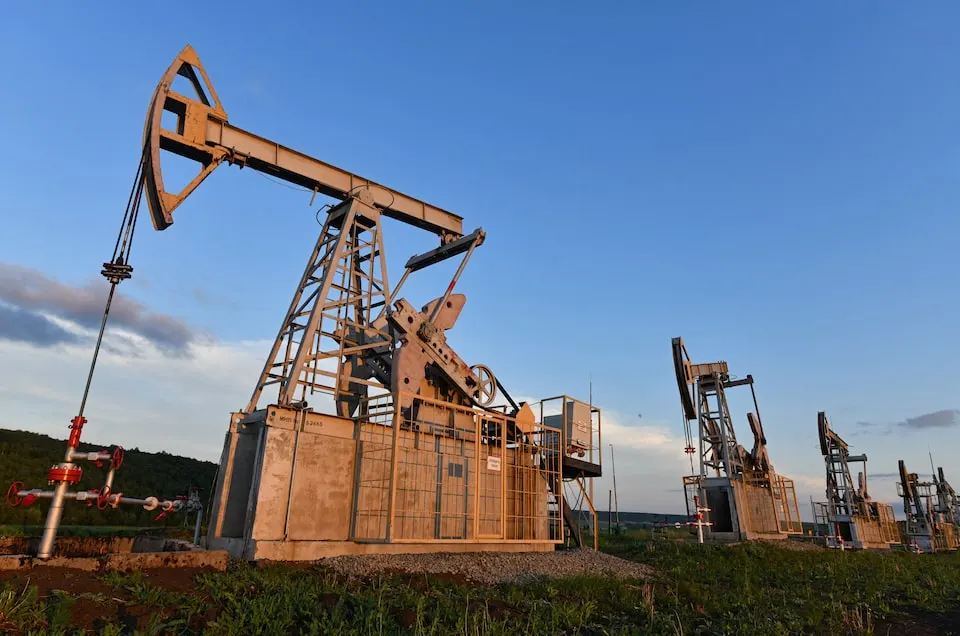
Oil prices swung violently around the $100-per-barrel mark on Tuesday as a reported United States strike on Iran's Qeshm Island revived escalation risks in a conflict that had appeared, hours earlier, to be moving toward settlement — whiplash that has turned the world's most macroeconomically sensitive commodity into November's most closely watched gauge of geopolitical risk, with direct consequences for the Gulf producers, importers and developed economies heading into the winter quarter.
After crude fell as much as seven percent on Monday on hopes that US-Iran diplomacy would defuse the conflict and as traders wagered on the direction of the Strait of Hormuz, Reuters reported a more than one-dollar rebound on Tuesday as an Iranian official said a deal to end the war was far off, while the United States confirmed strikes targeting the Qeshm Island area. Brent traded near the $106-107 level by midweek, having moved violently across a range that has made hedging — not forecasting — the operative discipline of the physical oil trade.
Hormuz remains the market's single point of vulnerability
The strategic geography explains the outsized price reaction. The Strait of Hormuz, the chokepoint Iran's government has periodically threatened to close, carries roughly one-fifth of global crude oil and petroleum gas supplies — including the exports that matter most to Asian industrial customers. Each escalation cycle that raises closure fears lifts asset prices of tanker owners, insurance premia and freight costs as shipping reroutes or military convoy arrangements rearrange, and those costs feed directly into delivered crude prices in Asia, where the bulk of Nigerian and Gulf cargoes are sold.
For African producers, this is currently a high-price environment doing a lot of work: Nigeria's income statement benefits from elevated crude clearing prices (Bonny Light has traded near $115 per barrel during the recent weeks), but Nigerian and Angolan crudes compete in the same market where Asian refiners' purchasing calculus is hostage to military incidents rather than demand fundamentals. Uncertainty also slows the long-horizon investment appetite — the same appetite Nigeria has been courting for its 40-block 2026 licensing round unveiled to investors in Abu Dhabi this week.
What the US election calendar has to do with the oil trade
The timing gives the conflict an unusual political charge. United States midterm elections take place this week, and market reports — including the IMF's daily markets monitor — suggested participants assigned limited direct market impact to the vote itself, but they acknowledged that expectations of the fighting's escalation are inseparable from the United States' political calendar, with strategists noting that markets are placing significant weight on their expectations that US-Iran fighting will intensify in the post-election window, where the administration's military latitude may widen.
Diplomatic signalling has produced the volatility the market is consuming. Reports that Washington wanted to give diplomacy more time before any resumption of strikes had driven Brent down sharply through the first days of the week, with prices touching a three-week low on Tuesday morning in some markets, minutes before the reported Qeshm Island strikes reversed the move entirely — leaving physical traders and financial desks evenly divided over which direction next week brings.
Consequences for inflation policy across major economies
Energy-price volatility is currently among the most consequential inputs into the world's central banking debate — with oil clearly elevated from year-start levels, headline inflation rates in the large developed economies have regained if not the trend, then the risk of it, and the policy implications land differently across the G-20. The Reserve Bank of Australia's decision this week — a fifth rate rise of 2026, taking the cash rate to an 18-year high of 4.85 percent — illustrates the direction: energy-driven inflation persistence has extended policy restraint well beyond what markets forecast at the start of the year.
Emerging market importers of energy — Pakistan, Bangladesh, Egypt among them — face the sharpest squeeze: higher indebtedness, dollar-for-dollar fuel subsidy costs and the exchange-rate transmission of higher dollar oil into fuel prices. The World Bank and IMF's recurring warning that oil supply shocks stand among the most significant risks to the 2027 growth outlook grows louder the longer the conflict's diplomatic track stalls, with the IMF's own growth projections already trimmed on geopolitical tension since the war began in earnest earlier in the year.
The positions buyers and producers now hold
For oil-producing governments, the current environment delivers financial buffers without a corresponding right to hype it: revenues earned on escalation-driven premia can evaporate as fast as they arrived if a credible peace turns Brent toward the mid-$90s or lower, and budget planning that treats current prices as structural would be reliably imprudent. For consumers, the protection is equally asymmetric — strategic reserves, demand-side efficiency measures and fuel pricing pass-through margins absorb some shock, but retail fuel prices in most economies have already repriced upward this year.
The correct read on Tuesday's market is that the oil trade has entered a two-sided mode: a war premium that can decline sharply on genuine diplomatic progress, and a supply-structure floor that reflects genuinely tight effective capacity after two years of underinvestment and the loss of some functioning regular supply. Moving standards on both dimensions means the price range stays wide and reactive — $95-$115 is currently the band strategists discussed this week — and the market's November allocation will go where energy security risk earns compensation as much as to any demand-driven fundamentals.
Up next
Nigerias Top Firms Lift Nine-Month Profits To N12.1tn
Twenty-two large Nigerian listed companies reported N12.1tn nine-month pre-tax profit, up 35.4 percent on the year as banks and cement groups led delivery.
More in Markets
See all
Brent crude steadies near $111 a barrel as traders weigh supply risks against softer demand after the Fed holds rates
Global oil benchmarks held firm on Thursday, with Brent trading near $110.80 after a week in which Middle East refinery damage kept supply risk at the centre of pricing, and the US Federal Reserve's decision to hold rates cooled demand expectations.
Brent Crude Rises on Tanker Attacks Near Strait of Hormuz
Brent crude climbed to its highest level since May after attacks on tankers near the Strait of Hormuz sparked renewed supply disruption concerns in global oil markets.
Trump Waives New Russia Sanctions Before Tariff Deadline, Citing National Interest
President Donald Trump has signed an executive order waiving most of the new Russia sanctions and tariffs Congress passed in the Graham Act, acting two days before the implementation deadline and citing the national interest.
About the author
Abiodun Abdullahi
Author / Business and Markets Writer
Abiodun Abdullahi writes for BusinessPress.
More by Abiodun Abdullahi
Australia Extends Rate Hike Streak To An 18-Year High
Markets49 mins ago
US Midterms Look Set To Spare Global Markets
Markets1 hr ago
China Halts Yuan Rally As Star 50 Index Slumps
Markets3 hrs ago


