
Global Stocks Rally, Dollar Dips After Democrats Sweep US Midterms
Democrats won both chambers of Congress in the US midterms, sending markets on an overnight whipsaw before stocks and the dollar recovered as investors priced in veto limits.
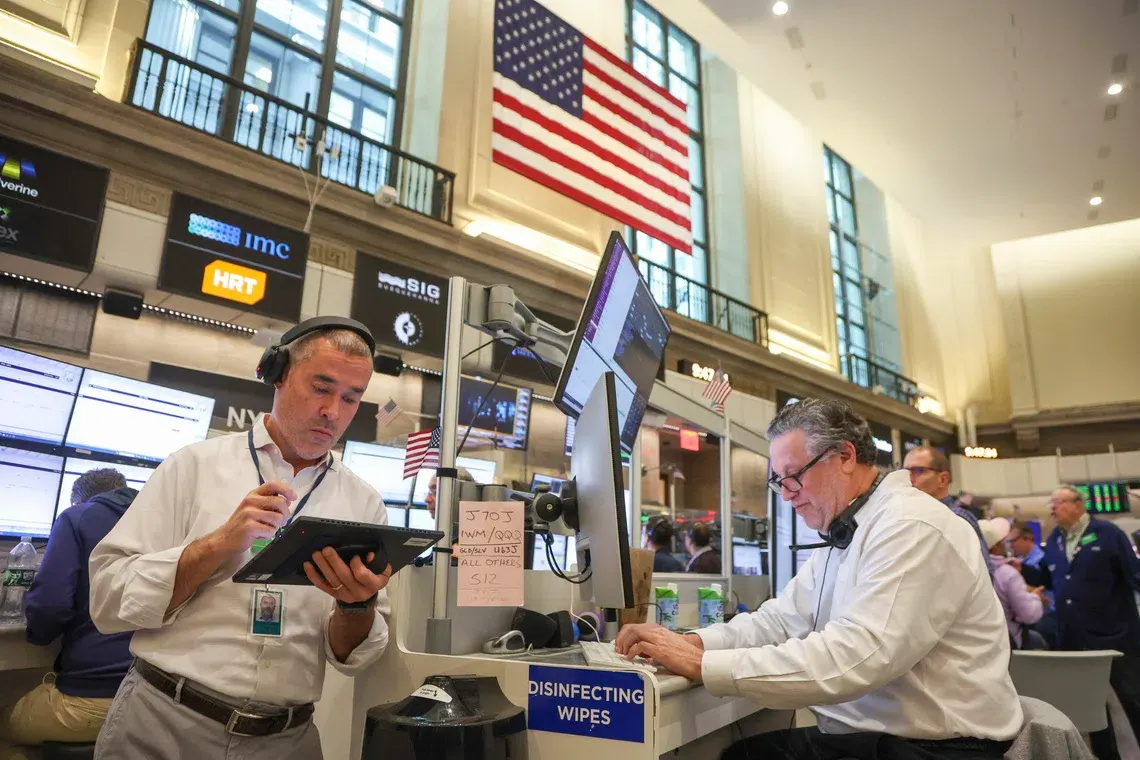
Global stocks and the dollar steadied and recovered on Wednesday after voters handed the Democratic Party control of both chambers of the US Congress in the midterm elections, a result that initially knocked markets overnight before investors converted fears of regulatory disruption into what many strategists considered an overreaction the moment President Donald Trump signalled he would accept the outcome.
The reversal was dramatic. Preliminary counts showing Democrats making larger-than-expected gains sent Asian chip stocks tumbling in early Wednesday trading, with Samsung Electronics and SK Hynix each dropping more than 4.5 percent and South Korea's KOSPI falling as much as 4 percent intraday. By midday, according to Reuters, global stocks had recovered from the overnight lows, the dollar had slipped, and US futures had turned positive — S&P 500 contracts up 0.8 percent and Dow futures 1.6 percent higher, while Nasdaq 100 futures remained flat, reflecting lingering nervousness among AI-heavy technology holdings rather than a wholesale reversal.
What voters actually decided
European tracking showed the shape of the result: by mid-morning Wednesday, Democrats had been called winners in 228 House seats, ten more than the 218 needed for a majority against Republicans' 139, with dozens of races still to be called, while the Senate swung as well — seven seats taken from Republicans, including in Texas, Ohio, Kansas and Maine, according to Euronews. High prices weighed heavily on voters, with about two-thirds of an election-day survey saying Trump's tariffs had hurt the economy.
Trump said he would accept the result, insisting the verdict was not a hit on him personally, while making clear he would use his veto to block the Democrats' legislation — a posture analysts read as both a constraint and a shield. Because the White House retains veto power, the “blue sweep” cannot translate directly into sweeping new statute, which is precisely why several strategists concluded the sharpest market fears were overdrawn.
Why the chip complex took the first hit
The market's most consistent worry was artificial intelligence regulation and data-centre permitting. The Democratic Party's wins in several technology-heavy states, notably in Texas, raised the prospect of a Congress more willing to police AI data-centre buildouts, energy consumption and the semiconductor supply chain — a set of policies that lands heaviest on the companies that own and power the AI buildout. That produced the whipsaw: the semiconductor and AI-infrastructure complex sells off hardest in Asian trading, then recovers most of the loss as the veto arithmetic becomes clear. AI-linked US names such as Tesla and SpaceX-linked holdings fell more than 4 percent in the immediate aftermath before moderating, per CNBC's election-night coverage.
The comparative losses matter for portfolio managers. European stocks opened higher, with renewable energy names leading gains as investors anticipated a potential shift in US energy policy, and Spain's IBEX 35 jumped 1.6 percent — the market rewarding companies and sectors that stood to gain from changed policy rather than rushing to price blanket losses. That rotation within the rally, rather than a uniform risk-off, suggests markets are trading specific policy vectors, not a general repricing of the American economy.
The dollar and the Fed remain the real anchor
For the dollar, the election changes the Fed's congressionally determined independence in important but slow-moving ways. “The greenback continues to respond predominantly to the Fed story, which shouldn't face an immediate and direct impact from the midterm result,” Francesco Pesole, FX strategist at ING, and colleagues wrote in a note, pointing to a longer-run risk: the possibility that a Democrat-controlled legislature will press more aggressively on Federal Reserve governance reform, an issue that could eventually pressure the currency several quarters from now.
Bond markets, the most sensitive channel for any change in the credibility of Washington's institutions, moved calmly. The yield on the 10-year Treasury fell to about 4.92 percent on Wednesday morning, a move consistent with investors making modest adjustments for a marginally softer fiscal outlook and slightly reduced expectations for enacted tax cuts or tariff escalations. Strategists at State Street Global Advisors framed the election's overshoot precisely — “the real risk facing the market is not the blue wave itself, but investors' overreaction to the blue wave,” Michael Arone said — a position echoed by Edward Jones's Angelo Kourkafas, who noted that election-driven volatility has historically dissipated quickly.
Why African and emerging markets are watching closely
The election's most consequential resonance for African and emerging-market investors lies in three transmission channels. First, tariffs: a Congress more sceptical of the administration's trade policy reduces the probability of tariff escalation over the next two years, easing the pressure that has distorted commodity and manufacturing supply chains — including those connecting Nigeria and other raw-material producers to factories in Asia feeding US demand. Second, oil and energy policy: Democratic control raises the prospect of moderating US petroleum expansion, a dynamic that supports Brent crude, which was trading near $105 amid the wider Middle East supply shock, and thus benefits African oil exporters' fiscal revenues. Third, dollar funding conditions: a calmer policy environment in Washington, paired with the Fed's independent inflation fight, is a positive backdrop for portfolio flows to emerging markets that in 2026 have been whipsawed by tariff shocks.
Wednesday's earnings calendar — Uber, Qualcomm, McDonald's, ARM Holdings and AMC — falls directly into that crossfire, with several reporting companies having already previewed tariff and consumer-price effects on guidance. The election result did not resolve the fundamental uncertainty facing those businesses, which remains inflation, consumer demand and the energy transition. What it did change, at least temporarily, is the market's confidence that the rules of American governance, however contested, are once again legible enough to invest against.
Up next
Banks Raise Prime Lending Rates In Eight Sectors Despite CBN Cuts
Nigerian banks raised average prime lending rates in eight key sectors including agriculture, construction and manufacturing despite successive cuts to the central bank policy rate.
More in Markets
See allAustralia Extends Rate Hike Streak To An 18-Year High
The Reserve Bank of Australia lifted its cash rate for a fifth time in 2026 to 4.85 percent, an eighteen-year high that hardens the global fight with inflation.

Oil Whiplash Tests Markets As US-Iran Talks Wobble
Oil prices swung violently around the 100 dollar mark after a US strike on Iran Qeshm Island revived escalation fears across the market.

US Midterms Look Set To Spare Global Markets
JPMorgan strategists expect limited market impact from the US midterm elections as investors price policy gridlock and look past the vote.
About the author
Abiodun Abdullahi
Author / Business and Markets Writer
Abiodun Abdullahi writes for BusinessPress.
More by Abiodun Abdullahi


