
Afreximbank Backs 81.9m Nigerian Tile Factory Expansion
An 81.9 million dollar Afreximbank loan expands Veenocks Sagamu porcelain tile plant, tripling capacity for eight African export markets.
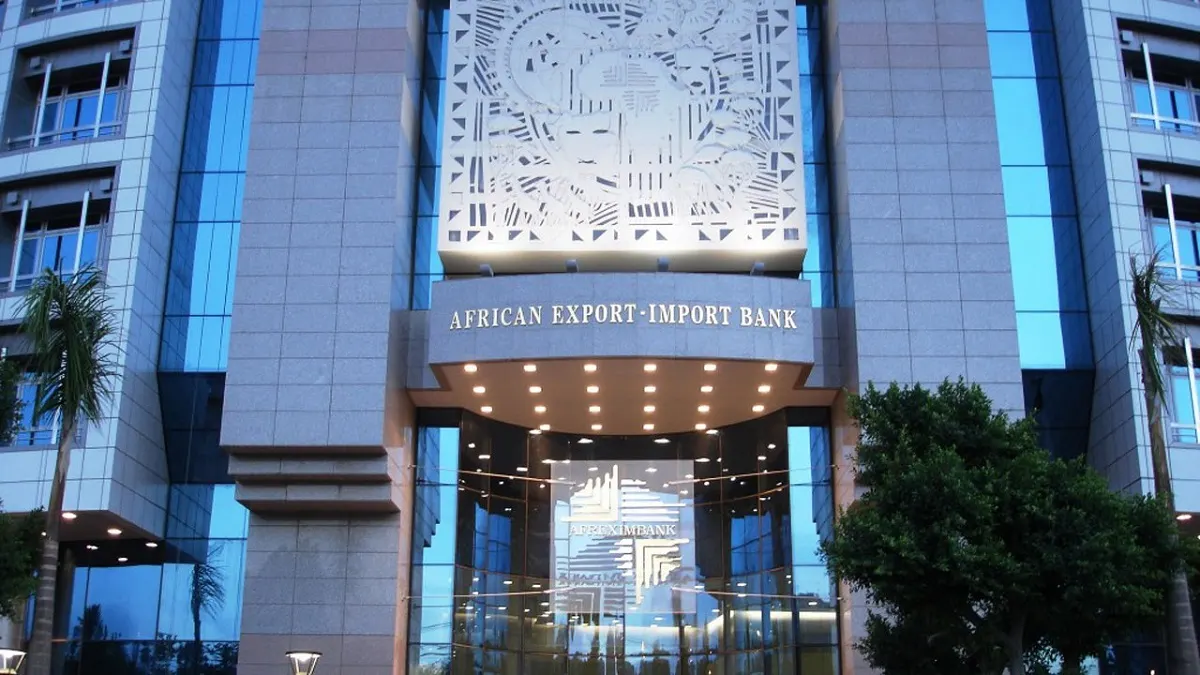
Afreximbank has committed an $81.9 million senior term loan to Veenocks Limited to expand its porcelain tile factory in Sagamu, Ogun State, the centrepiece of a $145 million industrial project that will triple the plant's annual production capacity and carry a made-in-Nigeria tile brand into eight West and Central African markets — one of the larger single-facility manufacturing financings secured by a privately held Nigerian industrial group this year.
The African Export-Import Bank, which disclosed the transaction in a statement on Monday, said the loan builds on a $2 million Project Preparation Facility agreement it signed with Veenocks in August 2024 to finance the technical, commercial, legal and environmental studies that established the bankability of the expansion, Nairametrics reported. With the preparation work complete, the bank's financing now funds a construction phase expected to lift the factory's annual output from 3.3 million square metres of porcelain tiles to 9.9 million square metres.
From a single plant in Sagamu to regional export ambitions
Veenocks, a member of Nigerian investment holding company R28 Holdings, produces premium porcelain wall and floor tiles under the Veramis brand for residential and commercial projects. The Sagamu plant directly employs more than 200 workers, and the expansion is expected to create a further 300 direct jobs in addition to indirect employment across raw material supply, logistics and distribution — meaningful additions in Ogun State's growing industrial corridor.
The export strategy is concrete. The company plans to use expanded capacity to pursue sales in Togo, Benin, Burkina Faso, Niger, Cameroon, Ghana, Mauritania and Senegal, seeking export markets at a time when Nigeria's non-oil exporters are under increasing pressure to convert supply-chain depth into hard currency revenues. Afreximbank's executive vice-president for intra-African trade, Kanayo Awani, pointed to the preparation facility's role in positioning the manufacturer to penetrate regional markets over the medium term.
Why locally made tiles matter for Nigeria's trade balance
The import substitution logic behind the project is straightforward. Nigeria's construction industry has long absorbed heavy volumes of imported tiles and sanitary ceramics, with demand fed by residential development, public infrastructure and refinishing projects across a nearly 220 million-person market. The bank says the expansion visibly reduces Nigeria's dependence on imported tiles, substituting domestic manufacturing value for a category historically supplied by China, Spain and regional producers.
Tiles are energy-intensive products — clay body preparation, tonne-level kiln firing, glazing and quality testing — which means the location economics are governed by gas availability and freight distance just as much as cost. Sagamu's position within Ogun's industrial belt, with access to power,Ilara granite raw material linkages and the Lagos corridor, and proximity to Apapa's export facilities, gives Veenocks the cost structure to compete against imports and to pursue regional shipments Afreximbank says its market studies found viable.
What the financing structure signals
The transaction carries a strong signal for Nigerian industrial financing: the path to an $81.9 million senior instrument ran through a diligent project preparation phase. Small-scale preparation funding, the kind of engagement Afreximbank supports through its Project Preparation Facility, bridged the gap between a factory expansion plan and a bankable credit, and now anchors a project nearly fifteen times larger than the original studies package.
For an industrial group such as R28 Holdings, whose strategic interests span a range of Nigerian economy sectors, the facility also reflects a broader change across the continent's development-finance landscape, where multilateral lenders are emphasising productive-sector lending and intra-African export push as the next phase of trade finance, in contrast to previous decades dominated by sponsor-led project debt in oil, gas and infrastructure.
Competitive and market implications
Veenocks is not the only Nigerian ceramic manufacturer expanding — other domestic producers have been adding capacity as tariffs and naira depreciation formally shifted the economics against imports — so the expanded Sagamu line enters an increasingly contestable market. The differentiation the company is betting on is product quality: its tiles are certified under the ISO 10545 testing series, with water absorption of 0.3 percent or less, below the 0.5 percent threshold that ISO 13006 requires for genuine porcelain, a specification designed to support premium positioning rather than commodity pricing.
For the Nigerian construction industry, more large-scale local capacity introduces a supply anchor that could support longer-term price discipline in a materials category prone to volatility whenever import logistics or the naira moves sharply. For Afreximbank, backing a private Nigerian manufacturer into eight regional export markets fits squarely within the continental trade mandate the bank emphasises — African factories trading into African markets — and offers a template for other mid-sized industrial exporters working toward regional scale.
The execution test still lies ahead. Tripling output requires construction delivery, commissioning, distribution architecture and working capital management landing nearly simultaneously, and export orders must be won against established rivals in markets where brand awareness must be built from the ground up. But the financing, the capacity plan and a defined set of eight first-stage export markets give the project the hardest-to-fake ingredient for industrial growth — a written, funded and evidenced route to market.
Up next
CBN Caps Payment Firms Dominance With Market Share Limits
The Central Bank of Nigeria cap card issuing shares at 25% and merchant acquiring at 15% as payments concentration becomes a systemic risk concern.
More in Business
See all
Nigeria Startups Raise 635m As Access Drive Begins
Nigerian startups raised 635 million dollars in nine months as Magna Collective organised an investor connection drive pairing 26 founders with 16 funds.

Aradel Output Rises Sevenfold to 144,700 Barrels
Aradel Holdings grew nine-month revenue 633 percent to N3.95 trillion and averaged 144,700 boepd, up from 24,000 boepd, after consolidating newly acquired subsidiaries.

Oando Holds Production Near 43,000 Barrels Daily
Oando produced 42,985 barrels of oil equivalent per day and grew nine-month revenue 9 percent, confirming its acquired Nigerian assets are operating at run-rate.
About the author
Abena Ofori
Agribusiness Correspondent
Abena Ofori writes for BusinessPress.
More by Abena Ofori
Cross River Plots 15,000 Tonne Coffee Weekend Plan
Agriculture1 hr ago
North-East Poultry Farmers Warn Sector Near Collapse
Agriculture3 hrs ago
Dangote Sugar Swings to Profit After N486bn Rights Issue
Corporate

