Ondo, OCTAGRAM Agree 9m scfd CNG Mother Station at Ore Industrial Park
The Omotosho project would compress and truck gas to industrial and transport customers beyond pipeline reach, moving from a Licence to Establish towards construction approval and offtake deals.
The Ondo State Government, through its Development and Investment Promotion Agency (ONDIPA), has signed an agreement with OCTAGRAM Fusion CNG Limited for the development of a proposed compressed natural gas mother station with a capacity of nine million standard cubic feet per day in the Omotosho area of the state.
The agreement, signed on October 14, 2026, locates the proposed facility within the Ore Industrial Park, close to existing national natural gas pipeline infrastructure, and is intended to extend gas access to industrial manufacturers, commercial transport operators and other energy-intensive businesses in Ondo State and neighbouring markets, according to The Guardian Nigeria, which reported the deal on October 21, 2026.
OCTAGRAM said it obtained a Licence to Establish from the Nigerian Midstream and Downstream Petroleum Regulatory Authority (NMDPRA) in May 2026. The company is now pursuing a Licence to Construct, alongside engineering work, procurement planning and negotiations with prospective commercial partners, and is exploring long-term gas supply and offtake agreements. The number of direct and indirect jobs expected from the development has not been disclosed.
What a Licence to Establish allows, and what it does not
The regulatory milestone matters, but it is easy to overstate. A Licence to Establish is permission to develop a project and assemble the technical and commercial case around it. It is not permission to build. NMDPRA's Licence to Construct is the document that follows a completed design, an agreed gas supply arrangement, a financing plan and an environmental process, and it is the point at which capital is usually committed. The gap between the two is where most announced gas infrastructure in Nigeria has historically stalled, and it is where this project will now be tested.
The company has been candid about the sequence. Engineering, procurement planning, gas supply negotiations and commercial offtake discussions are running in parallel rather than in sequence, which is the only way to compress the timeline in a licensing regime that requires a Construct Licence before physical work begins. It also means the announcement carries no schedule, no capital cost and no construction date, and none of those figures should be inferred from the nine million scfd capacity.
The economics of a virtual pipeline
The facility is designed to work as a virtual pipeline: gas is compressed at a central station and trucked in specialised high-pressure containers to designated delivery points, extending supply to customers who sit beyond the reach of the existing network. That model is the point of the project, but it is also where its risk sits, because a virtual pipeline is a trucking business with a compression plant attached.
The economics turn on two numbers that have not been published: the delivered cost of gas after compression and haulage, and the distance over which that cost stays competitive with petrol and diesel at the point of use. Haulage cost per standard cubic foot rises with distance, so the practical service radius of a nine million scfd station is set by freight economics rather than by pipeline geometry, and the effective market shrinks once the delivered price crosses the price of competing liquid fuel. That is why the partners have identified industrial clusters and the transport corridors linking Ondo with Lagos, Ogun, Ekiti and Edo states as the potential catchment, and why they acknowledge that the eventual reach depends on transportation costs, customer demand, infrastructure availability and the terms of gas supply agreements.
Scale helps but does not decide. A nine million scfd station is large for a virtual pipeline, which spreads fixed compression and terminal costs across more molecules and reduces the unit cost of each container movement. It also concentrates risk: a station running below capacity carries the same fixed costs over fewer molecules. Anchor offtake, not capacity, decides whether the model works.
Ondo's industrial bet
ONDIPA's Chief Executive Officer, Emmanuel Omomowo, said the agreement forms part of the state's efforts to attract private investment and strengthen industrial infrastructure, and described it as a step towards positioning Ondo State as a destination for energy-intensive industries under the administration of Governor Lucky Aiyedatiwa. OCTAGRAM's Chief Executive Officer, Olutunde Odeyale, said the investment thesis rests on a gap between Nigeria's gas resource base and the availability of reliable gas to industrial and commercial consumers, and that locating a mother station close to existing gas transmission infrastructure at Omotosho would allow the company to build a compression and distribution platform serving the region.
The commercial logic for a state government is straightforward: industrial parks cluster manufacturing, and industrial clusters need gas that arrives predictably. Ore Industrial Park, sited in a corridor with existing transmission infrastructure and access to the Lagos-Ibadan and Lagos-Ilorin truck routes, is a reasonable location. The risk is the classic one for any industrial park strategy, which is that capacity arrives before the customers that fill it. A gas network built ahead of a manufacturing order book can end up carrying gas to customers who have not yet decided to produce, and the state agency that brokered the deal will carry the reputational cost if the plant is idle.
What to watch between the announcement and construction
Four things will decide whether this becomes operating infrastructure or a signing photograph. First, the Licence to Construct application and its outcome, which will force NMDPRA and the company to publish or file a firmer project design. Second, a named gas supply agreement or memorandum with an upstream producer or midstream supplier, since feedstock access is the company's own stated condition and is not automatic from proximity to a pipeline. Third, anchor offtake: manufacturers, power producers and transport fleets that would contract volumes before commissioning, because offtake signed at commissioning is too late to underwrite the project. Fourth, the capital structure and the financing party, which the announcement does not name.
OCTAGRAM's stated next milestones are regulatory approval for construction and the commencement of physical development, with further announcements anticipated. Until then, the project is a well-placed proposal with a credible regulatory step already behind it, and the commercial questions that decide its value, from delivered gas price to anchor customers, are the ones still open.
Up next
FCMB Commits N20 Billion to Private Healthcare as Health Minister Presses Blended Finance
The bank announced an N20 billion facility for private healthcare providers, with eye-care businesses a named priority, at an Abuja roundtable where the minister of state for health pushed blended finance and impact bonds.
More in Business
See all
Lagos Regulator Takes Ibile Power Lekki Power Pilot to Licensing Review
LASERC has asked Ibile Power to file corporate and technical documents for a Lekki corridor pilot combining gas-fired generation with dedicated distribution, in a state targeting 2,500MW to 3,000MW of corridor capacity.
Nigeria Needs 0 Billion for Energy Infrastructure as Investors Demand Policy Consistency
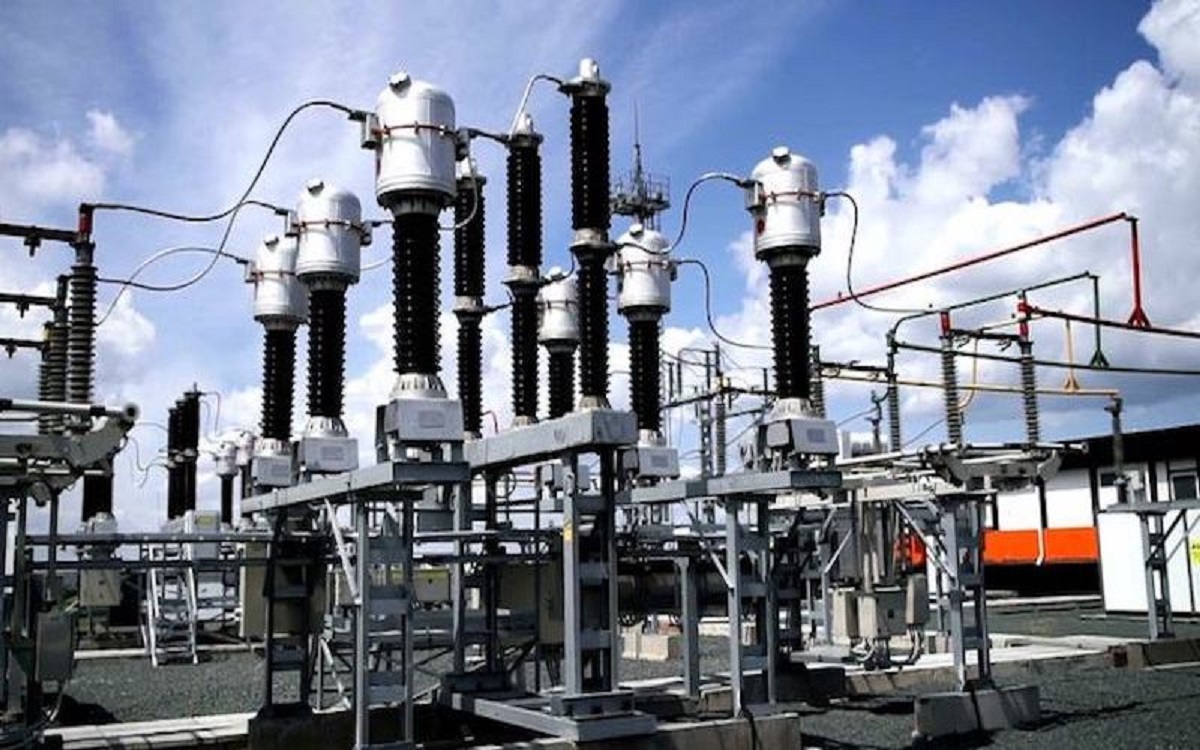
HBSAN energy conference chairman Mayowa Afe says Nigeria needs about 0bn in energy infrastructure investment over five years, warning that capital follows confidence and confidence follows consistency.
Insecurity, Illegal Mining Threaten Nigeria's Solid Minerals Investment Push
Mining Technologies CEO Joshua Egbagbe says insecurity, illegal occupation of licensed sites and policy instability have cost him foreign technical partners and disrupted operations in Nigeria's solid minerals sector.
About the author
Kelechi Nwachukwu
Business Reporter
Kelechi Nwachukwu writes for BusinessPress.