
Lam Research Bets $25bn on AI Trade Settlement
Chip equipment maker Lam surges 8.2% after unveiling a buyback of up to $25bn, the sharpest confidence signal yet inside the AI hardware chain after a $3trn rout.
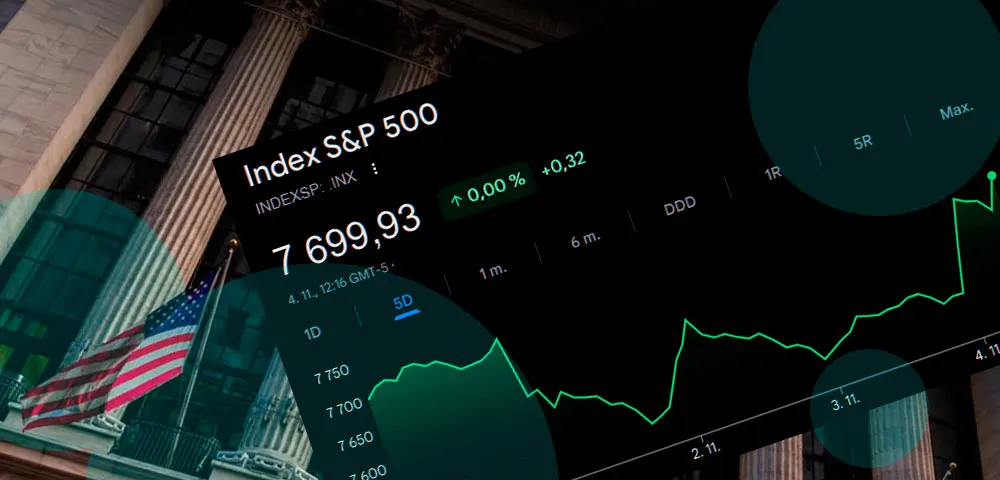
Lam Research shares jumped 8.2 per cent on Friday after the semiconductor equipment maker announced a shareholder return programme worth up to $25 billion — one of the largest buyback authorisations in the industry's history — delivering the most concrete vote of confidence yet from inside the AI hardware supply chain just two sessions after a $3 trillion rout swept through the market.
The move came on a day when the broader Philadelphia Semiconductor Index rose 4.2 per cent after slumping in its biggest one-day drop since April 2025 on Thursday, and when Nvidia, AMD, Intel and Micron all gained between 2.8 and 10 per cent on their own recoveries. Against that tape, Lam's outsized pop — roughly twice the sector's rebound amplitude — reflects a specific interpretation by investors: a fab-equipment supplier choosing to commit up to $25 billion of capital to its own shares is signalling that demand visibility inside chip factories remains intact despite the week's equity carnage.
Why a buyback carries signal weight in equipment
Semiconductor equipment is the supply chain's gatekeeper industry: companies like Lam design and sell the deposition and etch systems that chipmakers must order one-to-two years ahead of production. Buyback announcements in this group are read as capital-allocation statements about future orders, because equipment vendors sit close enough to the fab cycle to see booking pipelines before investors do. In a week in which the market's central fear was that Democratic midterm gains would slow data-centre construction and temper AI infrastructure spending, a capital commitment of this size says the management teams closest to the buildout are not bracing for a cliff.
The scale also distinguishes Lam from the general market. A $25 billion authorisation is not a routine quarterly programme but a multi-year capital plan sized relative to a company of Lam's standing — the kind of commitment typically reserved for moments when boards believe shares are mispriced. Boards that had watched their stock fall alongside the sector's 9 to 15 per cent single-day losses this week effectively used Friday to price the correction as overshoot.
Fitting Lam into the AI capex debate
The announcement lands in the market's defining argument of the week. Thursday's global sell-off — the S&P 500's single worst day since the April 2025 tariff panic, with Tokyo and Seoul each down around six per cent on Friday in sympathy — was driven not by earnings reports but by policy fear: Democratic gains in U.S. midterm elections raised the prospect of permitting slowdowns and tighter oversight of the massive data-centre buildout concentrated in states like Texas. Friday's rebound, in which the S&P 500 rose 0.3 per cent and the Nasdaq climbed 1.1 per cent to 24,579.42, was led by exactly the companies carrying the AI trade — and Lam joined the dip-buyers' list alongside Qualcomm-adjacent memory and networking names.
Fundamentals in the equipment complex had been strengthening into the announcement. Lam's own order momentum through 2026 has tracked record capital spending of the leading foundries and memory makers, whose high-bandwidth-memory and advanced-logic expansions require continuous equipment refresh. The week's other datapoints corroborate rather than contradict: IREN, a data-centre developer, surged 20 per cent on results that beat estimates and two new post-quarter contracts, evidence that compute demand in some segments was strong enough to be booked even mid-correction.
What the market got right and wrong this week
The reconcile is instructive for African and emerging-market investors who track the AI trade through local proxies. The week proved, first, that AI-linked equities now carry systemic weight — a U.S. election triggered multitrillion-dollar moves across Tokyo, Seoul, Singapore and Europe through a single supply chain. Second, it displayed the correction's dense reflex: after Thursday's $3 trillion erasure — the largest market value loss in a single session since the tariff panic of 2025 — Friday's bounce recovered only a fraction of value, leaving the S&P 500 down 2.7 per cent for its worst week since June.
Lam's buyback is a datapoint in that debate, not its conclusion. Equipment makers can commit capital at these levels because their earnings base is contractually anchored to multi-year fab projects; the risk the market is pricing is wider — whether the industry's monumental infrastructure spending can sustain current pricing, and whether the policy environment in Washington will slow the physical buildout. Friday's evidence, including Lam's, is that the industry's own operators believe in the demand; the unresolved question is timing.
Outlook for the week ahead
The sector's next tests are procedural rather than empirical. Megacap earnings continue, with hyperscaler capital-expenditure guidance as the week's most important read送给; on the policy side, questions about state-level permitting and regulatory posture remain unanswered, keeping event risk alive. Against that, Lam's capital commitment gives the corrected complex a floor reference: when the industry's equipment suppliers buy their own paper with confidence at post-correction prices, investors gain a pricing anchor less sensitive to daily headline fear.
For African technology and pension investors watching the global cycle from the sidelines, the week's lesson holds twice over: AI-linked equities are now a macro asset class whose corrections transmit globally, and corporate commitments within the supply chain — capital returns, contract wins, order momentum — are the most reliable evidence in the volatility. Lam Research put $25 billion behind the argument that the machine orders continue. If the next two weeks of hyperscaler results agree, the sector's October correction will be remembered as a repricing rather than a rollover; if they disagree, that same buyback will mark the top of the cycle's confidence.
Up next
Beta Glass Q3 Profit Signals Margin-Expansion Run
Beta Glass reports 11.7% revenue growth to N40.37bn for Q3 with gross profit up 21.3% to N15.18bn, confirming pricing power and cost pass-through in packaging.
More in Technology
See all
Samsung chip earnings dominate record quarterly profit as devices lose money
Semiconductor earnings account for almost all group operating profit, highlighting the widening gap between AI components and device profitability.
African banks ramp up AI spending despite data and fairness risks
Lenders are using AI for credit, fraud and customer service, but weak data, bias and job displacement raise governance questions.
Universal Music Group Cuts Costs With Fresh Layoffs and $270m Savings Target
The music major is trimming staff worldwide as it funds AI-era licensing infrastructure and redirects resources to high-growth priorities.
About the author
Chinedu Nwosu
Technology Editor
Chinedu Nwosu writes for BusinessPress.
More by Chinedu Nwosu


